FAQs
QuickEHR practice management questions
Short answers for teams comparing practice management software, EHR practice management, OpenEMR practice management, and AI-enabled PM workflows.
What is QuickEHR practice management software?
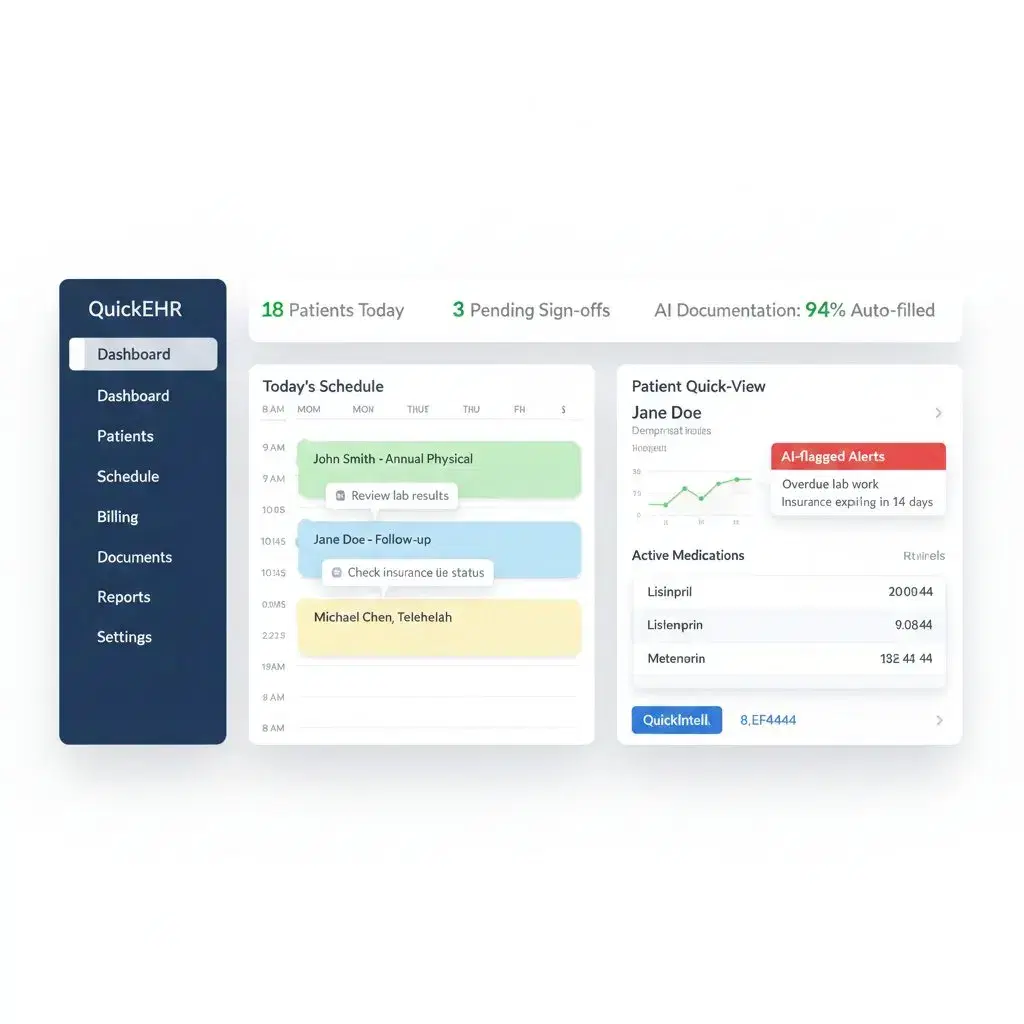
QuickEHR practice management software is the QuickEHR workflow for scheduling, patient registration, intake, eligibility, authorization readiness, documentation handoff, coding review, billing, claims, payments, denials, AR follow-up, patient balances, and reporting. It is built around QuickEHR's OpenEMR-powered clinical and operational context.
How is practice management software different from an EHR?
An EHR focuses on clinical charting and patient records. Practice management software focuses on operating the practice: scheduling, registration, insurance, billing, claims, payments, denials, patient communications, and reporting. QuickEHR connects both sides so practice workflows can use chart, appointment, payer, and billing context together.
Does QuickEHR include medical billing software workflows?
Yes. QuickEHR connects practice management and medical billing software workflows such as charge review, claim scrubbing, electronic claims, payment posting, denials, AR follow-up, patient balances, and reporting. QuickRCM and QuickERA add deeper revenue cycle and remittance workflow support.
How does OpenEMR practice management fit with QuickEHR?
QuickEHR is built on the OpenEMR foundation. Practices can use QuickEHR-managed OpenEMR workflows or connect an existing OpenEMR tenant when approved API, FHIR, HL7, clearinghouse, EDI, remittance, batch, or interface-engine paths are available for the deployment.
Can QuickEHR support AI EHR practice management?
QuickIntell AI can help classify, summarize, route, and prepare work for review across scheduling, intake, eligibility, documentation, coding, authorization, billing, denials, payments, and patient follow-up. The implementation should define which tasks require staff, clinician, coder, or billing review.
Can QuickEHR work around another practice management system?
Practices keeping another EHR or practice management system can evaluate QuickEHR Connect. That path is intended to route clinical, payer, billing, claim, denial, remittance, and patient follow-up context around an existing system of record when approved interfaces are available.
Who uses QuickEHR practice management workflows?
Front-desk teams, practice managers, clinicians, coders, billers, RCM specialists, payment posters, and operational leaders can use QuickEHR practice management workflows. Access, ownership, and review permissions should be configured for each deployment.
What should a clinic review before launching QuickEHR practice management?
Review scheduling rules, intake forms, payer routing, eligibility workflows, authorization evidence, documentation and coding handoffs, charge sources, claim edits, ERA/EOB handling, patient balance rules, reporting needs, user roles, access controls, support ownership, and which AI suggestions require review.
Does this page make compliance or certification claims?
No. This page describes practice management workflow planning. QuickEHR is built on the OpenEMR foundation, and any regulatory, security, certification, payer, or procurement evidence should be verified in the current implementation packet and contract for the specific deployment.