FAQs
QuickEHR patient portal questions.
These answers are written for clinics evaluating patient portal software, OpenEMR data access, intake, messaging, results, billing, AI routing, and implementation boundaries.
What is QuickEHR patient portal software?+
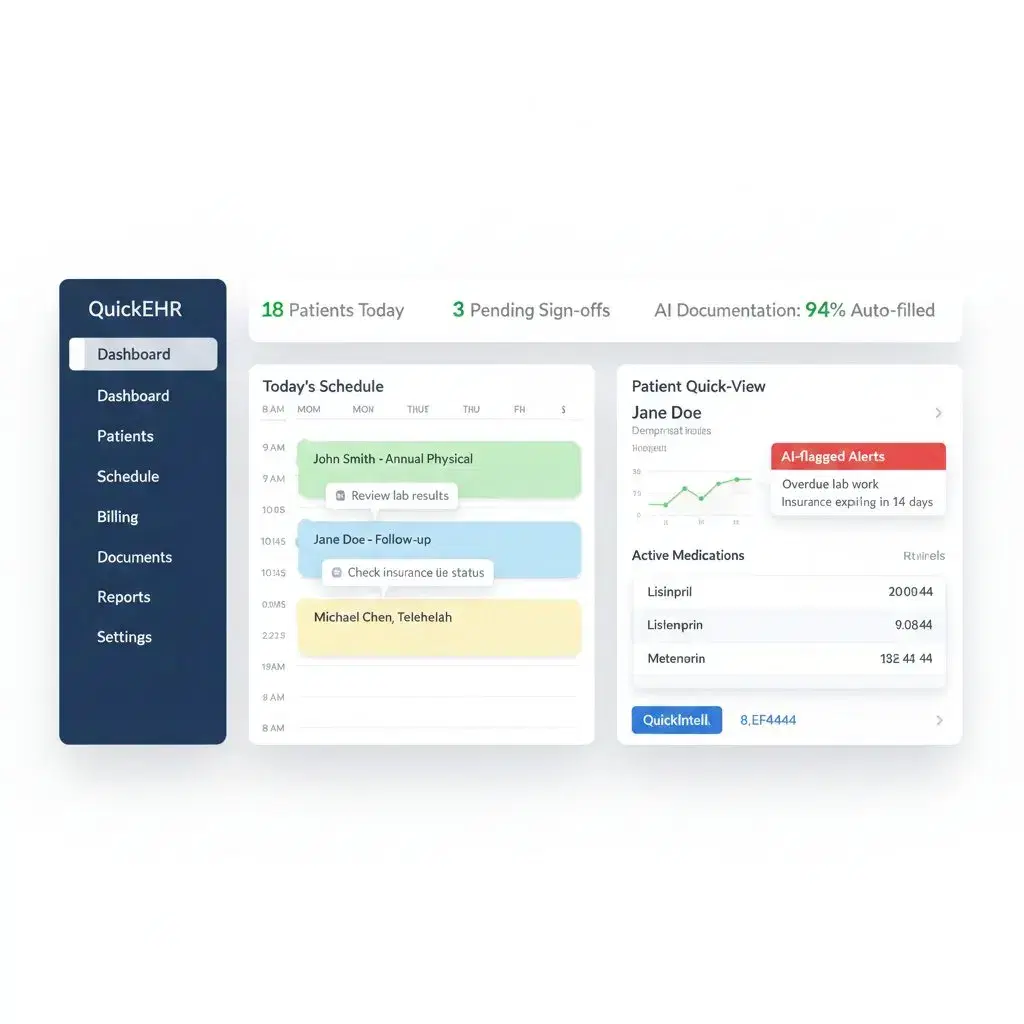
QuickEHR patient portal software is the patient-facing workflow layer for QuickEHR. It helps clinics organize intake forms, patient messages, selected results and records, billing questions, appointment follow-up, and OpenEMR-powered data access while connecting the work to QuickIntell AI, documentation, coding, authorization, RCM, and ERA workflows.
For the full platform overview, see QuickEHR.
Is QuickEHR patient portal software built for login searches?+
No. This page is written for software buyers and operators evaluating patient portal software for a clinic. Actual patient login paths, access instructions, support policies, and proxy access workflows should be configured and documented for each deployment.
How does QuickEHR use OpenEMR patient portal workflows?+
QuickEHR is built on the OpenEMR foundation. That foundation can support patient data access and portal workflows, while QuickIntell adds managed deployment, configuration, integrations, support, and AI workflow automation around the clinic's configured QuickEHR environment.
Can the portal support patient intake forms online?+
Yes, when configured for the clinic. QuickEHR can organize intake forms, demographic updates, visit reasons, histories, consent packets, and staff review queues so patient-submitted information is connected to the encounter instead of handled as disconnected paperwork.
Does QuickEHR include patient messaging software workflows?+
QuickEHR can support patient messaging workflows when enabled. The important implementation detail is routing: messages should go to the right staff or clinical queue, keep relevant chart context visible, and preserve the review responsibilities the clinic defines.
Can patients see lab results or medical records in the portal?+
QuickEHR can support selected results, chart summaries, instructions, and patient data access workflows through the configured OpenEMR-powered environment. Each clinic should define result-release rules, support ownership, and patient-facing instructions before go-live.
How does the patient billing portal connect to QuickRCM?+
Billing questions, balances, statements, claim follow-up, and remittance context can connect to QuickRCM and QuickERA workflows. That helps billing teams answer patient questions with the same encounter, claim, and payment context used in revenue-cycle operations.
Does AI answer patient messages or release results by itself?+
No. QuickIntell AI should be treated as assistive workflow automation. It can help draft, classify, route, summarize, or prepare work for review, but the clinic should define staff, clinician, billing, and support responsibilities for patient-facing actions.
What should practices review before launching a portal?+
Practices should review users, roles, proxy access, intake forms, message routing, result-release rules, payment workflow, patient support language, escalation paths, data handling, audit expectations, enabled integrations, and where QuickScribe, QuickCode, QuickAuth, QuickRCM, and QuickERA may use portal or chart context.
How should practices compare QuickEHR with other patient portal software companies?+
Compare workflow ownership, EHR integration, intake forms, messaging, result-release controls, billing handoff, AI review boundaries, implementation support, and trust documentation. QuickEHR is a managed OpenEMR-powered workflow inside the QuickIntell ecosystem, not a one-off patient portal software development project.
Does this page make certification or compliance claims?+
No. This page describes QuickEHR patient portal workflows and implementation planning. QuickEHR is built on the OpenEMR foundation, and any required certification, compliance, security, payer, procurement, or regulatory evidence should be verified in the current implementation packet and contract for the specific deployment.