Schedule, coverage, benefits, exceptions, claims, ERA
Pre-visit checks
Batch and day-of review
Coverage findings
Benefits, gaps, rejects
Revenue handoff
Auth, claims, denials
Eligibility workflow
Coverage checks should start with the schedule and travel with the claim.
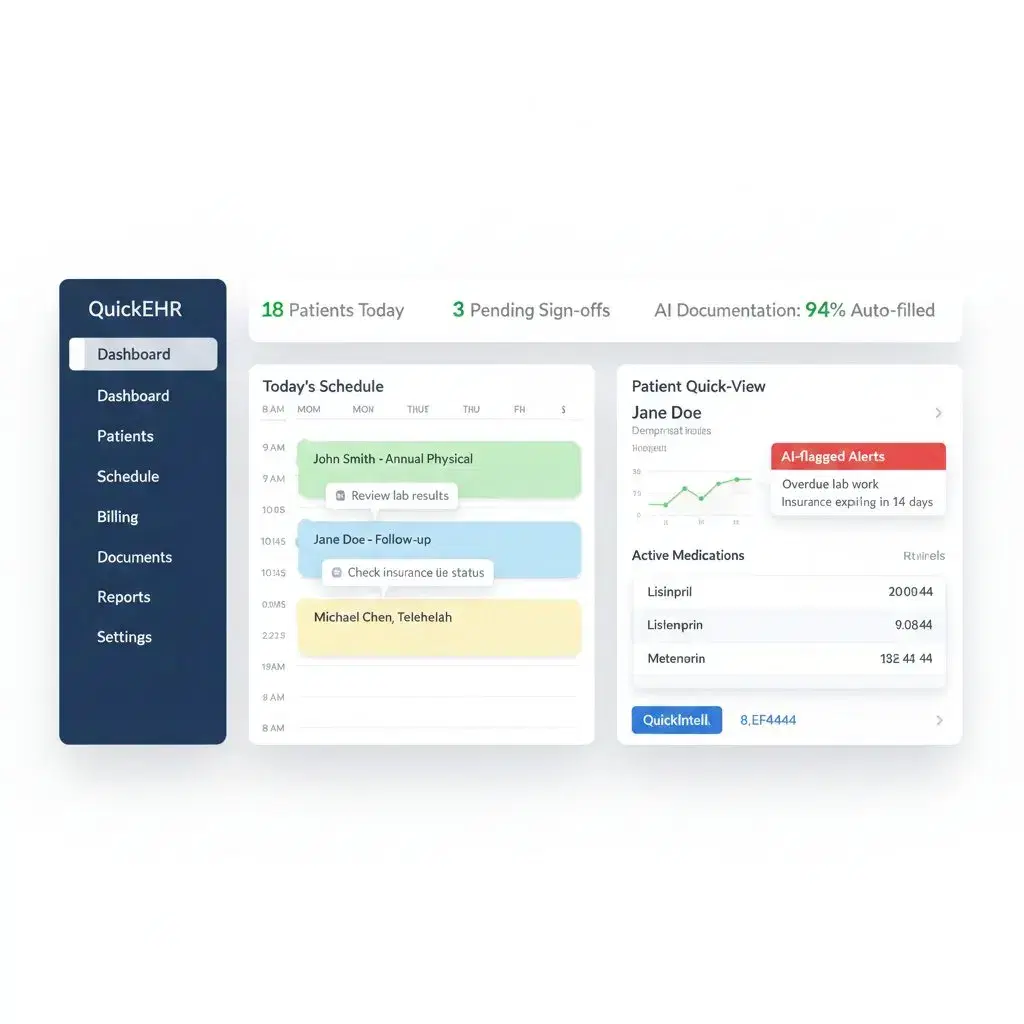
The SERP for eligibility verification software expects real-time checks, batch review, benefit details, denial prevention, EHR integration, and revenue cycle handoff. QuickEHR brings those jobs into an OpenEMR-powered practice workflow.
Pre-visit batch
Start from the QuickEHR schedule
QuickEHR eligibility verification starts with the appointment, patient, coverage, provider, location, service date, and visit reason already present in the OpenEMR-powered workflow.
Run pre-visit eligibility checks for upcoming appointments where payer routes are enabled.
Flag stale, missing, inactive, mismatched, or ambiguous coverage before check-in.
Keep verified coverage, payer response evidence, and follow-up tasks tied to the patient chart.
Single patient
Run real-time checks at intake
Front-desk and billing teams can use real time eligibility verification during scheduling, check-in, account review, or denial repair without leaving the broader QuickEHR workflow.
Prepare 270/271, clearinghouse, API, or payer-route requests based on the deployment design.
Surface active coverage, payer identifiers, service date context, copay, deductible, coinsurance, and plan notes when returned.
Route demographics, subscriber, payer, or service-date problems to staff for review before downstream billing work starts.
Downstream handoff
Carry eligibility into revenue cycle work
Insurance eligibility verification software is most useful when it follows the claim. QuickEHR connects eligibility context to coding, authorization, claims, denial follow-up, payment posting, and patient AR workflows.
Attach coverage findings to QuickAuth packets, QuickCode review, QuickRCM claim queues, and QuickERA payment workflows.
Use exception reasons to prevent repeat eligibility, demographic, authorization, or patient responsibility rework.
Keep staff review in place for payer ambiguity, portal-only workflows, historical checks, and manual overrides.
Electronic eligibility
Cover the practical front-desk and billing jobs buyers expect from medical insurance eligibility verification software.
Confirm active or inactive coverage for the service date through the eligibility routes enabled for the practice.
Batch pre-visit review
Queue upcoming visits for electronic eligibility checks before the front desk starts the day.
Benefit detail normalization
Turn payer response details into clearer work items for copays, deductibles, coinsurance, visit limits, referrals, and plan notes.
Exception worklists
Group invalid subscriber IDs, demographic mismatches, inactive plans, AAA rejects, stale checks, and payer outages by owner.
Eligibility evidence
Store request and response context with the encounter or account so claim, denial, and AR teams can see what was checked.
Revenue cycle handoff
Pass coverage context into authorization, coding, claims, denials, payment posting, and patient balance workflows.
AI eligibility automation
AI can prepare eligibility work while teams keep the review points.
For practices comparing AI EHR eligibility verification, automated eligibility verification, or patient eligibility verification software, QuickEHR uses QuickIntell modules to connect checks, exceptions, documentation, coding, authorization, claims, denials, and payment posting.
Response parsing
AI-assisted parsing can summarize payer response language into coverage, benefit, and patient responsibility signals for staff review.
Mismatch detection
Highlight subscriber, member ID, DOB, payer, plan, provider, location, and service-date inconsistencies that may cause rework.
Work routing
Send inactive coverage, retry, payer outage, referral, prior-auth, and missing-card items to the right front-desk or billing owner.
Payer-route monitoring
Track which clearinghouse, API, portal, or manual route is configured and expose retries or fallback work when a route is unavailable.
OpenEMR and QuickEHR fit
QuickEHR eligibility verification works around the EHR and payer route your clinic chooses.
QuickEHR can be a managed OpenEMR-powered EHR or the connection layer around an existing system. In either model, eligibility workflows should know the schedule, chart, coverage, provider, payer, planned service, claim, denial, and remittance context.
QuickEHR is built on the OpenEMR foundation and adds QuickIntell-managed workflows for eligibility, documentation, coding, authorization, RCM, and ERA handoff.
Existing OpenEMR tenants
Practices already using OpenEMR can evaluate approved OpenEMR API, FHIR, HL7, clearinghouse, or interface-engine routes for appointment, patient, coverage, and claim context.
QuickEHR Connect
Clinics keeping another EHR can use QuickEHR as an AI workflow layer around scheduling, eligibility verification, prior authorization, coding, claims, denials, and payment posting.
Related QuickIntell products
Eligibility verification is the front door to the revenue workflow.
Coverage checks can affect authorization, coding, claim scrubbing, denials, payment posting, patient balances, and outreach. These links keep buyers moving through the connected QuickIntell workflow.
Eligibility buyers often need the surrounding scheduling, claims, OpenEMR, RCM, and patient chart workflow before choosing an eligibility verification model.
Eligibility checks vary by visit type, payer, benefit class, referral rule, authorization requirement, and patient balance workflow. QuickEHR should be scoped around the specialties your teams actually support.
Define the eligibility operating model before production use.
Eligibility workflows touch patient demographics, payer routes, coverage data, service dates, benefit details, authorization evidence, claim risk, patient responsibility, account follow-up, and audit expectations. QuickEHR implementation should make routes, review points, and ownership explicit.
Security and procurement teams can review current materials through the Trust Center. Any implementation-specific evidence should be verified in the current contract and deployment packet.
Eligibility implementation checklist
Scope these items before go-live.
Choose QuickEHR-managed OpenEMR, an existing OpenEMR tenant, or QuickEHR Connect around another EHR or practice management system.
Map appointment, patient, coverage, provider, location, payer, plan, service-date, and visit-type data needed for eligibility checks.
Confirm enabled clearinghouse, payer, 270/271, FHIR, API, batch, portal, file, or interface-engine routes for the deployment.
Define freshness windows for pre-visit, day-of, post-service, stale, historical, denial repair, and re-verification workflows.
Decide which AI outputs may summarize, classify, route, draft, or queue work before staff review.
Review access controls, audit logs, data retention, trust materials, support ownership, and implementation evidence before go-live.
FAQs
QuickEHR eligibility verification questions.
Answers for practices comparing insurance eligibility verification software, eligibility verification software, electronic eligibility, OpenEMR eligibility verification, AI EHR eligibility verification, and connected RCM workflows.
What is QuickEHR insurance eligibility verification software?
QuickEHR insurance eligibility verification software helps practices check coverage from the EHR workflow, then keep eligibility findings connected to scheduling, check-in, prior authorization, coding, claims, denial repair, payment posting, and patient balance follow-up.
How is this different from a standalone eligibility verification tool?
Standalone tools often stop after returning payer response details. QuickEHR keeps the check tied to OpenEMR-powered patient, appointment, coverage, provider, and encounter context, then passes exceptions and evidence to QuickAuth, QuickCode, QuickRCM, and QuickERA workflows.
Does QuickEHR support real time eligibility verification?
Yes, when the required payer, clearinghouse, API, EDI, FHIR, or integration route is enabled for the deployment. Real-time checks can support scheduling, check-in, account review, historical service-date checks, and denial repair workflows.
Can QuickEHR run batch eligibility before visits?
Yes. QuickEHR can use the schedule to queue batch eligibility checks for upcoming appointments, then flag inactive coverage, stale checks, missing insurance, payer rejects, demographic mismatches, and other exceptions for staff review.
How does AI help with electronic eligibility responses?
AI can help parse and summarize payer response language, identify coverage or demographic mismatches, classify exceptions, route follow-up tasks, and prepare plain-language context for staff. Staff review remains important for ambiguous benefits, payer-specific rules, and manual override decisions.
Does this work with OpenEMR?
QuickEHR is built on the OpenEMR foundation. For existing OpenEMR tenants, the implementation team reviews the tenant version, hosting model, enabled APIs, FHIR, HL7, clearinghouse, payer, and interface routes before enabling OpenEMR eligibility verification workflows.
How does eligibility verification connect to prior authorization and claims?
Eligibility findings can feed QuickAuth prior authorization packets, QuickCode coding review, QuickRCM claim and denial queues, and QuickERA payment posting workflows. The goal is to keep payer, member, service-date, coverage, and patient responsibility context attached to downstream work.
Does this page make compliance or certification claims?
No. This page describes QuickEHR eligibility workflow planning. QuickEHR is built on the OpenEMR foundation, and any certification, regulatory, security, privacy, payer, or procurement evidence should be verified in the current implementation packet and contract for the specific deployment.
Need eligibility verification inside your EHR workflow?
QuickIntell can walk through QuickEHR, OpenEMR integration, QuickScribe, QuickCode, QuickAuth, QuickRCM, QuickERA, eligibility, claims, denials, payment posting, and trust documentation for the clinic environment you are evaluating.