What status states will I see?
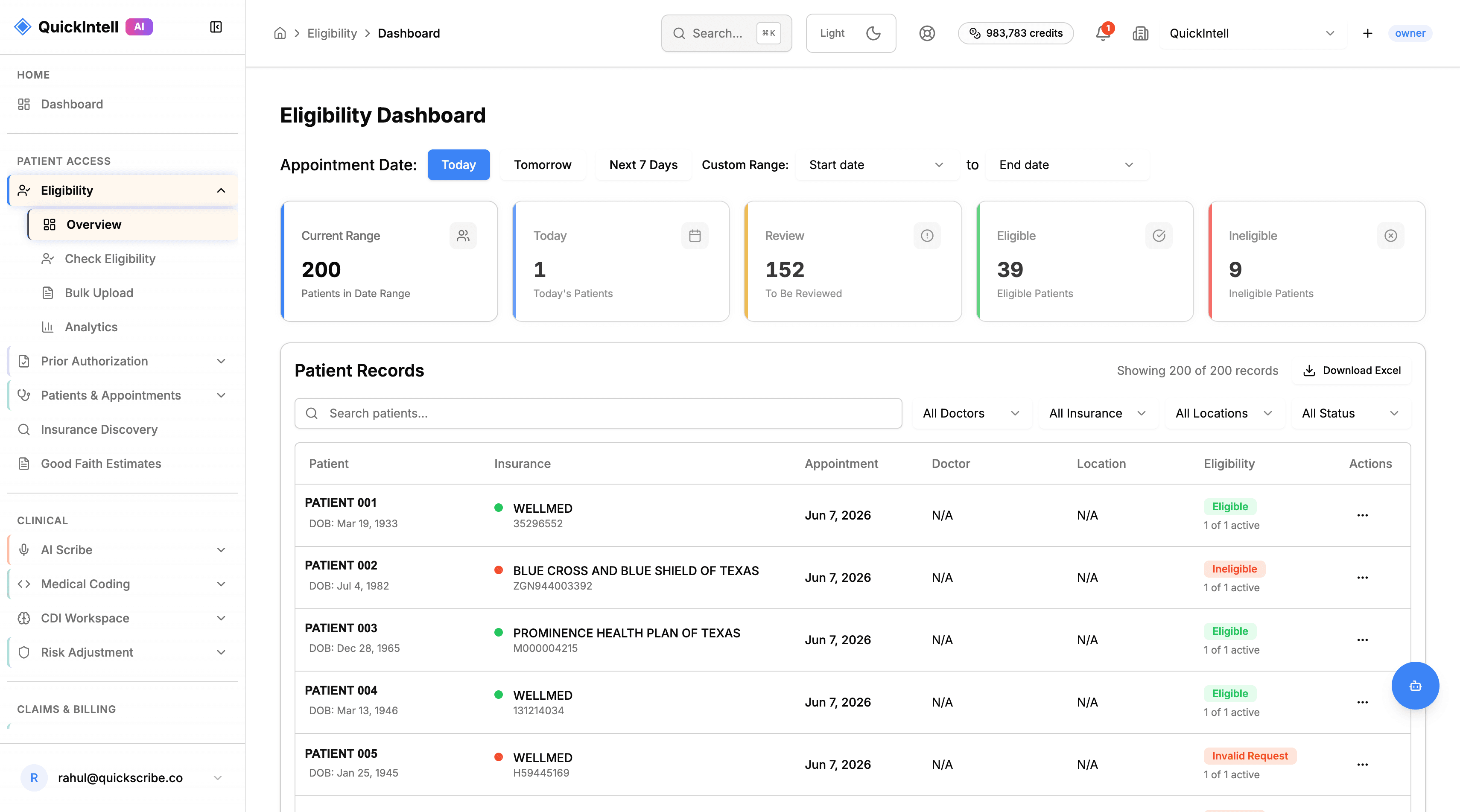
The workflow distinguishes pending, active, inactive, error, stale, and manually overridden checks. Review the payer response and service date behind the displayed state. Assign missing or conflicting information to an owner, and document the reason and evidence for any override.
What happens when an inquiry route is unavailable?
The check remains unresolved until a usable response or documented manual verification is obtained. Define retries, alerts, and the staff fallback for your workflow. Demonstrate the failure path in evaluation rather than assuming every payer always responds.
Can I check coverage for a past service date?
Use the relevant service date when the payer and transaction support historical inquiries. Save the response and its date for investigation. Availability varies, and a response does not determine the outcome of an appeal or establish final payment.
What security and data agreements should we review?
Request deployment-specific data flows, hosting, access controls, credential handling, audit records, subprocessors, and applicable business associate agreements. Have your privacy and security teams confirm the evidence for the proposed use before sensitive records are shared.
How should we measure verification turnaround?
Track inquiry submission, response receipt, failed attempts, manual follow-up, and completion for comparable payer groups. Separate electronic response time from the time needed to resolve benefit questions or registration exceptions. No universal response time or staff-time reduction is promised.
Which payers do you support?
Evaluate your actual payer mix and required inquiry types. Confirm the available route, authorized access, service-date handling, and returned fields for each payer. A payer-directory entry or reference count does not establish a working transaction connection.
Do you support batch pre-visit checks?
Schedule-based worklists support pre-visit verification. Define the inquiry windows, freshness rules, changed-coverage review, and exception owners for your workflow. Validate patient and subscriber matching before using a batch.
Can you organize complex benefit responses?
Review the returned coverage dates, patient responsibility, benefit limits, and any other information available for the inquiry. The workflow organizes these fields for staff review. Missing or ambiguous benefits require payer follow-up; coverage, authorization, and final payment are separate determinations.
Will this work with my EHR or practice management system?
Confirm the specific system and version, available schedule and coverage interfaces, vendor permissions, mapping, and write-back scope. Demonstrate representative records, failed matches, and the manual fallback before enabling production changes.
Is this software or a verification service?
This page describes software your team operates. Managed eligibility verification is a separate service engagement defining the agreed questions, patient records, payer follow-up, customer responsibilities, reporting, and escalation. Request a service assessment for that delivery scope.
How are rollout and pricing established?
Request a quotation for the payer and transaction scope, usage, system interfaces, configuration, training, and support. Agree on a representative validation set, exception handling, and acceptance criteria before launch. Confirm all fees and exclusions in the proposal.