Call
OpenEMR-powered payments workflow

Healthcare payment software for QuickEHR patient payments

QuickEHR healthcare payment software connects online patient payments, OpenEMR payments context, payment posting, patient balances, refunds, disputes, AI worklists, QuickRCM follow-up, and QuickERA remittance workflows.

Primary intent: healthcare payment software
Patient experience: online payments and plans
AI role: exception triage and routing

QuickEHR payments workspace

Balances, payments, posting, ERA, AR

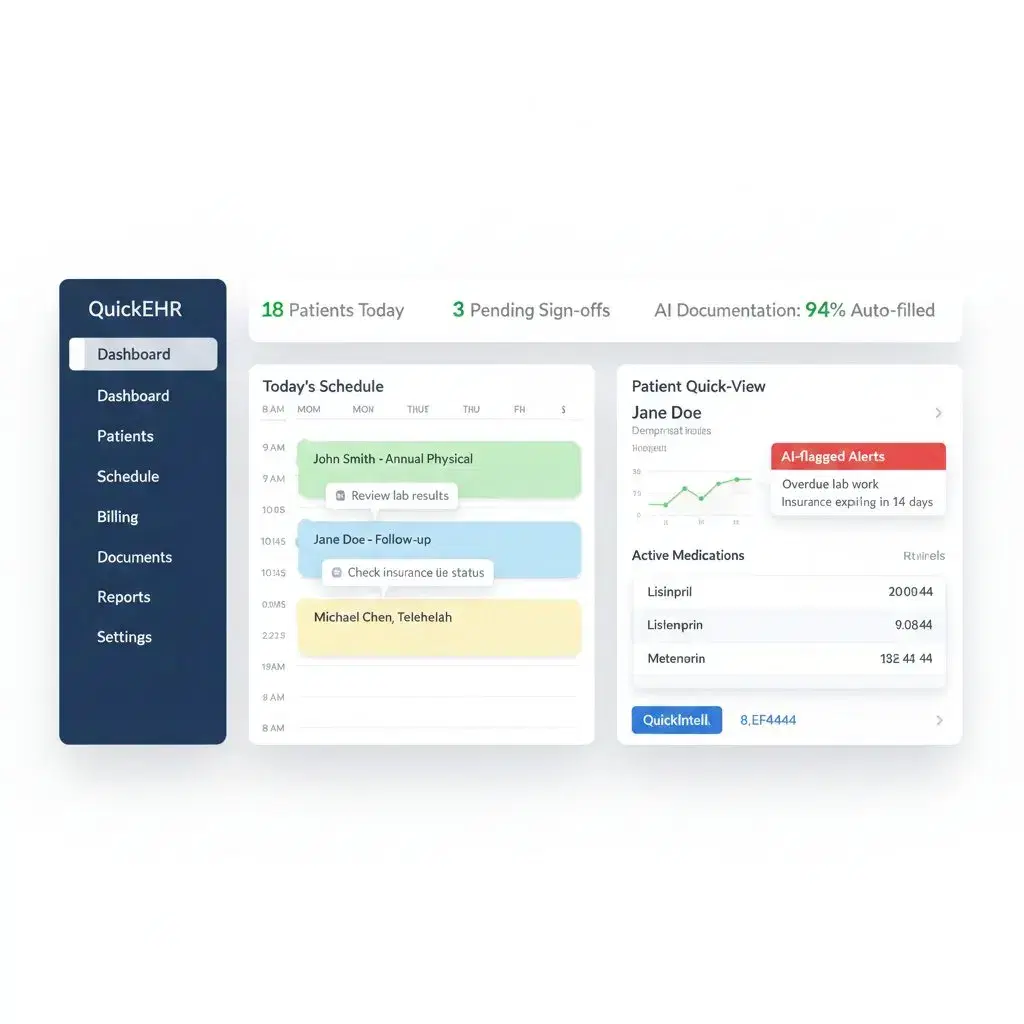
QuickEHR dashboard showing healthcare payment software context for patient balances, online payments, claims, payment posting, and revenue workflow

Patient pay

Portal, link, terminal

Posting

Payments and balances

Exceptions

Refunds, disputes, AR

Payments workflow

Payments should stay connected to the account story.

The healthcare payment software SERP expects payment portals, payment processing, patient payment plans, and reconciliation. In QuickEHR, the useful workflow also includes claim context, statements, ERA/EOB detail, payment posting, disputes, refunds, AR, and staff review.

Before payment

Confirm the balance before collection starts

QuickEHR healthcare payment software starts from the OpenEMR-powered patient, encounter, claim, payer, adjustment, statement, and balance context behind each payment request.

  • Separate clean patient responsibility from open claims, denied lines, missing remittance, unapplied cash, refund questions, and disputed account items.
  • Keep demographics, guarantor, coverage, provider, location, charge, claim, ERA, EOB, and statement context visible before staff ask for payment.
  • Route blockers to eligibility, coding, authorization, payment posting, patient financial, or QuickRCM owners before the balance advances.

Payment capture

Collect through the approved patient payment path

Online patient payments, ePayments, in-person collections, phone payments, payment plans, and portal balances all need to stay tied to the account story rather than a disconnected payment screen.

  • Scope portal, pay-by-link, statement, terminal, card-on-file, payment plan, and phone payment workflows with the practice's approved processor and policies.
  • Track pending, paid, failed, voided, refunded, disputed, and unapplied payment activity as reviewable work.
  • Keep processor-specific fees, token handling, consent language, and payment responsibilities in the implementation review.

After payment

Post, reconcile, and follow up

Medical billing payments are not complete until the payment is posted, reconciled, and reflected in the claim, statement, patient balance, and AR workflow.

  • Connect patient payment activity to QuickERA, ERA/EOB context, payment posting rules, patient responsibility, and adjustment review.
  • Move mismatches, refunds, disputes, duplicate payments, underpayments, and unresolved balances into QuickRCM queues with account evidence attached.
  • Use payment and denial outcomes to improve front-desk estimates, billing review, statement timing, and patient financial workflows.

Healthcare payment operations

A patient payment solution needs more than a pay button.

QuickEHR helps the practice scope how payment activity moves through the account, claim, statement, posting, AR, and remittance workflow while the selected processor handles processor-specific payment rails.

Online patient payments

Plan portal, pay-by-link, statement, and guest-payment workflows that send activity back to the QuickEHR account and billing worklist.

Patient balance review

Check copays, deductibles, coinsurance, self-pay balances, deposits, payer transfers, and prior balances before collection.

In-person and phone payments

Queue front-desk, phone, and back-office payment tasks from the schedule, account, statement, claim, or AR workflow.

Payment plans and card-on-file

Scope consent language, payment plan rules, token handling, staff approvals, failed-payment routing, and patient communication boundaries.

Payment posting handoff

Carry payment details into QuickERA, ERA/EOB review, account balance updates, posting exceptions, and unapplied cash queues.

Refunds, voids, and disputes

Route duplicate payments, chargebacks, refunds, voids, disputed balances, and processor exceptions before balances are closed.

Payment reconciliation

Compare patient balances, statements, processor activity, bank deposit references, ERA/EOB context, and posted totals in focused queues.

EHR payment reporting

Track payment status, source, owner, balance type, payer, provider, location, aging bucket, and workflow bottlenecks for practice management review.

AI automation

AI payment automation should prepare decisions, not hide them.

QuickIntell AI can help organize EHR payments for review: what happened, what it links to, what is missing, and who should take the next action.

Payment exception classification

AI-assisted worklists can group failed payments, unapplied cash, duplicate activity, refunds, disputes, patient questions, and posting mismatches for review.

Patient balance summaries

Prepare concise summaries of the visit, claim, payer response, adjustment, statement, payment, and patient responsibility context before outreach.

Posting and reconciliation prep

Surface likely claim links, account destinations, ERA/EOB context, balance changes, and missing evidence before billing approval.

Revenue-cycle feedback loops

Turn payment questions, denial reasons, remittance exceptions, and AR outcomes into reviewable workflow improvements.

OpenEMR and QuickEHR fit

Plan payments around the EHR source of truth.

OpenEMR payments and EHR payments searches need precise wording. QuickEHR is built on the OpenEMR foundation, while payment processor paths, posting rules, and reconciliation scope are implementation-specific.

QuickEHR-managed OpenEMR

QuickEHR is built on the OpenEMR foundation and adds QuickIntell-managed workflow design around patient payments, billing, AR, and remittance review.

Existing OpenEMR tenants

Practices already using OpenEMR can evaluate approved OpenEMR API, FHIR, HL7, clearinghouse, payment processor, batch, or interface-engine paths before enabling payment workflows.

QuickEHR Connect

Practices keeping another EHR or practice management system can evaluate QuickEHR as a workflow layer around patient payment, claim, denial, AR, and ERA context.

Implementation and trust review

Scope the processor, posting rules, and review boundaries before launch.

QuickEHR can help organize healthcare payment processing around the patient account. Processor-specific PCI scope, fees, tokenization, merchant responsibilities, patient communications, and production controls should be confirmed with the approved processor and practice team.

Payments workflow checklist

  • Choose QuickEHR-managed OpenEMR, an existing OpenEMR tenant, or QuickEHR Connect around another EHR or practice management system.
  • Confirm payment processor, merchant account, terminal, portal, pay-by-link, payment plan, refund, dispute, and reconciliation scope.
  • Map copays, deductibles, coinsurance, self-pay balances, deposits, prior balances, claim balances, statements, and posting rules.
  • Define how processor activity, account balances, ERA/EOB details, patient statements, bank references, and unapplied payments are reconciled.
  • Document review boundaries for card-on-file, payment plans, failed payments, refunds, voids, disputes, patient outreach, and write-off decisions.
  • Review processor evidence, PCI scope, PHI handling, access controls, audit expectations, support ownership, and trust materials before production use.

Related navigation

Continue payment and billing planning from nearby pages.

These links keep the payment workflow connected to QuickEHR, OpenEMR, RCM, ERA, patient access, billing, and specialty use cases.

FAQs

QuickEHR payments questions

Answers for teams comparing healthcare payment software, online patient payments, OpenEMR payments, AI EHR payments, patient payment solutions, and medical billing payments workflows.

What is healthcare payment software for QuickEHR?

QuickEHR healthcare payment software is the QuickIntell workflow layer for connecting patient payments to OpenEMR-powered billing, patient balances, online patient payments, payment posting, QuickRCM follow-up, and QuickERA remittance context.

How do online patient payments fit into QuickEHR?

Online patient payments can be planned through portal, statement, pay-by-link, guest-payment, or approved processor workflows when the practice configuration supports them. QuickEHR keeps those payment events tied to the patient account, claim, statement, and posting workflow.

Is QuickEHR payments the same as merchant processing?

No. QuickEHR is the EHR and workflow layer around healthcare payment operations. The payment processor, merchant account, terminal setup, online payment path, card-on-file setup, PCI scope, fees, and processor responsibilities are confirmed during implementation.

Can QuickEHR support OpenEMR payments workflows?

QuickEHR is built on the OpenEMR foundation. Practices using QuickEHR-managed OpenEMR or an existing OpenEMR tenant can evaluate approved OpenEMR API, FHIR, HL7, clearinghouse, payment processor, batch, or interface-engine paths for patient payment and posting workflows.

How do QuickRCM and QuickERA connect to payments?

QuickRCM can organize patient balances, payer follow-up, denials, AR, underpayments, and payment exceptions. QuickERA can provide ERA and EOB context for payment posting, adjustments, patient responsibility, and remittance handoff when configured for the deployment.

How does AI help with EHR payments?

QuickIntell AI can help classify payment exceptions, summarize patient balance context, prepare posting and reconciliation queues, and route blockers to billing, coding, authorization, RCM, or patient financial teams for review.

What payment methods can be planned in QuickEHR?

Teams can scope in-person payments, phone payments, online patient payments, portal payments, pay-by-link, statement payments, card-on-file, and payment plan workflows. The approved methods depend on the processor, practice policies, consent language, and posting workflow selected for the implementation.

What should a practice review before launching payments?

Review merchant setup, processor terms, online and terminal payment workflows, card-on-file policies, payment plan rules, refunds, disputes, reconciliation, posting ownership, access controls, PHI handling, PCI scope, trust materials, and staff review boundaries before production use.

Payment workflow planning

Connect patient payments to the rest of QuickEHR billing.

Scope online patient payments, processor handoff, posting, AR, ERA, and review workflows with the same context your billing team uses every day.