Call
Chart-aware patient outreach

Patient communications software for QuickEHR workflows

QuickEHR patient communications software connects OpenEMR chart context, patient messaging, QuickVoice outreach, reminders, recalls, intake nudges, billing questions, and QuickIntell AI routing so clinics can keep patient engagement tied to the work staff already owns.

Primary intent: patient communications software
Channels: messaging, portal, voice
EHR fit: QuickEHR and OpenEMR

QuickEHR communication workspace

Patient messages, voice outreach, reminders, and routing

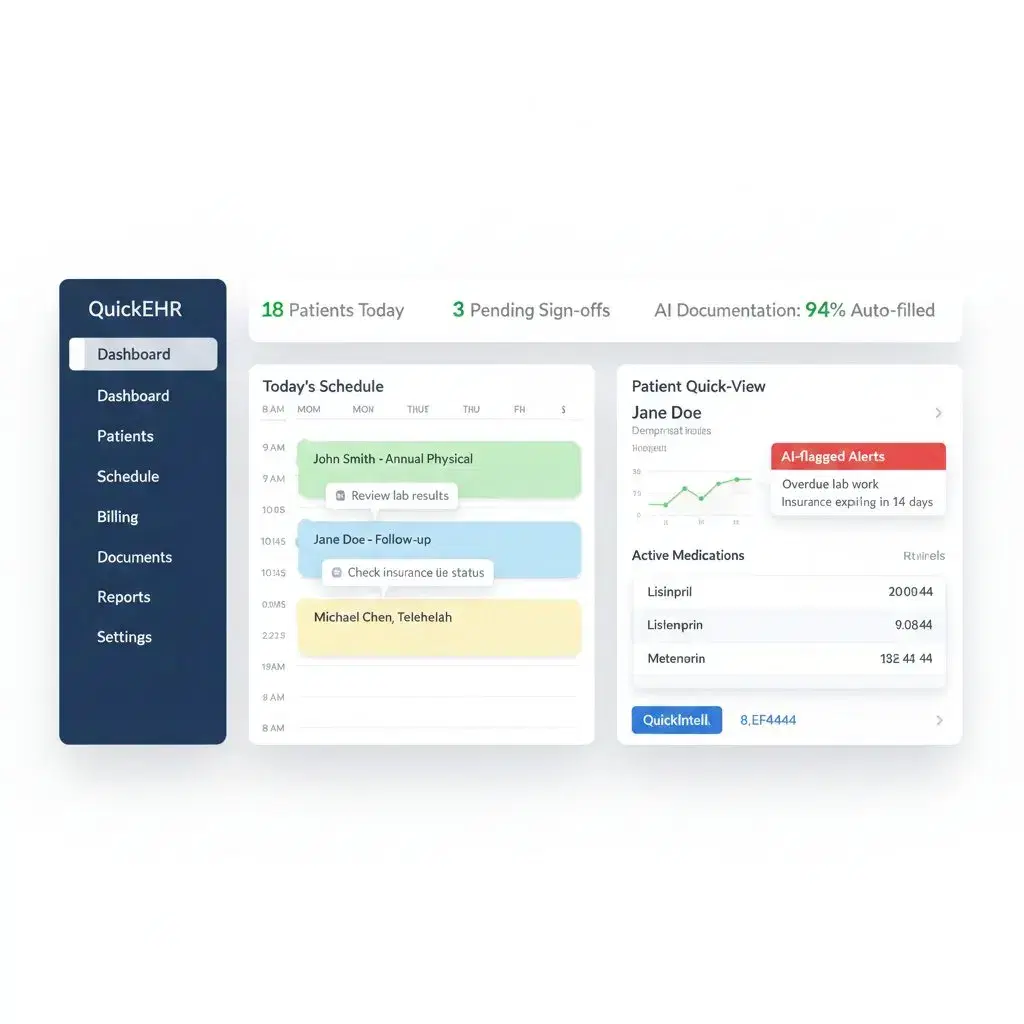
QuickEHR dashboard showing chart, patient communication, scheduling, documentation, authorization, and revenue workflow context

Chart context

Patient, visit, payer

Outreach

Message, portal, voice

Routing

Staff, clinical, RCM

Communication workflow

Patient outreach works better when it stays connected to the chart.

The search results for patient communications software focus on messaging, reminders, calls, and patient engagement. QuickEHR adds the context clinics need: the appointment, chart, OpenEMR workflow, staff queue, and downstream QuickIntell automation.

Chart-aware intake

Start every conversation from the patient and visit context

QuickEHR patient communications software is designed around the chart, appointment, provider, location, visit reason, payer context, and open tasks instead of a disconnected message inbox.

  • Use QuickEHR-managed OpenEMR context when the clinic runs on QuickEHR.
  • Evaluate approved OpenEMR API, FHIR, HL7, or interface-engine paths for existing OpenEMR tenants.
  • Keep patient outreach tied to scheduling, intake, charting, authorization, billing, and follow-up work.

Unified outreach

Coordinate text, email, portal messages, and QuickVoice calls

Patient engagement software should help teams manage routine outreach without forcing staff to jump between phone notes, portal messages, reminder tools, and billing queues.

  • Plan text, email, portal, reminder, recall, and voice workflows around clinic rules.
  • Use QuickVoice for routine phone outreach and inbound call handling where the deployment enables it.
  • Route cancellations, reschedules, clinical questions, billing questions, and low-confidence replies to staff.

Follow-through

Turn patient responses into reviewable work

A patient response is only useful if it reaches the team that owns the next step. QuickEHR can connect outreach outcomes to clinical, operational, and revenue-cycle queues.

  • Move reminder confirmations, intake gaps, recall needs, and patient questions into structured worklists.
  • Use QuickScribe, QuickCode, QuickAuth, QuickRCM, and QuickERA context when outreach affects downstream work.
  • Preserve staff and clinician review points for patient-facing actions, clinical decisions, and financial workflows.

Patient engagement channels

Cover messaging, reminders, voice, intake, and billing handoff.

Patient engagement software and healthcare communications software buyers expect more than a message thread. QuickEHR helps practices plan patient communication services around the channel, the chart context, and the team responsible for the next step.

For reminder-specific workflows, review QuickEHR appointment reminders. For patient portal workflows, review QuickEHR patient portal software.

Two-way patient messaging

Organize patient messaging software workflows for appointment questions, follow-up instructions, intake gaps, results questions, and administrative requests.

QuickVoice outreach

Use QuickVoice-assisted calls for routine reminders, recalls, rescheduling help, callbacks, and inbound questions that need phone handling.

Appointment reminders

Connect appointment reminders, confirmations, cancellations, reschedules, waitlist fills, and preparation instructions to QuickEHR scheduling context.

Email and portal follow-up

Use email and portal communication paths for longer instructions, forms prompts, care-team follow-up, and non-urgent patient-facing tasks when configured.

Intake and forms nudges

Prompt patients for demographics, history updates, visit reason, coverage details, consent packets, and missing documents before arrival.

Billing and RCM questions

Route balances, coverage questions, statement issues, claim follow-up, and payment questions to billing workflows with claim and remittance context nearby.

OpenEMR and QuickEHR fit

OpenEMR patient communications need operational context.

QuickEHR is built on the OpenEMR foundation and adds managed workflow design around patient outreach, QuickVoice, patient engagement, and QuickIntell AI automation.

QuickEHR-managed OpenEMR

QuickEHR is built on the OpenEMR foundation and adds managed implementation, patient outreach configuration, integrations, and QuickIntell automation around the chart.

Existing OpenEMR environments

Practices already using OpenEMR can evaluate approved OpenEMR API, FHIR, HL7, or interface-engine paths for EHR patient communications, message routing, and outreach outcomes.

QuickEHR Connect

Clinics keeping another EHR or practice management system can use QuickEHR as a workflow layer around patient communications, appointments, encounters, claims, and remittance context.

Communication controls

Patient outreach should be automated with clear review boundaries.

The goal is not to let automation answer everything. The goal is to make routine patient communications easier to route, while staff and clinicians keep the responsibilities the clinic defines.

For security and procurement review, use the QuickIntell Trust Center alongside the implementation packet for the specific deployment.

Patient-facing language review

Approve message templates, call flows, portal instructions, recall language, billing handoff language, and after-hours expectations before launch.

Escalation and ownership

Define who owns cancellations, reschedules, clinical questions, medication questions, billing issues, coverage gaps, and low-confidence AI classifications.

Opt-out and channel preferences

Plan communication preferences, quiet hours, opt-out handling, phone call alternatives, and manual follow-up paths by workflow and channel.

Measurement without inflated claims

Track sent, delivered, replied, escalated, resolved, recalled, rescheduled, staff-reviewed, and billing-routed outcomes without promising fixed performance results.

Implementation and trust

Launch patient communications with the operating model defined first.

Patient communications can touch clinical care, scheduling, billing, access, and patient support. QuickIntell scopes the implementation around the actual clinic workflow, enabled interfaces, approved language, and review responsibilities.

Best-fit use cases

Ambulatory practices, multi-location groups, and specialty clinics that want a digital patient engagement platform tied to OpenEMR-powered chart context, QuickVoice, and QuickIntell automation.

Launch checklist

  • Choose QuickEHR-managed OpenEMR, an existing OpenEMR tenant, or QuickEHR Connect for another EHR or practice management system.
  • Map communication channels: text, email, portal, reminders, recalls, voice calls, inbound messages, and billing outreach.
  • Define patient segments, visit types, language, templates, staff queues, escalation rules, opt-out handling, and support ownership.
  • Confirm enabled OpenEMR API, FHIR, HL7, interface-engine, portal, telephony, eligibility, clearinghouse, payer, and payment workflow paths.
  • Decide where AI may draft, classify, summarize, route, or queue patient communications before staff or clinician review.
  • Review trust documentation, data handling, access controls, audit expectations, procurement evidence, and implementation-specific responsibilities before production use.

Specialty workflows

Patient communications vary by specialty. Link the channel, template, escalation path, and staff queue to the care model before go-live.

FAQs

QuickEHR patient communications FAQs

Answers for teams comparing patient communications software, patient engagement software, EHR patient communications, and OpenEMR patient communications workflows.

What is QuickEHR patient communications software?+

QuickEHR patient communications software helps clinics organize patient messaging, reminders, recalls, portal follow-up, voice outreach, intake nudges, billing questions, and staff escalation around QuickEHR and OpenEMR-powered chart context.

How is this different from a generic patient messaging app?+

A generic messaging app can send and receive messages. QuickEHR patient communications are designed to stay connected to appointment context, chart details, staff queues, QuickVoice calls, intake work, authorization review, billing questions, and revenue-cycle follow-through.

Can QuickEHR support two-way patient communications?+

Yes, two-way patient communications can be part of a scoped QuickEHR workflow. The implementation should define allowed channels, templates, routing, escalation, opt-out handling, support ownership, and which responses require staff or clinician review.

How does QuickVoice fit with patient communications?+

QuickVoice can support routine phone outreach and inbound call workflows for reminders, recalls, cancellations, reschedules, callbacks, and patient questions. Exceptions and low-confidence paths should be routed to the staff queue defined during implementation.

Can QuickEHR support automated patient outreach?+

Yes, automated patient outreach can be scoped for reminders, recalls, intake nudges, portal follow-up, billing handoff, and routine voice workflows. The clinic should define approved channels, message language, escalation paths, and review responsibilities before launch.

How do OpenEMR patient communications fit with QuickEHR?+

QuickEHR is built on the OpenEMR foundation. For QuickEHR-managed OpenEMR deployments, communication workflows can be planned around the managed chart, schedule, and patient workflow. Existing OpenEMR tenants can evaluate approved API, FHIR, HL7, or interface-engine paths.

What does AI EHR patient communications mean in QuickEHR?+

AI EHR patient communications in QuickEHR means assistive automation for drafting, classifying, summarizing, routing, and preparing work for review. AI should not replace the clinic's defined staff, clinician, billing, or support responsibilities for patient-facing actions.

Can patient communications trigger scheduling, eligibility, or prior authorization work?+

Yes, when configured. A patient response can surface a cancellation, reschedule request, missing intake item, coverage question, referral issue, or authorization-sensitive visit that should be routed into the right QuickEHR, QuickAuth, or eligibility workflow.

How do patient communications connect to QuickRCM and QuickERA?+

Patient outreach often surfaces coverage, claim, denial, balance, statement, or payment questions. QuickEHR can route those signals into QuickRCM and QuickERA workflows so billing teams have appointment, claim, payment, and communication context nearby.

Which channels should a practice review before launch?+

Review text, email, portal messaging, appointment reminders, recall outreach, QuickVoice call flows, inbound phone questions, billing outreach, opt-out handling, quiet hours, message templates, escalation rules, and who owns each queue.

How should practices compare QuickEHR with patient engagement software companies?+

Compare EHR integration, chart context, voice and messaging workflows, staff routing, reminders, intake, billing handoff, AI review boundaries, implementation support, and trust documentation. QuickEHR's differentiator is OpenEMR-powered workflow context plus QuickIntell automation.

Does this page make compliance or certification claims?+

No. This page describes patient communications workflow planning for QuickEHR. QuickEHR is built on the OpenEMR foundation, and any required certification, security, payer, procurement, or regulatory evidence should be verified in the current implementation packet and contract for the specific deployment.

QuickEHR patient engagement

Connect patient communications to the chart, the call, and the next workflow.

See how QuickEHR, QuickVoice, and QuickIntell AI can unify patient outreach with OpenEMR-powered clinical, operational, and revenue workflows.