Vaccine capture in the chart
Keep administered vaccines, historical vaccines, refusals, lot details, manufacturer, route, site, VIS details, and encounter context reviewable inside the EHR workflow.
QuickEHR immunization reporting software helps practices organize vaccine records, OpenEMR chart context, immunization registry reporting, IIS handoff readiness, AI-prepared review queues, patient follow-up, coding, claims, and remittance workflows in one reviewable operating model.
The goal is practical public-health readiness: know which state registry or IIS workflow applies, which vaccine details are complete, what AI flagged, who reviewed exceptions, and how the configured implementation will handle registry, portal, file, or partner handoffs.
QuickEHR immunization reporting view
Vaccine records, IIS readiness, AI review, and follow-up
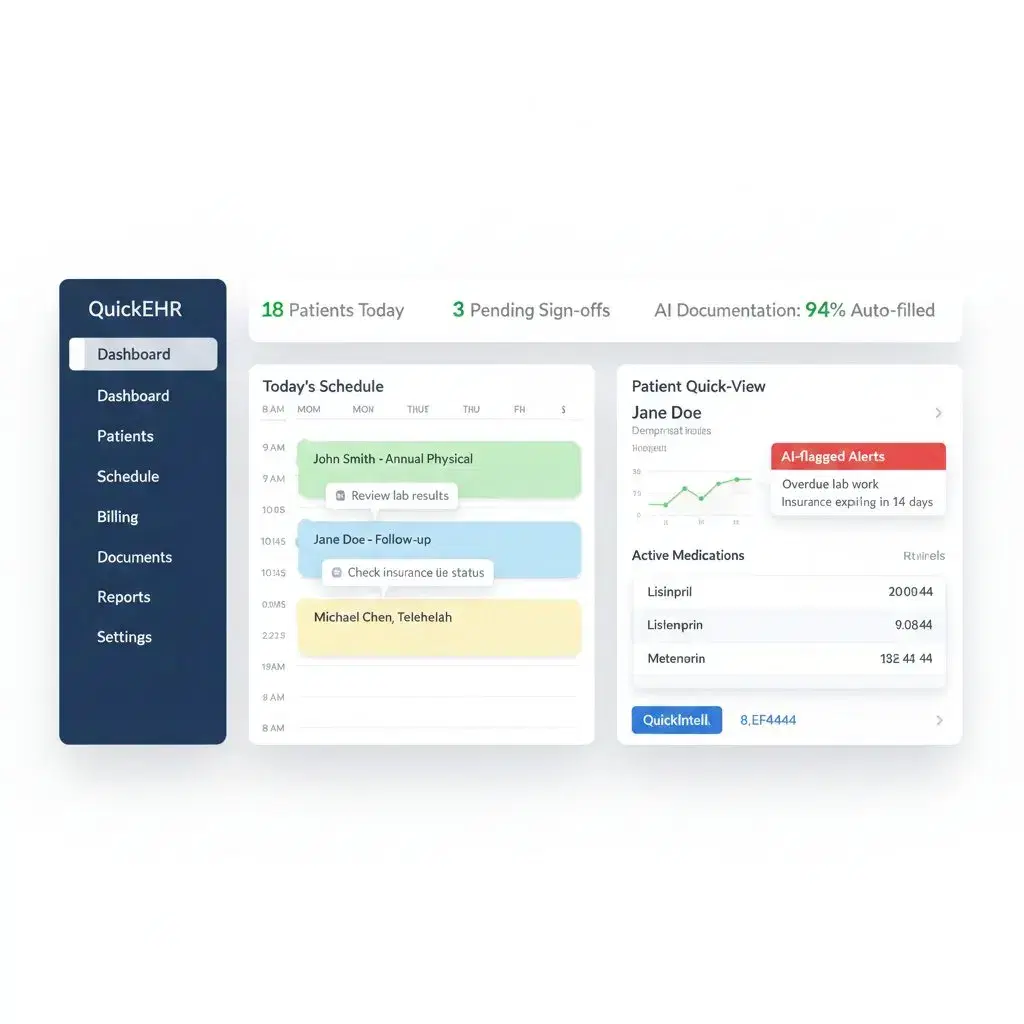
Vaccine record
Administration and history
Registry readiness
IIS fields and exceptions
Follow-up path
Outreach, claims, and QA
Immunization registry reporting map
Searchers looking for immunization reporting software or vaccine reporting software need more than a generic vaccine log. QuickEHR connects vaccine capture to IIS readiness, documentation, coding, public-health review, and patient follow-up.
Keep administered vaccines, historical vaccines, refusals, lot details, manufacturer, route, site, VIS details, and encounter context reviewable inside the EHR workflow.
Plan immunization registry reporting around the clinic's state IIS rules, approved interface path, required fields, user roles, and exception handling before go-live.
Track which public-health immunization reporting requirements apply by location, specialty, patient population, program, and configured implementation scope.
Help teams spot missing immunization documentation, age-based follow-up needs, school-form context, and recall work without separating it from the patient chart.
Connect vaccine administration documentation to QuickCode and QuickRCM workflows so codes, claims, denials, and remittance details do not drift from the visit record.
Preserve source data, AI-prepared suggestions, registry handoff status, owner review, exception notes, and implementation decisions for operational review.
Vaccine reporting workflow
Public-health immunization reporting varies by state, registry, interface, and implementation. QuickEHR keeps the evidence, owner, and exception path visible from the chart through the final handoff.
Scope
Immunization reporting software only works when it is mapped to the clinic's real public-health obligations. QuickEHR starts with state IIS scope, specialty workflows, patient population, and system ownership.
Capture
QuickEHR is built on the OpenEMR foundation, so immunization reporting can be planned around the same patient chart used for clinical documentation, orders, follow-up, and billing.
Validate
EHR immunization registry reporting should make validation visible. QuickEHR helps teams see what was captured, what is missing, what AI flagged, and what still needs human review.
Follow up
Immunization reporting is not only a file or interface event. It also creates follow-up work for pediatric, family medicine, primary care, urgent care, and population-health teams.
AI EHR immunization reporting
QuickIntell AI can draft, flag, classify, route, and reconcile immunization work around the chart. Clinical, public-health, coding, billing, and compliance decisions stay under the right human review path.
QuickScribe
Prepare encounter documentation around vaccine counseling, administration, refusals, follow-up, and patient instructions while clinicians keep final control.
QuickCode
Use chart evidence, diagnoses, procedure context, and payer rules to prepare reviewable vaccine administration and encounter coding suggestions.
QuickAuth
Assemble relevant chart, order, coverage, and clinical details for review when a vaccine-related service or follow-up workflow requires payer documentation.
QuickRCM
Move eligibility, charge, claim, denial, and AR context through revenue workflows without detaching it from the reviewed vaccine record.
QuickERA
Route ERA, EOB, adjustment, and payment-posting context back to the claim and encounter when billing teams need to resolve vaccine-related exceptions.
OpenEMR and QuickEHR fit
QuickEHR uses the OpenEMR foundation for the EHR layer and adds QuickIntell workflow design, implementation support, data mapping, exception queues, and AI automation around the chart. That gives teams a clearer boundary between the configured OpenEMR record, registry or IIS handoff path, and assistive AI work.
QuickEHR is built on the OpenEMR foundation. OpenEMR immunization reporting questions should be reviewed against the configured version, enabled modules, forms, and interfaces.
QuickIntell adds workflow design, implementation planning, data mapping, exception queues, and operating visibility around the OpenEMR-based EHR experience.
HL7 immunization reporting, each immunization registry interface, state IIS workflows, portals, files, and partner handoffs are implementation-specific. QuickEHR keeps the boundary visible before teams rely on a path.
QuickScribe, QuickCode, QuickAuth, QuickRCM, and QuickERA can prepare reviewable work around the chart, but clinical and reporting accountability stays with the practice.
Implementation and trust
Immunization reporting requirements change by state, registry, practice location, vaccine program, interface, and year. QuickIntell helps teams map current requirements to the configured OpenEMR foundation, QuickEHR workflow, AI review controls, and final reporting handoffs.
State IIS, public-health, school, program, and payer requirements that apply to each clinic location
OpenEMR version, QuickEHR modules, vaccine fields, custom forms, code sets, and enabled interfaces
Approved immunization registry interface path, including HL7, API, file, portal, or partner workflow where configured
Required vaccine data elements, patient matching rules, duplicate handling, acknowledgement review, and exception ownership
Clinician, nursing, front-desk, billing, quality, and implementation roles for review and signoff
Trust documentation, data retention expectations, access controls, support ownership, and go-live evidence packet
QuickEHR immunization reporting workflow review
QuickIntell can help your team map immunization reporting software needs to QuickEHR, OpenEMR data sources, registry or IIS handoffs, AI automation, coding, RCM, and implementation evidence.
FAQs
These answers define the workflow boundary: QuickEHR can organize vaccine reporting data and review paths, while registry requirements and final submission accountability remain implementation-specific.
Immunization reporting in QuickEHR is the workflow for capturing vaccine details in the OpenEMR-powered chart, validating required data, preparing registry or IIS handoffs where configured, tracking exceptions, and routing follow-up work to the right team.
QuickEHR can support immunization reporting software workflows by organizing vaccine records, patient chart context, registry readiness checks, AI-prepared review queues, coding context, claim follow-through, and implementation evidence. The exact registry connection and submission workflow must be validated for the configured deployment.
This page does not claim that QuickEHR submits directly to every state immunization registry or replaces state-specific validation. QuickEHR can help practices plan, prepare, review, and monitor registry or IIS handoffs through approved interfaces, files, portals, or partners where configured.
QuickEHR is built on the OpenEMR foundation. OpenEMR immunization reporting support should be reviewed against the configured version, enabled modules, vaccine fields, custom forms, HL7 or API scope, and implementation evidence packet. QuickIntell adds managed workflow and AI automation around that foundation.
AI can help identify missing vaccine details, draft visit documentation for review, flag incomplete registry data, prepare coding suggestions, route authorization or claim context, and summarize exceptions. Clinicians, staff, coders, and implementation owners keep final review and reporting responsibility.
Practices should validate patient identity fields, vaccine type, administration date, lot, manufacturer, route, site, provider, location, historical vaccine source, refusal details, acknowledgement handling, duplicate logic, and state-specific requirements before relying on an IIS handoff.
Yes. QuickEHR can help pediatrics, family medicine, primary care, and urgent care teams keep vaccine administration, historical immunizations, school-form context, follow-up tasks, outreach, coding, claims, and registry exceptions connected to the patient chart.
Immunization reporting can affect clinical quality measures, preventive care workflows, care gaps, patient outreach, coding review, and payer follow-up. QuickEHR links the immunization record to related quality, documentation, coding, authorization, RCM, and ERA workflows.
No. Public-health immunization reporting rules vary by state, program, interface, and year. QuickEHR helps organize the EHR workflow and evidence for implementation review, while the practice confirms current registry requirements and final reporting accountability.