Clinical data capture
Keep demographics, problems, medications, allergies, visit notes, orders, results, and encounter details structured enough for review, reporting, and downstream operations.
QuickEHR meaningful use EHR software helps clinics map historical Meaningful Use and current Promoting Interoperability expectations to practical workflows: OpenEMR-powered charting, patient access, AI documentation, coding review, prior authorization packets, RCM, ERA, and implementation evidence.
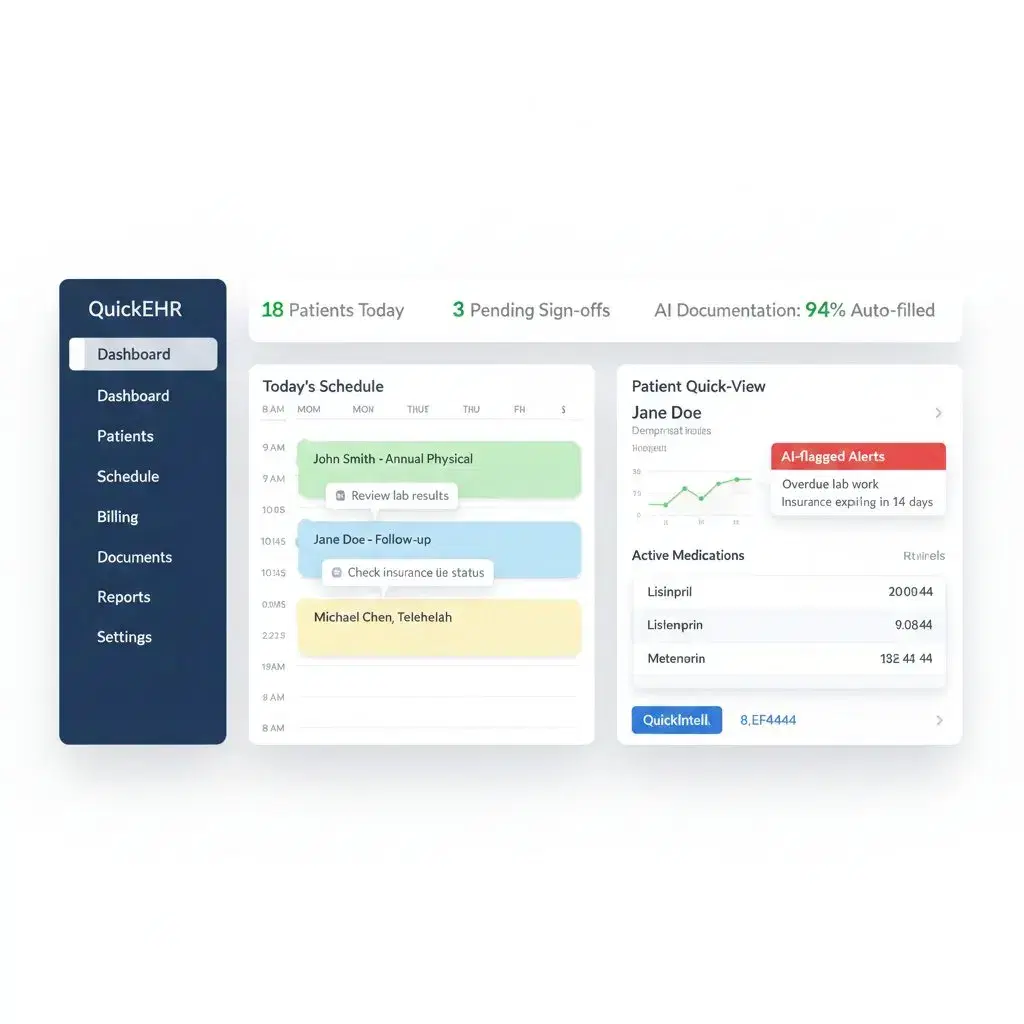
QuickEHR meaningful use readiness view
Charting, patient access, exchange, AI, RCM, and evidence
Record context
Structured chart data
Patient access
Portal and messaging
Evidence review
Roles, logs, packets
Meaningful use software map
Searchers asking about meaningful use, meaningful use requirements, or meaningful use stages usually need both the regulatory concept and the operational EHR work. QuickEHR keeps those two conversations separate and reviewable.
Keep demographics, problems, medications, allergies, visit notes, orders, results, and encounter details structured enough for review, reporting, and downstream operations.
Connect the patient portal, selected results, intake forms, messages, reminders, and billing questions to the chart workflow instead of scattering tasks across inboxes.
Plan FHIR, API, HL7, OpenEMR, and interface-engine scope around the deployment so clinical and administrative data can move where the clinic expects it.
Define user roles, approval points, activity logs, reporting evidence, and implementation ownership before any team relies on a configuration for program review.
Use cleaner documentation and structured chart context to support coding review, clinical quality measure preparation, HCC capture, and payer-specific follow-up.
Carry encounter context into prior authorization, claims, remittance, denial, and AR workflows so teams can work from the same clinical source of truth.
Workflow readiness
The useful question is not whether a page says the right words. It is whether the EHR, AI, and revenue workflows have the right data, approvals, and evidence for the clinic's actual requirements.
Before go-live
Meaningful use software pages often stop at checklists. QuickEHR starts with the daily work: scheduling, intake, charting, prescribing workflows, patient portal access, coding review, and claim follow-through.
During the encounter
QuickEHR meaningful use EHR workflows depend on documentation discipline. Providers need fast charting, but the record still needs enough structure for exchange, reporting, coding, and patient access.
After the visit
The EHR helps achieve meaningful use goals only when the data leaves the note in usable form. QuickIntell connects reviewed chart context to coding, authorization, RCM, ERA, and follow-up work.
AI EHR meaningful use support
QuickIntell automation can help the chart move faster through documentation, coding, authorization, RCM, and remittance workflows. The clinic still owns clinical, coding, compliance, and operational approvals.
QuickScribe
Draft visit notes from encounter context and ambient documentation workflows, then route them back for clinician review and signature.
QuickCode
Use documentation, diagnoses, procedures, payer rules, and historical context for reviewable ICD-10, CPT, HCPCS, and HCC suggestions.
QuickAuth
Assemble authorization-ready clinical details from the EHR workflow while keeping payer packet review under the right operational team.
QuickRCM
Move eligibility, charge, claim, denial, and AR work from the documented encounter into structured revenue-cycle queues.
QuickERA
Connect EOB, ERA, adjustment, and posting work to the clinical and claim record teams need when resolving payment exceptions.
OpenEMR and QuickEHR fit
QuickEHR uses the OpenEMR foundation for the EHR layer and adds QuickIntell configuration, support, integration planning, and AI workflow automation around the chart. That gives teams a clearer boundary between EHR foundation evidence, managed QuickEHR implementation, and assistive automation.
QuickEHR is built on the OpenEMR foundation. For OpenEMR meaningful use or certification questions, review the deployment-specific OpenEMR version and evidence packet.
QuickIntell adds managed configuration, implementation support, data-flow planning, and workflow design around the OpenEMR-based EHR experience.
QuickScribe, QuickCode, QuickAuth, QuickRCM, and QuickERA help automate work around the chart. They should be treated as reviewable workflow layers unless implementation evidence says otherwise.
Clinics keeping another EHR can still use QuickIntell workflows through approved FHIR, API, HL7, file, or interface-engine paths where available for that deployment.
QuickEHR meaningful use workflows sit between the clinical chart and the operating work that follows. These products use chart context in reviewable ways.
Use these child pages to review the patient-facing, provider-facing, prescribing, scheduling, and certification parts of the QuickEHR implementation plan.
Requirements and templates vary by specialty. These pages show how QuickIntell workflows typically connect around encounter volume, documentation, coding, and patient follow-up.
Implementation and trust
Meaningful use requirements and related Promoting Interoperability requirements are not a generic website checklist. QuickIntell helps teams map the current requirement set to the configured OpenEMR foundation, QuickEHR workflow, enabled interfaces, and review controls.
Confirm current CMS, payer, procurement, and specialty-program requirements before treating any configuration as ready for attestation or reporting.
Review the OpenEMR foundation, version, enabled modules, and implementation evidence packet with the QuickIntell team.
Map patient portal access, messaging, selected results, intake, reminders, and patient education handoffs to the clinic workflow.
Define documentation templates, clinician signature steps, coding review, authorization review, and billing team approval paths.
Confirm FHIR, OpenEMR API, HL7, interface-engine, file, or third-party service scope for the deployment.
Review user roles, audit expectations, support ownership, data retention, and trust documentation before go-live.
QuickEHR implementation review
QuickIntell can help your team evaluate the OpenEMR foundation, QuickEHR configuration, AI workflow boundaries, and operational handoffs needed for meaningful use and Promoting Interoperability readiness conversations.
Meaningful use FAQs
These answers keep the regulatory boundary explicit: QuickEHR can support workflow readiness, but the clinic still needs current requirement review and deployment-specific evidence.
Meaningful use EHR software is software that helps healthcare organizations use electronic health record workflows in ways that support structured charting, patient access, exchange of health information, clinical quality context, and evidence review. QuickEHR approaches this through an OpenEMR-powered EHR foundation with QuickIntell automation around documentation, coding, prior authorization, RCM, and remittance workflows.
No. This page does not promise attestation, incentive payments, or regulatory outcomes. Program requirements change, and each clinic should review current CMS, payer, procurement, and implementation-specific evidence before relying on any configuration for reporting or attestation.
The EHR helps by capturing structured clinical data, supporting patient access, organizing exchange and reporting workflows, maintaining role-based approval paths, and preserving evidence that teams can review. QuickEHR adds QuickIntell automation so that documentation, coding, authorization, claims, and remittance work can use the same chart context.
QuickEHR is built on the OpenEMR foundation. OpenEMR meaningful use or certification questions should be reviewed against the specific OpenEMR version, enabled modules, and deployment evidence packet. QuickIntell adds managed implementation and AI workflow layers around that foundation.
Review patient access, clinical documentation, clinical quality measure context, exchange workflows, public health or registry expectations, security and audit evidence, certified EHR technology requirements, and any current Promoting Interoperability requirements that apply to the clinic or organization.
AI can help prepare and route work, but it should not replace clinical, coding, compliance, or operational review. QuickScribe can draft notes, QuickCode can suggest codes, QuickAuth can prepare authorization packets, and QuickRCM or QuickERA can organize revenue workflows while the clinic keeps approval responsibility.
Meaningful Use is still a common search term and historical program phrase. CMS renamed the Medicare and Medicaid EHR Incentive Programs to Promoting Interoperability Programs in April 2018. Current participation and reporting questions should be checked against the current CMS program materials.
No. The page intentionally avoids broad certification or compliance claims. It states that QuickEHR is built on the OpenEMR foundation and that certification, EPCS, security, procurement, and regulatory evidence should be reviewed for the specific implementation packet and deployed configuration.