Measure selection and ownership
Map clinical quality measures, electronic clinical quality measures, payer programs, specialty expectations, and owner review before the clinic treats reporting work as ready.
QuickEHR clinical quality measures software helps practices organize CQMs, electronic clinical quality measures, MIPS quality measures, OpenEMR chart context, AI documentation, coding, authorization, RCM, ERA, and quality reporting handoffs in one reviewable workflow.
The goal is practical quality operations: know which measures are in scope, where evidence lives, what AI prepared, who reviewed it, and how the clinic's registry, QPP, payer, file, or partner reporting path will be handled.
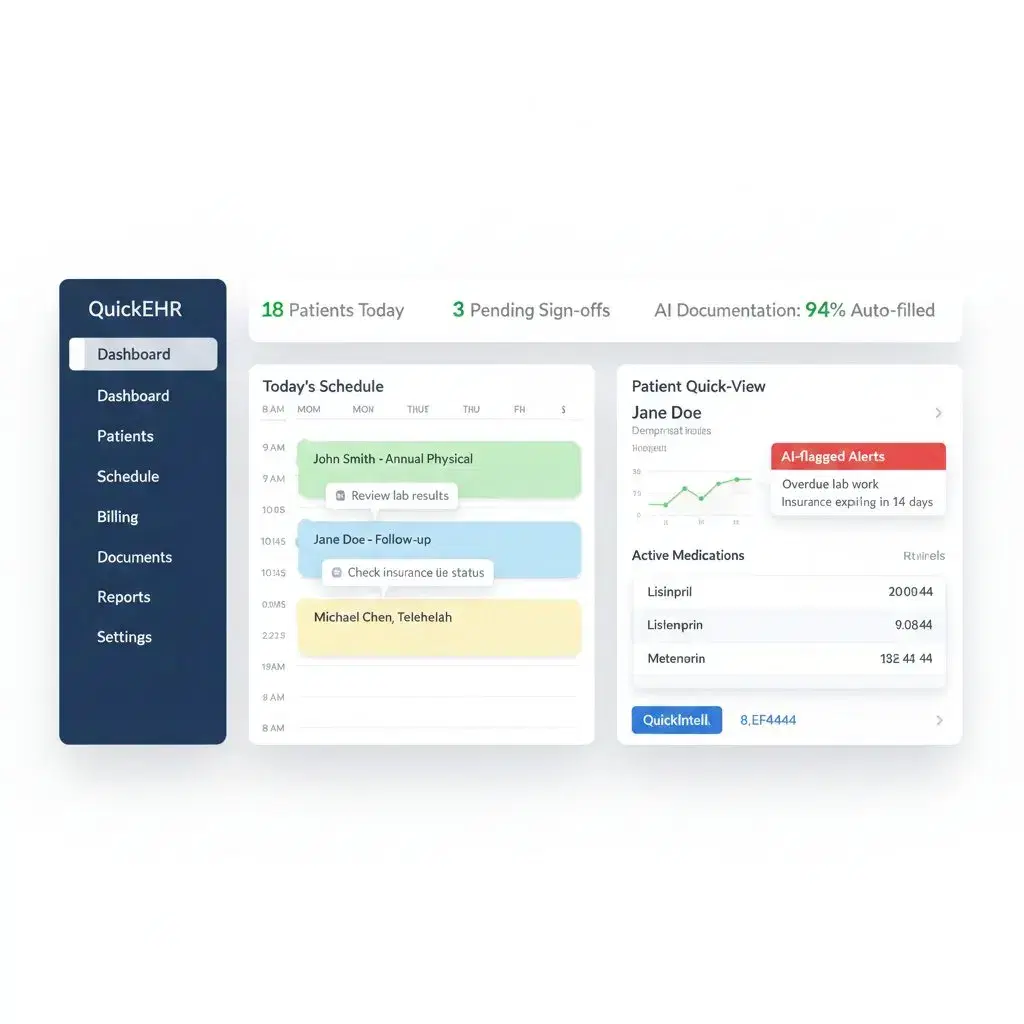
QuickEHR quality measures view
Measures, chart evidence, AI-prepared work, and reporting handoffs
CQM scope
Measure and owner map
Chart evidence
OpenEMR data sources
Handoff path
Registry, payer, or file
Clinical quality measures map
Searchers looking for clinical quality measures software need both a plain-language CQM workflow and a practical EHR operating model. QuickEHR connects measure planning to documentation, coding, follow-up, and reporting handoff.
Map clinical quality measures, electronic clinical quality measures, payer programs, specialty expectations, and owner review before the clinic treats reporting work as ready.
Keep problems, medications, allergies, vitals, orders, results, referrals, procedures, diagnoses, and note details usable for quality measure review.
Connect the provider note, assessment, plan, orders, follow-up, and patient instructions to the quality data that downstream teams need to verify.
Bring reviewed ICD-10, CPT, HCPCS, and HCC context close to CQM review so coding, risk adjustment, and quality work do not drift apart.
Prepare review queues, exports, file scope, registry handoffs, and evidence packets without claiming QuickEHR replaces the clinic's chosen submission path.
Track owners, review dates, source data, configuration decisions, exceptions, exclusions, and signoff notes for implementation-specific quality reporting review.
Quality reporting workflow
Quality reporting software should clarify where the evidence came from and who approved it. QuickEHR keeps the boundary visible from the patient chart through the final reporting handoff.
Plan
The strongest quality reporting software workflow starts with scope. QuickEHR helps teams connect program requirements to real clinic operations instead of relying on a generic checklist.
Capture
QuickEHR is built on the OpenEMR foundation, so clinical quality measures can be planned around the same patient chart workflows used for care delivery.
Review
AI EHR clinical quality measures workflows should make review faster, clearer, and more consistent without hiding why a patient is included, excluded, or missing evidence.
Hand off
QuickEHR can organize clinical quality measures software workflows, but the clinic still confirms reporting method, registry scope, file requirements, and final submission accountability.
AI EHR clinical quality measures
QuickIntell AI can draft, suggest, route, and reconcile work around the chart. Clinical, coding, quality, compliance, and reporting decisions stay under the right human review path.
QuickScribe
Draft visit documentation from encounter context for clinician review so CQM, coding, and follow-up teams start from a more complete record.
QuickCode
Prepare reviewable ICD-10, CPT, HCPCS, and HCC suggestions from documentation, payer rules, and encounter history.
QuickAuth
Assemble authorization-ready clinical details from orders, coverage, and documentation while keeping packet review in the right queue.
QuickRCM
Keep eligibility, charge, claim, denial, and AR context connected to the clinical record that supports quality and payment review.
QuickERA
Route EOB, ERA, adjustment, and posting work into reviewable queues when payment details affect measure, coding, or follow-up work.
OpenEMR and QuickEHR fit
QuickEHR uses the OpenEMR foundation for the EHR layer and adds QuickIntell workflow design, integration planning, and AI automation around the chart. That gives teams a clearer boundary between EHR foundation evidence, configured CQM or eCQM workflows, and assistive automation.
QuickEHR is built on the OpenEMR foundation. OpenEMR clinical quality measures questions should be reviewed against the configured version, enabled modules, interfaces, and evidence packet.
QuickIntell adds workflow design, configuration planning, implementation support, data-flow mapping, and operating worklists around the OpenEMR-based EHR experience.
QuickScribe, QuickCode, QuickAuth, QuickRCM, and QuickERA can prepare reviewable work around the chart. The clinic keeps clinical, coding, quality, and reporting accountability.
Clinics keeping another EHR can still plan quality reporting workflows through approved FHIR, API, HL7, file, or interface-engine paths where available.
Implementation and trust
Clinical quality measures change by program, year, specialty, payer, data source, and reporting method. QuickIntell helps teams map current requirements to the configured OpenEMR foundation, QuickEHR workflow, enabled interfaces, AI review controls, and final reporting handoffs.
Current CMS, payer, ACO, MIPS, UDS, specialty, or internal quality program requirements that apply to the clinic
Selected clinical quality measures, eCQM logic, exclusions, denominator assumptions, and data source ownership
OpenEMR version, enabled QuickEHR modules, custom forms, interfaces, and implementation evidence packet
Documentation templates, clinician signature steps, coding review, and quality review approval paths
Registry, QPP, payer, file export, partner, or submission workflow scope, including final accountability
User roles, audit logs, data retention, source-data evidence, support ownership, and trust documentation before go-live
QuickEHR quality reporting workflow review
QuickIntell can help your team map clinical quality measures software needs to QuickEHR, OpenEMR data sources, AI automation, quality reporting handoffs, and operating evidence before the reporting period becomes a scramble.
Clinical quality measures FAQs
These answers keep the scope explicit: QuickEHR can organize clinical quality measures workflows, but the clinic still needs current requirement review and deployment-specific evidence.
Clinical quality measures are structured ways to evaluate care processes, outcomes, safety, coordination, patient engagement, and other quality topics. In QuickEHR, clinical quality measures are handled as OpenEMR-powered chart workflows plus QuickIntell worklists for documentation, coding, quality review, evidence tracking, and reporting handoff.
QuickEHR can support clinical quality measures software workflows by organizing structured chart evidence, eCQM readiness, measure review tasks, AI-prepared documentation, coding context, and reporting handoffs. The specific measure set and submission path should be validated during implementation.
QuickEHR can help practices plan electronic clinical quality measures around OpenEMR chart data, structured documentation, orders, results, diagnoses, medications, and review queues. Teams should confirm eCQM logic, data mappings, exclusions, interfaces, and evidence requirements for the configured deployment.
MIPS clinical quality measures can be planned through the same QuickEHR workflow used for documentation, coding, follow-up, and evidence review. QuickEHR helps organize measure scope, data completeness, quality review, and registry or QPP handoff planning, but it does not guarantee a MIPS score or outcome.
This page does not claim that QuickEHR is a CMS qualified registry, direct CMS submission entity, or guaranteed submission mechanism. QuickEHR can help prepare and organize quality reporting data, evidence, and handoffs. The final registry, QPP, payer, file, or partner workflow should be confirmed during implementation.
AI can help prepare documentation, surface missing chart details, suggest codes for review, route prior authorization context, and connect claim or remittance signals back to the encounter. QuickIntell treats AI as assistive workflow support; clinicians, coders, quality teams, and compliance owners keep final review.
QuickEHR is built on the OpenEMR foundation. OpenEMR clinical quality measures support should be reviewed against the configured OpenEMR version, enabled modules, custom forms, interfaces, and evidence packet. QuickIntell adds managed workflow design and AI automation around that foundation.
Yes. QuickEHR can help small practices make quality reporting work more visible by connecting chart documentation, measure review, coding context, patient follow-up, claim status, and implementation evidence in one operating workflow. The practice still needs current requirement review and deployment-specific signoff.
Examples vary by specialty and program, but clinics commonly start by reviewing preventive care, chronic disease management, medication safety, care coordination, screening, follow-up, and outcome-related measures. QuickEHR implementation should map the exact program requirements and measure logic before go-live.