Eligibility and reporting scope
Track the clinicians, TIN/NPI combinations, reporting paths, performance year assumptions, and ownership decisions your team needs to review before MIPS work begins.
QuickEHR MIPS software helps practices bring MIPS reporting, MACRA MIPS context, quality measures, documentation, coding, authorization, RCM, and ERA work into one reviewable OpenEMR-powered EHR workflow with QuickIntell AI automation around the chart.
The goal is operational clarity: know which measures are in scope, where evidence lives, who reviews it, and how your registry, QPP, file, or partner submission workflow will be handled before the reporting period closes.
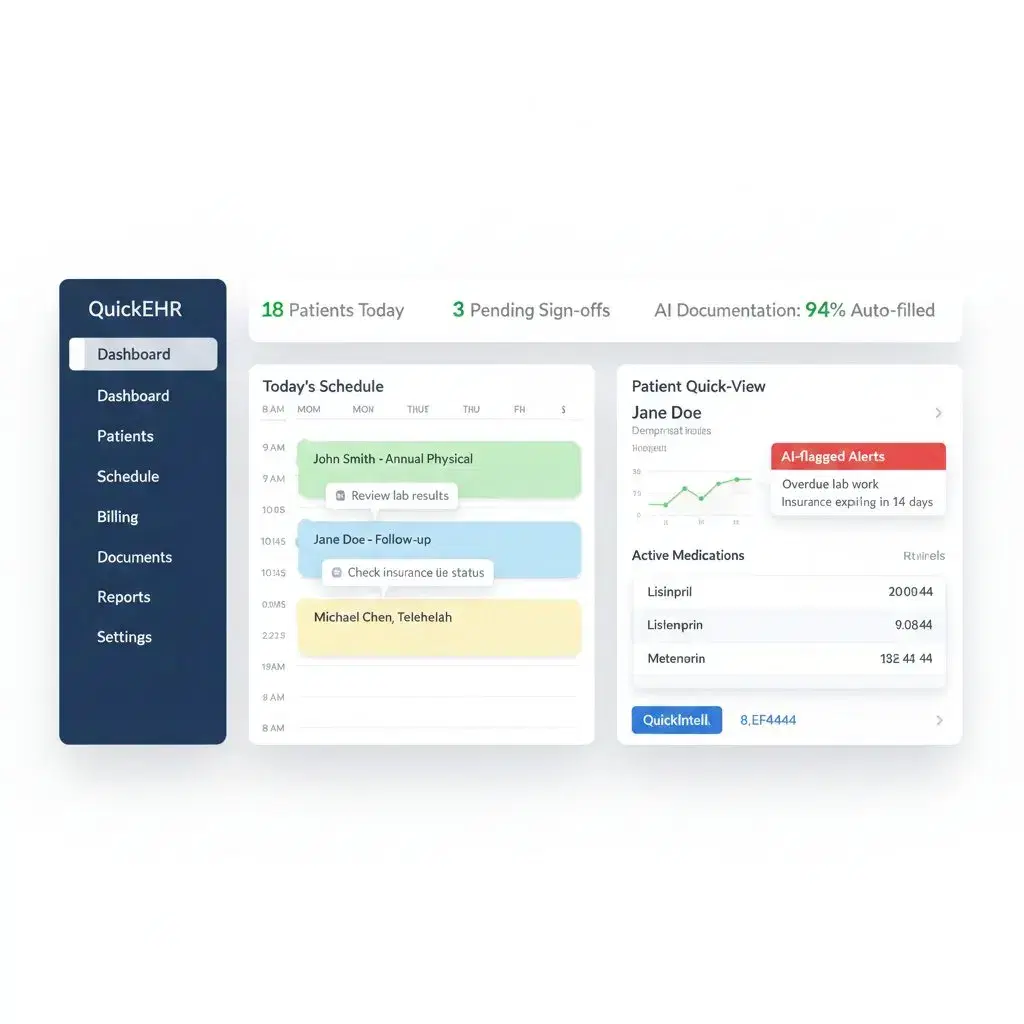
QuickEHR MIPS readiness view
Measures, chart context, review tasks, and reporting handoffs
Measure context
Quality and MVP review
Chart evidence
OpenEMR data sources
Handoff path
Registry or QPP scope
MIPS reporting software map
Searchers comparing MIPS reporting software need more than a dashboard. They need a clear path from patient chart context to quality measure review, coding validation, registry handoff, and implementation evidence.
Track the clinicians, TIN/NPI combinations, reporting paths, performance year assumptions, and ownership decisions your team needs to review before MIPS work begins.
Map MIPS quality measures, specialty measure sets, MVP concepts, and documentation sources to the actual QuickEHR workflows used by providers and staff.
Keep diagnoses, procedures, medications, orders, results, care gaps, and note details structured enough for quality reporting, coding review, and evidence checks.
Connect reviewed chart details to QuickCode and revenue-cycle workflows so coding, claims, denials, and MIPS quality reporting do not drift apart.
Prepare exports, evidence, dashboards, and task queues for the clinic's chosen registry, QPP, or submission workflow without claiming QuickEHR is the registry itself.
Preserve owners, approvals, review dates, configuration decisions, and supporting evidence so MIPS reporting requirements can be checked during implementation and closeout.
MIPS workflow
MIPS compliance software pages often imply the tool can solve the whole program. QuickEHR keeps the boundaries explicit: the software organizes the workflow, while the practice reviews requirements, evidence, and submission decisions.
Planning
MIPS software is only useful if it reflects the clinic's clinicians, specialties, payer mix, reporting method, measure choices, and review responsibilities.
Encounter
QuickEHR MIPS EHR software keeps the clinical record close to the quality workflow. The record should be fast for clinicians and still useful for measure review.
Operations
MIPS quality reporting is stronger when the same encounter context is available to coding, prior authorization, claims, remittance, and denial teams.
Closeout
QuickEHR can help organize MIPS reporting software workflows, but the clinic still needs deployment-specific review before relying on any configuration.
AI EHR MIPS automation
QuickIntell AI can draft, suggest, route, and reconcile work around the chart. Clinical, coding, quality, compliance, and submission decisions stay under the right human review path.
QuickScribe
Draft notes from encounter context for clinician review so quality, coding, and follow-up teams start from a cleaner record.
QuickCode
Prepare reviewable ICD-10, CPT, HCPCS, and HCC suggestions from documentation, payer rules, and encounter history.
QuickAuth
Use structured chart and order context to assemble authorization-ready information while preserving operational review.
QuickRCM
Keep eligibility, charge, claim, denial, and AR work connected to the clinical record that supports reporting and payment review.
QuickERA
Route EOB, ERA, adjustment, and posting work into reviewable queues that preserve claim and encounter context.
OpenEMR and QuickEHR fit
QuickEHR uses the OpenEMR foundation for the EHR layer and adds QuickIntell workflow design, integration planning, and AI automation around the chart. That gives teams a clearer boundary between EHR foundation evidence, configured MIPS reporting workflows, and assistive automation.
QuickEHR is built on the OpenEMR foundation. OpenEMR MIPS questions should be reviewed against the configured version, enabled modules, interfaces, and evidence packet.
QuickIntell adds implementation planning, configuration, data-flow mapping, support, and workflow design around the OpenEMR-based EHR experience.
QuickScribe, QuickCode, QuickAuth, QuickRCM, and QuickERA help prepare work around the chart. The clinic keeps review, submission, and compliance accountability.
Clinics keeping another EHR can still plan MIPS reporting workflows through approved FHIR, API, HL7, file, or interface-engine paths where available.
Implementation and trust
MIPS reporting requirements change by year, clinician, organization, and participation path. QuickIntell helps teams map current requirements to the configured OpenEMR foundation, QuickEHR workflow, enabled interfaces, AI review controls, and final submission handoffs.
Current QPP, MACRA MIPS, payer, ACO, specialty, and small-practice reporting requirements that apply to the clinic
MIPS quality measures, MVP assumptions, exclusions, denominator logic, and data sources selected for review
OpenEMR version, enabled QuickEHR modules, interfaces, and implementation evidence packet
Clinical documentation templates, clinician signature steps, coding review, and quality review ownership
Registry, QPP, file export, partner, or submission workflow scope, including who owns final submission decisions
User roles, audit logs, data retention, evidence retention, and support responsibilities before go-live
QuickEHR MIPS workflow review
QuickIntell can help your team map MIPS reporting software needs to QuickEHR, OpenEMR data sources, AI automation, registry handoffs, and operational evidence before the reporting period becomes a scramble.
MIPS software FAQs
These answers keep the scope explicit: QuickEHR can organize MIPS reporting workflows, but the clinic still needs current requirement review and deployment-specific evidence.
QuickEHR MIPS software helps practices organize the work around MIPS reporting: measure planning, structured documentation, quality review, coding context, evidence tracking, and submission handoffs. It is designed as an OpenEMR-powered EHR workflow with QuickIntell AI automation around the chart, not as a promise of a particular score or reporting outcome.
MIPS stands for the Merit-based Incentive Payment System, one way clinicians may participate in the Quality Payment Program. In practice, teams often need to review eligibility, quality measures, improvement activities, cost context, Promoting Interoperability or related EHR requirements, and the submission path that applies to their organization.
This page does not claim that QuickEHR is a CMS qualified registry or direct submission entity. QuickEHR can help prepare, organize, review, and route MIPS reporting data and evidence. The final registry, QPP, file, partner, or submission workflow should be confirmed during implementation.
QuickEHR helps by keeping chart data, documentation, coding context, quality measure review, task ownership, and evidence close together. QuickIntell implementation work can map current MIPS reporting requirements to OpenEMR-powered workflows, enabled interfaces, review controls, and downstream submission handoffs.
QuickEHR can support MIPS quality measure workflows by organizing structured chart context, documentation completeness, measure ownership, review tasks, and evidence. The specific measure set, logic, exclusions, and submission method should be validated for the clinic's performance year and implementation.
QuickEHR is built on the OpenEMR foundation. OpenEMR MIPS workflow questions should be reviewed against the configured OpenEMR version, enabled modules, data fields, interfaces, and evidence packet. QuickIntell adds managed workflow design and AI automation around that foundation.
AI can help prepare and route work, but it should not replace clinical, coding, quality, compliance, or submission review. QuickScribe can draft documentation, QuickCode can suggest codes, QuickAuth can assemble authorization context, and QuickRCM or QuickERA can organize revenue-cycle follow-through while humans approve final decisions.
Not necessarily. MIPS participation depends on current QPP rules, clinician type, volume thresholds, organizational arrangements, alternative payment model status, and other details. Practices should verify their current eligibility and reporting obligations before relying on any MIPS compliance software workflow.
Yes, QuickEHR can help small practices create a clearer operating workflow for MIPS reporting, especially when documentation, coding, quality review, prior authorization, claims, and remittance work are spread across tools. The implementation should still define the current requirements, submission path, and review owners before go-live.