Call
Telemedicine timeline and AI EHR workflow

Telemedicine history and the QuickEHR workflow today

Telemedicine history is more than a timeline of phones, radios, video, portals, and mobile apps. For modern practices, the important question is how remote care becomes a complete QuickEHR workflow: patient history, OpenEMR-powered chart context, telemedicine documentation, AI note drafting, coding, authorization, RCM, ERA, and follow-up.

This guide connects the history of telemedicine to the current QuickIntell operating model, where AI prepares work for clinician, staff, coding, authorization, billing, and posting review instead of leaving teams to rebuild context after each virtual visit.

Search fit: telemedicine history
Workflow fit: patient history software
Platform fit: OpenEMR and AI EHR

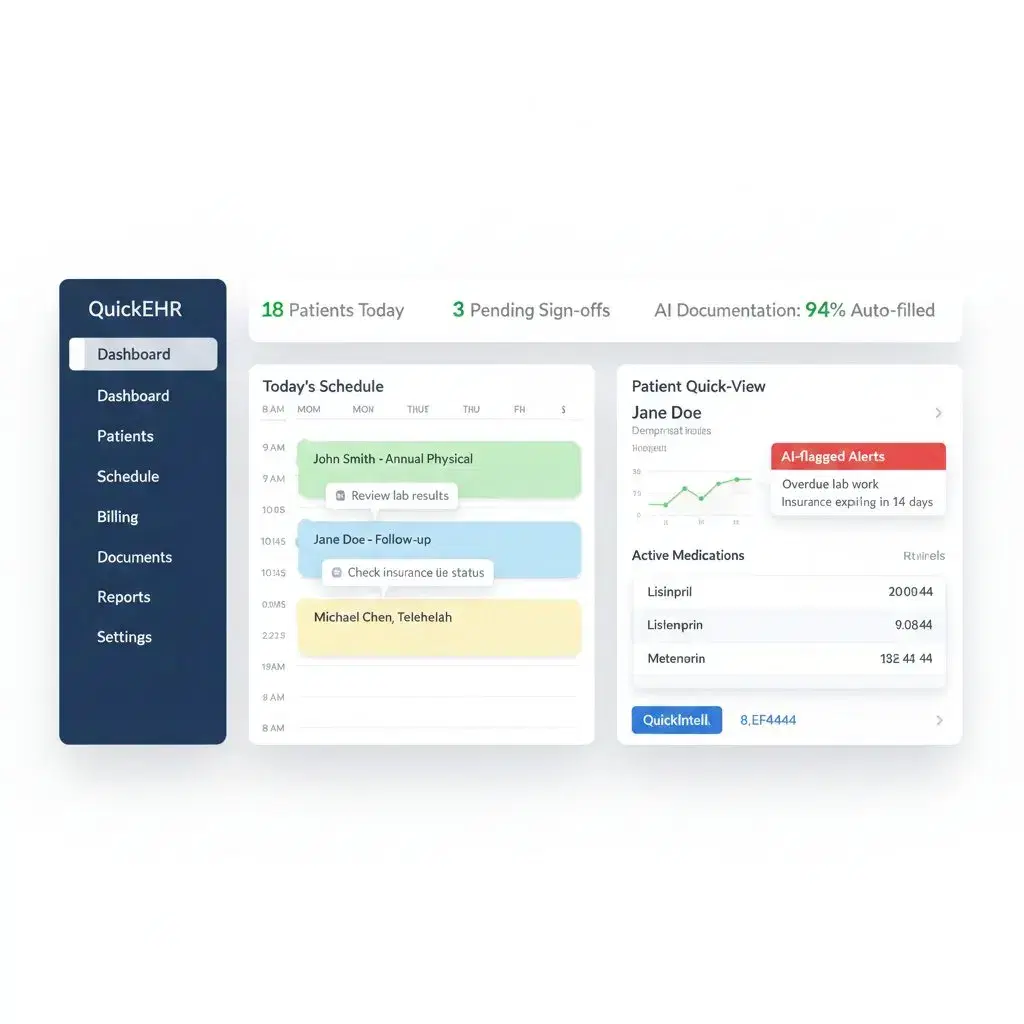
QuickEHR telemedicine history workspace

Patient history, documentation, coding, RCM, and ERA context

QuickEHR dashboard used to connect telemedicine history, patient history, documentation, coding, RCM, and ERA workflows

Prepare

History and intake

Document

Virtual encounter

Follow up

Auth, RCM, ERA

Telemedicine history timeline

The pattern is consistent: better communication creates new workflow demands.

Searches for telemedicine history, history of telemedicine, and telehealth history usually start with milestones. For operating teams, each milestone also shows why patient context, documentation, and handoff design matter.

Telephone and radio roots

Remote care started as communication before it became software

The history of telemedicine is tied to the history of communication technology: clinicians used telephone, radio, and early monitoring concepts to reach patients and exchange medical information across distance.

The durable lesson is still operational: remote care only works when the right information reaches the right person at the right time.

Mid-century experimentation

Hospitals tested teleradiology, two-way video, and remote exams

As telecommunications improved, telehealth history moved from ideas into practical programs for image transmission, specialty consultation, education, and remote clinical support.

Modern teams still face the same design question: what context should move with the encounter and what remains outside the record?

Aerospace, rural, and specialty programs

Remote monitoring and rural access shaped telemedicine use cases

Military, aerospace, rural health, and academic programs helped prove that distance care could support monitoring, triage, specialty input, and follow-up when staffing or geography created access gaps.

QuickEHR telemedicine planning should account for the setting, specialty, payer mix, and follow-up intensity rather than treating every virtual visit the same way.

Internet and mobile adoption

Broadband, portals, smartphones, and EHRs made virtual care routine

The internet era changed telemedicine from a limited technical project into a more common part of scheduling, patient access, portals, documentation, and revenue-cycle operations.

Telemedicine documentation, coding, authorization, claims, and remittance work became part of the visit trail, not a separate back-office afterthought.

AI EHR history today

AI changes what teams can prepare before humans review it

The current AI EHR history is less about replacing the clinician and more about preparing chart summaries, visit notes, coding evidence, authorization packets, revenue-cycle queues, and patient follow-up for review.

QuickIntell focuses on reviewable automation around QuickEHR, QuickScribe, QuickCode, QuickAuth, QuickRCM, and QuickERA.

Workflow shift

Telemedicine moved from communication channel to operating layer.

The current opportunity is not just offering a video visit. It is connecting patient history, virtual encounter documentation, billing evidence, and patient follow-up so remote care does not create extra reconstruction work.

From a call to an encounter

Telemedicine history started with remote communication. In QuickEHR, the modern workflow has to preserve appointment, patient, provider, location, chart, and encounter context.

  • Patient identity, visit reason, consent, intake, insurance, and appointment type should be visible before the virtual visit starts.
  • Messages, attachments, symptoms, readings, medication updates, and follow-up questions should remain tied to the patient story.
  • Telemedicine documentation should stay close to the OpenEMR-powered encounter, not isolated inside a separate video tool.

From documentation to downstream work

Virtual visits can create the same operational trail as in-person care: note drafts, diagnoses, orders, care plans, coding, authorization, claim, denial, payment, and patient balance work.

  • QuickScribe can draft reviewed virtual encounter notes from approved visit and chart context.
  • QuickCode and QuickAuth can carry reviewed clinical evidence into coding and prior authorization preparation.
  • QuickRCM and QuickERA can keep claims, denials, ERA, EOB, and payment questions connected to the visit trail.

From disconnected history software to patient context

Searches for medical history software, patient history software, and telehealth patient history all point to the same need: teams want a clear patient timeline that supports care decisions and administrative follow-through.

  • QuickEHR patient charts, patient cards, portal context, and clinical documentation can help organize the longitudinal record.
  • Patient-reported history should be reviewed before it affects documentation, coding, authorization, or patient-facing follow-up.
  • OpenEMR integration scope should define what is read, written, linked, or left in the source system.

Patient history software fit

The virtual visit is only useful when patient history travels with it.

Medical history software and patient history software queries often point to a practical need: teams want intake, prior notes, medications, problems, patient messages, attachments, orders, and follow-up context in one reviewable story.

QuickEHR helps practices plan that story around the QuickEHR chart and OpenEMR integration scope so telehealth patient history can support care, documentation, and downstream review.

Patient engagement before the visit

Use reminders, intake, forms, portal prompts, and patient messages to capture the context a clinician needs before the telemedicine encounter.

Review patient engagement

Patient portal and guide content

Give patients a predictable path for virtual visit instructions, forms, selected records, messages, and follow-up questions.

Review patient guide

OpenEMR-powered chart context

QuickEHR is built on the OpenEMR foundation, so telemedicine history can become chart-aware workflow planning across scheduling, documentation, and billing context.

Review OpenEMR integration

Virtual encounter documentation

Use clinical documentation, specialty templates, visit notes, diagnoses, orders, attachments, and follow-up tasks as the record of the virtual encounter.

Review documentation

Implementation and trust

Scope the telemedicine workflow before relying on automation.

Telemedicine today touches scheduling, portal access, patient history, clinical documentation, coding, authorization, claims, denials, ERA, EOB, patient balances, and follow-up. QuickEHR implementation should define the enabled data paths and review ownership for each step.

  • Confirm whether QuickEHR-managed OpenEMR, an existing OpenEMR tenant, or another connected EHR is the system of record.
  • Map which patient history details are patient-submitted, imported, reviewed, summarized, written back, or left in the source system.
  • Define the enabled telemedicine platform, portal, phone fallback, document, payer, clearinghouse, payment, and remittance data paths.
  • Set review gates for AI chart summaries, note drafts, coding suggestions, authorization packets, patient-facing messages, RCM worklists, and ERA exceptions.
  • Review patient-facing language, access controls, audit expectations, support ownership, contract scope, and current Trust Center materials before production use.
  • Test the complete path from appointment scheduling through documentation, coding, authorization, claim, denial, ERA, EOB, and follow-up before expanding.

Historical content is informational

This page explains telemedicine history and modern workflow planning. It is not clinical, legal, reimbursement, coding, or compliance advice.

OpenEMR scope should be verified

QuickEHR is built on the OpenEMR foundation. Existing OpenEMR environments should confirm approved API, FHIR, HL7, interface-engine, file, support, and write-back paths before launch.

AI review remains explicit

QuickIntell AI can draft, classify, summarize, route, and prepare work, but the practice should define final review ownership for clinical, coding, authorization, billing, and patient-facing actions.

Trust materials are deployment-specific

Use the QuickIntell Trust Center, contract, and implementation packet to review current privacy, security, access, procurement, and data-handling evidence for the specific deployment.

Review Trust Center

Specialty fit

Telemedicine history explains the tool. Specialty workflow explains the implementation.

Primary care, urgent care, behavioral health, pediatrics, cardiology, and internal medicine can all use virtual care, but each specialty needs different intake, patient history, documentation, follow-up, coding, authorization, and billing rules.

FAQs

Telemedicine history and QuickEHR workflow questions

Use these answers to connect historical interest with practical AI EHR, OpenEMR, documentation, and patient history workflow decisions.

What is telemedicine history?

Telemedicine history is the evolution of remote care from early telephone, radio, image transmission, two-way video, aerospace monitoring, rural health programs, internet portals, smartphones, EHR-connected virtual visits, and now AI-assisted clinical and revenue workflows.

Why does the history of telemedicine matter for QuickEHR?

The history of telemedicine shows that remote care succeeds when communication is connected to clinical context. QuickEHR applies that lesson by keeping virtual visit readiness, patient history, documentation, coding, authorization, RCM, ERA, and follow-up close to the OpenEMR-powered record.

Is this page about OpenEMR history?

This page focuses on telemedicine history, but it also explains why OpenEMR history and open EHR workflow planning matter for QuickEHR. QuickEHR is built on the OpenEMR foundation, so practices can scope chart, scheduling, portal, documentation, billing, and integration workflows around that foundation.

How does AI EHR history change telemedicine today?

AI EHR history is moving telemedicine from simple remote access toward reviewable workflow preparation. QuickIntell can help prepare chart summaries, note drafts, coding evidence, prior authorization packets, RCM worklists, ERA exceptions, and patient follow-up for human review.

How does patient history software relate to telemedicine?

Patient history software and medical history software matter because virtual visits need the same context as in-person care: demographics, medications, allergies, problems, prior notes, patient-submitted details, orders, messages, and follow-up needs. QuickEHR helps keep that context tied to the encounter workflow.

Can QuickEHR replace every telemedicine video platform?

This page does not claim QuickEHR replaces every video platform. QuickEHR can support EHR-connected telemedicine workflow planning around configured video, phone, portal, or third-party paths, but the exact scope should be confirmed during implementation.

What telemedicine documentation should be captured?

Telemedicine documentation should capture the reviewed visit note, patient history, diagnoses, orders, care plan, patient instructions, attachments, follow-up tasks, and the context needed by coding, authorization, claims, denials, payment posting, and patient support teams.

What should practices review before using AI in telemedicine workflows?

Practices should review source data quality, access controls, AI review boundaries, patient-facing language, available OpenEMR or EHR integration paths, coding and payer workflow impact, billing ownership, support responsibilities, and current Trust Center materials before production use.
Turn telemedicine history into a QuickEHR operating plan.

QuickIntell can help map virtual care from patient history and OpenEMR-powered chart context through AI documentation, coding, authorization, RCM, ERA, and patient follow-up review.