Call
Patient-ready telehealth guide workflow

Telehealth patient guide for QuickEHR virtual visits

This telehealth patient guide helps practices turn virtual visit instructions into a repeatable QuickEHR workflow: patient reminders, portal prompts, intake, consent, troubleshooting, OpenEMR-powered chart context, QuickIntell AI handoffs, and staff review rules.

Search fit: telehealth patient guide
Guide scope: setup, visit, follow-up
Workflow layer: OpenEMR and AI review

QuickEHR telehealth patient guide packet

Patient instructions, staff queues, and AI handoffs

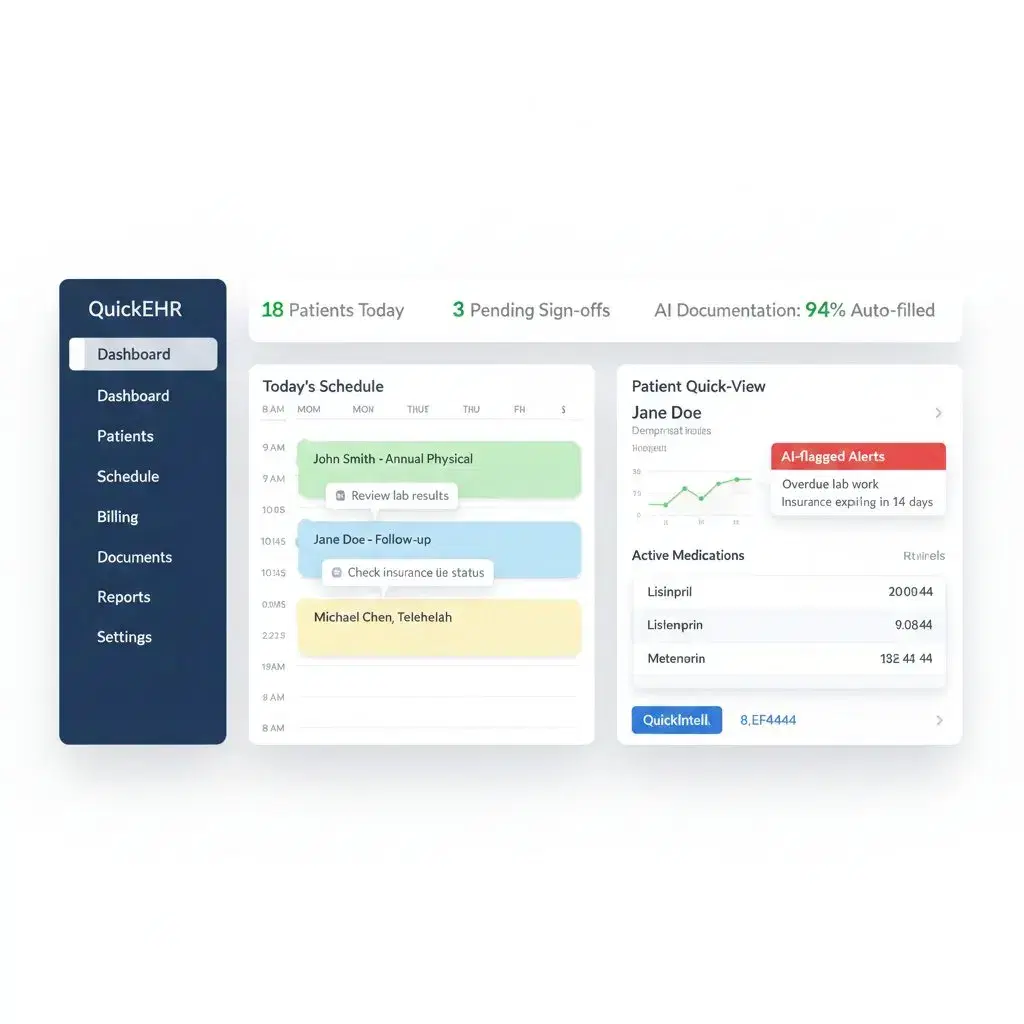
QuickEHR dashboard used to plan telehealth patient guide workflows with OpenEMR-powered chart context

Prepare

Reminders, intake, forms

Connect

Portal, link, fallback

Follow up

Notes, RCM, messages

Guide workflow

Build patient telemedicine instructions around the real visit path.

Patients and staff need practical answers around telehealth patient instructions, patient telemedicine instructions, setup, FAQs, and patient resources. The guide should answer those questions while connecting the operational work to QuickEHR.

Before the visit

Send the right instructions before the appointment starts

A useful telehealth patient guide starts before the visit. QuickEHR can connect appointment type, reminder cadence, portal prompts, intake forms, consent packets, and missing information to the OpenEMR-powered chart context.

  • Prepare patient telemedicine instructions for device choice, login path, appointment time, privacy, and what to keep nearby.
  • Route missing demographics, consent forms, insurance questions, or visit-reason details to staff queues before the call.
  • Use patient portal, appointment reminder, and patient messaging workflows instead of one-off manual outreach.

Joining the visit

Make the first five minutes predictable for patients and staff

Patients need a simple path for how to use telehealth: where to start, when to join, what to test, and what to do if audio, camera, or connection issues appear.

  • Include a plain-language checklist for device charging, camera and microphone access, browser or app choice, and a quiet private space.
  • Give staff a clear fallback path for late arrivals, link problems, phone-only escalation, and rescheduling rules.
  • Tie every exception back to the appointment, patient, location, provider, and encounter owner.

During care

Keep the virtual visit connected to the clinical record

A telemedicine patient guide should help patients prepare symptoms, medications, questions, readings, photos, and follow-up needs without separating those details from the clinician workflow.

  • Bring patient-submitted context into QuickEHR clinical documentation, templates, messages, and follow-up tasks when configured.
  • Use QuickScribe to prepare review-ready note drafts from visit context while clinicians retain review responsibility.
  • Keep low-confidence AI classifications and patient-facing responses routed for human review.

After the visit

Turn the guide into follow-up, billing, and outreach tasks

Telehealth patient education materials should explain what happens after the visit and should give staff a workflow for instructions, portal messages, coding evidence, authorization needs, claims, and balance questions.

  • Connect after-visit instructions, portal replies, callbacks, and patient questions to the responsible care team.
  • Use QuickCode, QuickAuth, QuickRCM, and QuickERA workflows when the virtual encounter affects coding, authorization, claims, denials, payments, or ERA review.
  • Review the final patient-facing language before launch and whenever the virtual visit workflow changes.

Patient guide sections

Turn a general telemedicine patient guide into a QuickEHR operating checklist.

Helpful patient tutorial documents rank because they are practical. For QuickEHR, the resource should go one step further: every instruction should map to a reminder, portal prompt, intake task, documentation step, follow-up owner, or revenue-cycle handoff.

Start with the patient-facing guide, then map each step to QuickEHR patient engagement and OpenEMR integration scope.

Technology and access

Tell patients which device, browser, app, link, portal, and phone fallback path your practice supports.

  • Computer, tablet, or smartphone requirements
  • Camera, microphone, speaker, charger, and internet checks
  • Portal login, appointment link, and support contact rules

Appointment readiness

Use telehealth patient instructions to reduce avoidable delays and repeated staff calls.

  • Join window, quiet space, lighting, privacy, and caregiver participation
  • Medication list, allergies, symptoms, readings, questions, and photos
  • ID, insurance, consent, intake forms, and visit-reason updates

During the virtual visit

Give patients a short telehealth tutorial for patients that explains how the visit will feel operationally.

  • Camera position, speaking clearly, and staying available
  • What to do if the clinician asks for a visual check or self-report
  • How staff will contact the patient if the video connection fails

After-visit next steps

Clarify where patients should find instructions, portal messages, follow-up tasks, referrals, results, and billing questions.

  • Where after-visit instructions and portal replies appear
  • How follow-up appointments, prescriptions, referrals, or lab work are handled
  • Where to ask statement, payment, coverage, or claim status questions

OpenEMR and QuickEHR fit

OpenEMR telehealth workflows need patient instructions and staff routing.

QuickEHR is built on the OpenEMR foundation. The practical work is mapping each patient instruction to the enabled chart, schedule, portal, message, document, billing, and AI review path available for that deployment.

QuickEHR is built on the OpenEMR foundation

The guide can be scoped around the managed QuickEHR experience, including chart, scheduling, portal, forms, messaging, and billing context.

Existing OpenEMR environments can be mapped

Practices already using OpenEMR can evaluate approved OpenEMR API, FHIR, HL7, or interface-engine paths before enabling telehealth patient workflow automation.

AI stays inside defined review boundaries

QuickIntell automation can draft, classify, summarize, route, and prepare work, while patient-facing approvals and clinical decisions stay with the practice.

Implementation and trust

Publish the patient guide only after the workflow is tested.

A telehealth patient portal guide affects scheduling, clinical care, patient support, documentation, billing, and access. QuickIntell implementation should define the enabled paths, review rules, patient-facing language, and support ownership before production use.

Review current security, privacy, and procurement materials in the QuickIntell Trust Center with the implementation packet for the specific deployment.

Best-fit use cases

Ambulatory practices, specialty clinics, and multi-location groups that want QuickEHR telehealth patient guides tied to OpenEMR-powered EHR context, QuickIntell AI automation, and staff review queues.

Launch checklist

  • Confirm the telehealth platform, patient portal, reminder channels, message templates, phone fallback, and support ownership.
  • Decide which patient guide sections are patient-facing, staff-facing, or internal-only.
  • Map QuickEHR, OpenEMR, portal, scheduling, telephony, clearinghouse, payer, payment, and document data paths before launch.
  • Define AI review rules for drafting, classification, summarization, routing, documentation support, coding evidence, authorization packets, and revenue-cycle exceptions.
  • Review patient-facing language, access controls, audit expectations, escalation paths, and current Trust Center materials for the specific deployment.
  • Test the complete patient journey with a real appointment type before expanding the guide across providers, locations, or specialties.

No unsupported certification claims

This resource describes workflow planning. Any certification, regulatory, payer, procurement, or contractual evidence should be confirmed in the current implementation packet.

Patient language needs approval

Instructions, reminders, fallback messages, portal prompts, and billing language should be approved by the practice before they are sent to patients.

Integration scope varies

Available read, write, sync, portal, phone, video, payment, and reporting paths depend on the deployed EHR environment and approved implementation scope.

Human review remains explicit

QuickIntell AI can prepare work for review, but clinical judgment, patient-facing approvals, billing review, and support ownership stay with the practice.

Specialty workflows

Patient telemedicine instructions vary by specialty. Map forms, visit preparation, caregiver participation, remote checks, documentation, and follow-up ownership before reusing one guide across every clinic.

FAQs

QuickEHR telehealth patient guide FAQs

Answers for teams creating telehealth patient instructions, patient telemedicine instructions, telehealth patient portal guides, OpenEMR telehealth workflows, and AI EHR telehealth patient guide content.

What should a QuickEHR telehealth patient guide include?+

A QuickEHR telehealth patient guide should include device requirements, portal or appointment link steps, join timing, privacy guidance, consent and intake reminders, clinical preparation, troubleshooting, after-visit instructions, billing questions, and staff escalation paths tied to QuickEHR workflow ownership.

Is this a telehealth tutorial for patients or a staff resource?+

It is both. The patient-facing sections explain how to prepare for and join a virtual visit. The staff-facing sections help practices map those patient instructions into QuickEHR, OpenEMR, portal, messaging, documentation, authorization, RCM, and ERA workflows.

How does QuickEHR use OpenEMR for telehealth patient workflows?+

QuickEHR is built on the OpenEMR foundation. Telehealth patient guide workflows can be planned around OpenEMR-powered chart, appointment, portal, forms, message, encounter, and billing context. Existing OpenEMR tenants can evaluate approved API, FHIR, HL7, or interface-engine paths during implementation.

Can QuickEHR replace every telehealth video platform?+

This page does not claim QuickEHR replaces every video platform. QuickEHR can support telehealth preparation, portal prompts, patient instructions, documentation context, follow-up tasks, and billing handoff when configured. Video, phone, device, and third-party telehealth scope should be confirmed during implementation.

How does AI help with telehealth patient instructions?+

QuickIntell AI can help draft, classify, summarize, route, and prepare work around telehealth patient instructions. Examples include reminder exceptions, portal message summaries, documentation drafts, coding evidence, authorization packets, RCM tasks, and ERA exceptions for staff or clinician review.

Can one guide support multiple specialties and locations?+

Yes, but each location and specialty should review the telehealth patient guide for appointment types, intake forms, caregiver participation, remote checks, documentation needs, billing handoffs, support ownership, and escalation rules before reusing it.

What should patients prepare before a virtual visit?+

Patients should be told to prepare a supported device, internet connection, camera, microphone, charger, quiet private space, medication list, allergies, symptoms, questions, readings, photos if requested, ID, insurance information, and any forms or consent items required by the practice.

How should a practice handle telehealth troubleshooting?+

The guide should define what patients do if the link, portal login, camera, microphone, audio, or connection fails. It should also define staff fallback rules for phone outreach, rescheduling, late arrivals, support ownership, and documentation of the exception.

Can telehealth patient education materials connect to billing?+

Yes, when configured. After-visit instructions, patient questions, claim status, balance questions, payment details, denials, ERA, and EOB context can be routed into QuickRCM and QuickERA workflows so revenue teams can work from the same encounter trail.

What should be reviewed before publishing patient-facing guide content?+

Practices should review patient-facing language, access controls, channel rules, opt-out handling, escalation paths, AI review boundaries, integration scope, support responsibilities, payer workflow impact, and current Trust Center materials before using the guide in production.
QuickEHR virtual visit readiness

Make every telehealth patient guide part of the workflow, not a disconnected document.

See how QuickEHR, OpenEMR integration, QuickScribe, QuickCode, QuickAuth, QuickRCM, QuickERA, and QuickIntell AI can connect patient instructions to operational follow-through.