FAQs
Remote patient monitoring software questions
Short answers for teams evaluating QuickEHR remote patient monitoring, OpenEMR remote patient monitoring, RPM software, remote therapeutic monitoring adjacency, and downstream QuickIntell automation.
What is QuickEHR remote patient monitoring software?
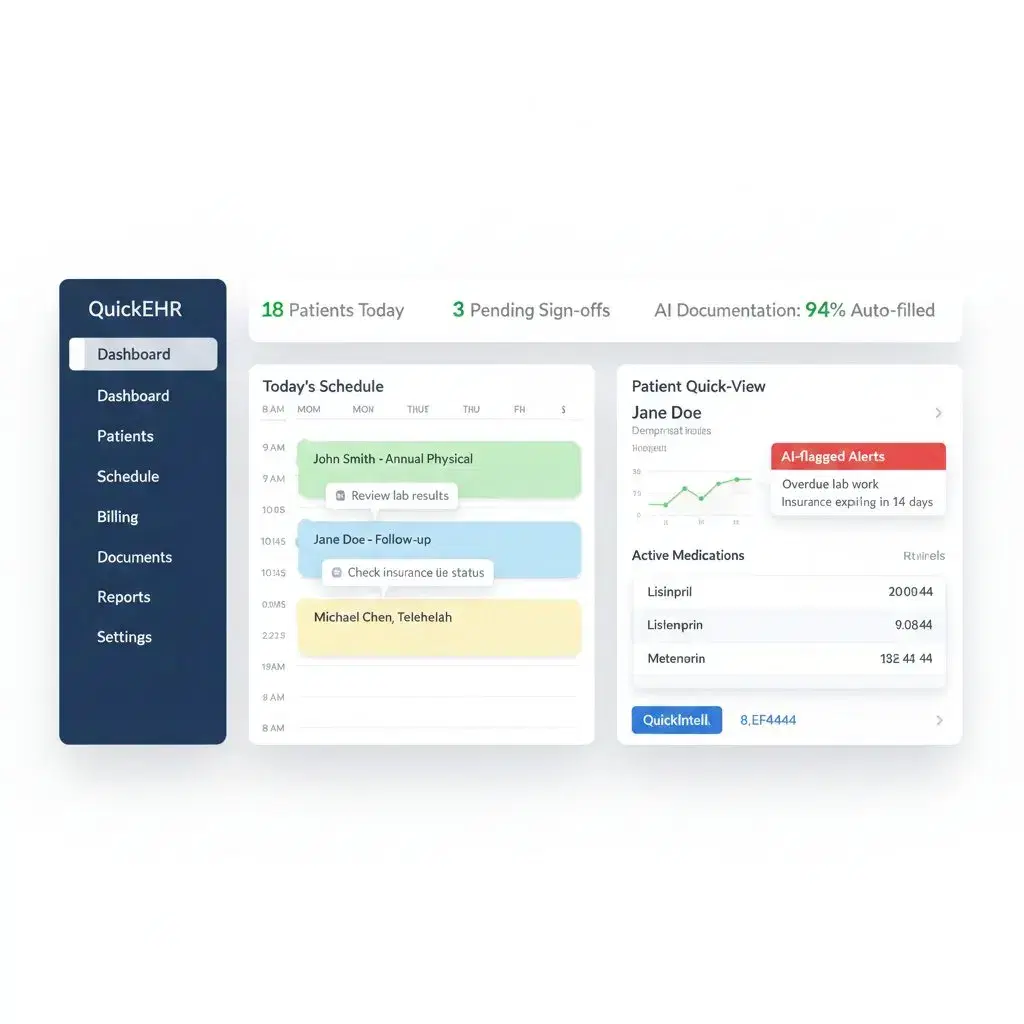
QuickEHR remote patient monitoring software is the EHR workflow layer for RPM programs. It keeps approved device or RPM-platform data, OpenEMR-powered chart context, alerts, follow-up tasks, documentation, coding review, prior authorization, claims, and remittance handoff in one QuickIntell operating model.
Does QuickEHR provide remote patient monitoring devices?
This page does not claim QuickEHR is a device vendor or device-fulfillment service. QuickEHR can support RPM workflows around approved device feeds, RPM platforms, APIs, FHIR, HL7, or implementation-specific data paths when those routes are available and validated.
How does OpenEMR remote patient monitoring fit with QuickEHR?
QuickEHR is built on the OpenEMR foundation. OpenEMR can provide the patient chart, schedule, documentation, orders, messages, and billing context while QuickIntell adds managed workflow design, integrations, AI assistance, and review queues around RPM work.
How does AI support RPM software workflows?
AI is assistive and reviewable. QuickIntell can help summarize readings, classify exceptions, draft follow-up context, route tasks, prepare coding suggestions, assemble payer evidence, and surface claim or remittance issues. Clinical, coding, authorization, and billing teams keep their review responsibilities.
Can QuickEHR help with remote patient monitoring billing?
QuickEHR can organize documentation, time, communication, coverage, coding, claim, denial, and ERA context for staff review. Billing rules and payer requirements vary, so QuickIntell does not promise reimbursement or replace customer-specific billing policy review.
Is remote therapeutic monitoring the same as RPM?
No. Remote therapeutic monitoring and remote patient monitoring are related virtual-care workflows, but they can involve different data, program rules, documentation expectations, and billing review. QuickEHR implementations should map RTM and RPM as distinct workflows.
Which specialties commonly evaluate RPM software?
Primary care, internal medicine, family medicine, cardiology, endocrinology, pulmonology, nephrology, and geriatrics commonly evaluate RPM workflows for chronic-condition follow-up, home readings, medication questions, care gaps, and patient outreach.
Can QuickEHR remote patient monitoring work with another EHR?
Practices keeping another EHR can evaluate QuickEHR Connect as a workflow layer. Available read, write, and synchronization paths depend on the EHR, RPM platform, deployment environment, approved interfaces, and implementation scope.
Does this page add new certification or compliance claims?
No. This page describes QuickEHR remote patient monitoring workflows and implementation planning. QuickEHR is built on the OpenEMR foundation, and any certification, regulatory, payer, trust, or procurement evidence should be confirmed in the current implementation packet.