FAQs
Addiction medicine EHR software questions
Short answers for practices comparing QuickEHR addiction medicine, substance abuse EHR software, OpenEMR EHR software, AI EHR software, and addiction medicine billing software.
What is addiction medicine EHR software?
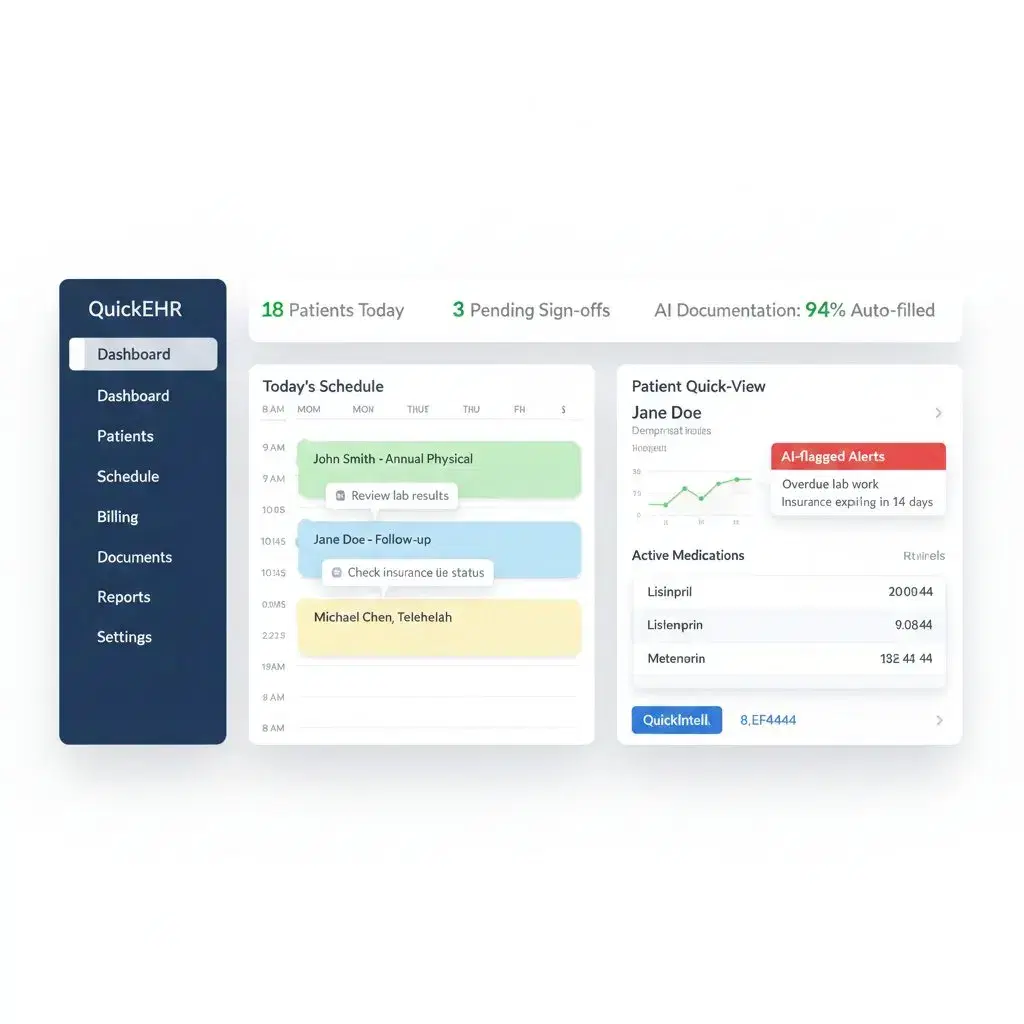
Addiction medicine EHR software helps SUD, MAT, counseling, recovery, and addiction treatment teams manage patient intake, documentation, treatment-plan context, coding, billing, claims, denials, payment posting, and follow-up workflows. QuickEHR brings those workflows into an OpenEMR-powered QuickIntell operating model.
How does QuickEHR support substance abuse EHR software workflows?
QuickEHR can support substance abuse EHR software workflows such as intake, consent routing, SUD history, counseling notes, MAT documentation context, treatment-plan updates, lab follow-up, authorization evidence, billing review, and RCM worklists when those workflows are configured for the deployment.
Is QuickEHR built on OpenEMR for addiction medicine practices?
QuickEHR is built on the OpenEMR foundation. Practices can evaluate QuickEHR-managed OpenEMR workflows or an existing OpenEMR addiction medicine tenant when approved FHIR, OpenEMR API, HL7, EDI, clearinghouse, remittance, batch, file, or interface-engine paths are available.
Can QuickEHR support MAT clinic EHR software needs?
QuickEHR can be scoped around MAT clinic EHR software and methadone clinic EHR software needs such as medication history documentation, counseling context, lab follow-up, treatment-plan updates, authorization requirements, billing review, and care-team handoff. Deployment-specific medication, prescribing, dispensing, and regulatory requirements should be verified before go-live.
Does QuickEHR include addiction medicine billing software?
QuickEHR can support addiction medicine billing software workflows by keeping encounter, coverage, authorization, coding, charge, claim, denial, ERA, payment posting, and AR context connected to the chart and practice management worklists.
How does AI EHR software fit addiction medicine workflows?
QuickIntell frames AI as assistive automation. QuickScribe can draft documentation for review, QuickCode can prepare coding cues, QuickAuth can organize payer evidence, QuickRCM can route denials and AR, and QuickERA can connect remittance context. Review gates remain part of the implementation design.
How is this different from generic behavioral health EHR software?
Behavioral health EHR software often covers broad therapy and mental health workflows. This page focuses on addiction medicine EHR workflows: SUD intake, MAT context, counseling and group services, treatment-plan updates, lab or referral follow-up, authorization evidence, and claim review tied to QuickEHR.
Can QuickEHR connect to another EHR or practice management system?
Yes. Practices can evaluate QuickEHR Connect around another EHR or practice management system when approved API, FHIR, HL7, EDI, batch, payer, clearinghouse, remittance, or interface-engine paths are available for the deployment.
Does this page make certification or compliance claims?
No. This page describes workflow planning and implementation scope. Review the current Trust Center, contract, and implementation packet for the security, compliance, regulatory, prescribing, certification, and procurement evidence required for a specific deployment.