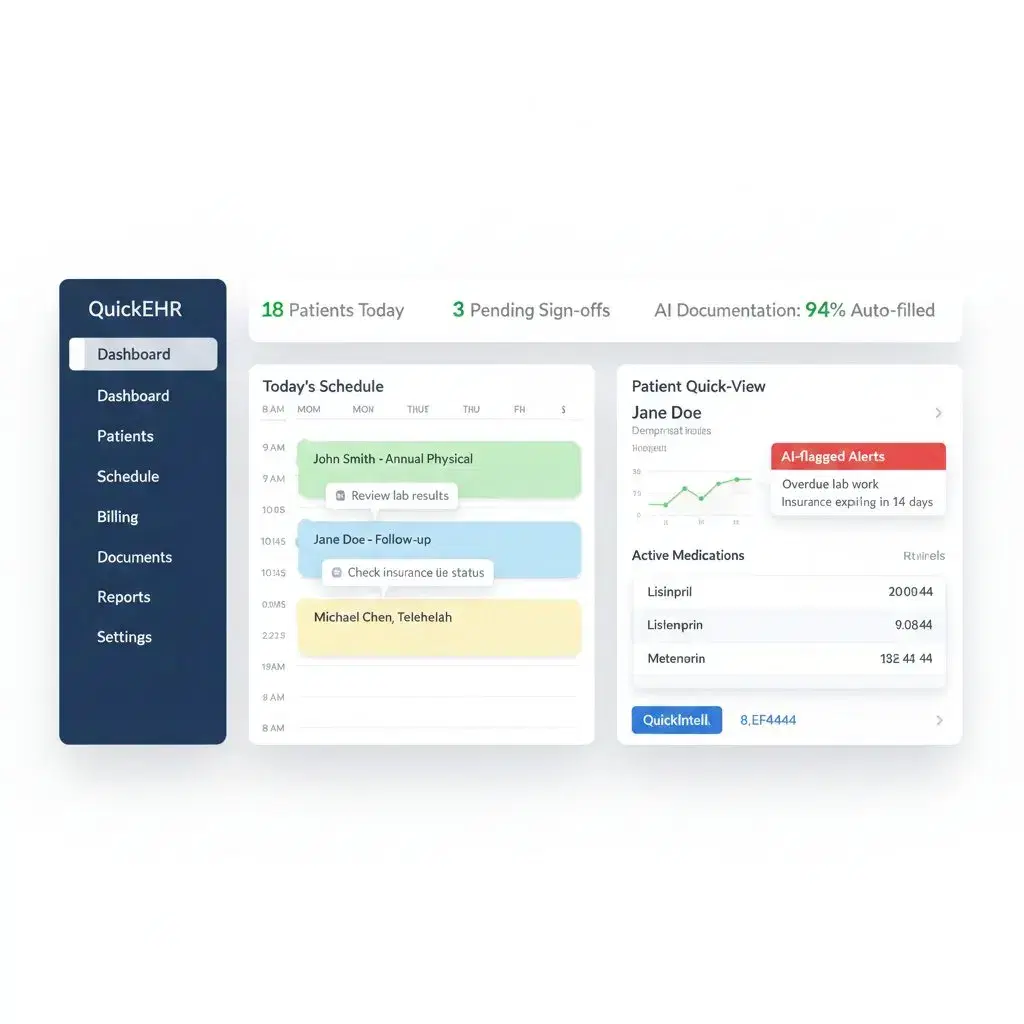
Appointment reminders software for QuickEHR workflows
QuickEHR appointment reminders software connects OpenEMR scheduling context, SMS appointment reminders, email and voice outreach, confirmations, reschedules, recall work, and QuickIntell AI routing so clinics can reduce preventable no-show work without losing staff review.
Schedule sync, reminders, replies, reschedules, and routing
Appointment context
Patient, provider, visit type
Outreach channels
SMS, email, and voice
Follow-through
Reschedule, recall, RCM
Reminder workflow
Automated appointment reminders should stay connected to the schedule.
The reminder SERP is full of standalone SMS and reminder apps. QuickEHR is different because appointment outreach can stay connected to the OpenEMR-powered chart, patient access, intake, eligibility, authorization, billing, and follow-up workflow.
Schedule sync
Start from the QuickEHR appointment, not a separate reminder list
QuickEHR appointment reminders software uses scheduled visit context so reminder work can stay tied to the patient, provider, location, visit type, and preparation needs.
Use OpenEMR-powered scheduling context when QuickEHR is the managed EHR.
Evaluate approved OpenEMR API, FHIR, HL7, or interface-engine paths for existing OpenEMR tenants.
Keep confirmations, cancellations, reschedules, and no-show follow-up connected to the operational record.
Patient outreach
Send SMS, email, and voice reminders with clinic rules
Reminder workflows should reflect how the clinic actually operates: which visits need preparation instructions, which patients need a call, and which replies need staff review.
Plan SMS appointment reminders, text message appointment reminders, email reminders, and voice reminder calls by visit type.
Define reminder cadence, preparation instructions, language, reply routing, quiet hours, and opt-out handling before launch.
Route low-confidence replies, cancellations, clinical questions, and sensitive requests back to staff.
Downstream work
Turn reminder outcomes into work the team can act on
A reminder is only useful if the result helps the clinic. QuickEHR can feed confirmations, failed contacts, cancellation requests, reschedules, recall needs, and coverage issues into reviewable queues.
Use reminder outcomes to update scheduling, intake, eligibility, authorization, and patient follow-up queues when configured.
Trigger QuickRCM and QuickERA follow-through when patient outreach reveals coverage, balance, or billing questions.
Preserve staff review points instead of letting automation finalize clinical or financial decisions on its own.
Reminder channels
Cover SMS, email, and voice without fragmenting patient work.
Medical appointment reminders are operational workflows, not just message templates. QuickEHR helps teams plan reminder channels around appointment type, patient context, visit preparation, cancellation handling, and downstream work.
That matters for buyers comparing patient appointment reminder software, appointment reminders by text, appointment reminder systems, and medical appointment reminder software that must work inside an EHR operating model.
Use SMS appointment reminders and text message appointment reminders for confirmations, visit prep, cancellation links, reschedule prompts, and follow-up instructions when the clinic enables those workflows.
Email appointment reminders
Send longer preparation details, portal prompts, forms reminders, or logistical instructions through email where email is the right patient-facing channel.
Voice reminder calls
Use voice reminders or QuickVoice-assisted calls for patients who need phone outreach, callbacks, rescheduling help, recall follow-up, or staff escalation.
Confirmations and cancellations
Capture yes, no, cancel, and reschedule intent in a structured way so the schedule, waitlist, and front-desk worklist stay current.
Recalls and follow-up
Organize follow-up reminders, recall lists, missed-visit recovery, stale appointments, and care-team outreach around the patient record.
Preparation instructions
Attach visit-specific preparation reminders for forms, fasting, imaging, referral paperwork, insurance updates, telehealth setup, or arrival instructions.
AI appointment reminder automation
AI can route reminder work while teams keep control.
For practices comparing AI EHR appointment reminders, QuickEHR uses QuickIntell modules to help classify replies, prepare tasks, summarize exceptions, and connect reminder outcomes to documentation, coding, authorization, RCM, ERA, and voice workflows.
OpenEMR appointment reminders need implementation-specific sync paths.
QuickEHR can run as a managed OpenEMR-powered EHR or as a workflow layer around an existing system. Reminder design should follow the approved integration path, patient communication rules, and staff ownership model for the clinic.
QuickEHR is built on the OpenEMR foundation and adds managed implementation, configuration, patient outreach design, and QuickIntell automation around reminders.
Existing OpenEMR appointment reminders
Practices already using OpenEMR can evaluate approved OpenEMR API, FHIR, HL7, or interface-engine paths to connect schedule context and reminder outcomes.
QuickEHR Connect for other systems
Clinics keeping another EHR or practice management system can use QuickEHR as a workflow layer around appointments, patient outreach, claims, and remittance context.
No-show control
Reduce patient no-shows by acting earlier on the signal.
Reminder software cannot solve every missed visit, but it can help practices find preventable gaps earlier. QuickEHR keeps reminder responses close to scheduling, intake, eligibility, authorization, and follow-up workflows so the team can act.
For teams searching how to reduce patient no shows, the practical goal is earlier confirmation, earlier cancellation capture, and cleaner reschedule routing rather than a fixed outcome claim.
Use automated appointment reminders, confirmations, and preparation prompts to surface cancellations, transportation issues, missing forms, and telehealth setup gaps earlier.
Route exceptions to the right team
Cancellation, reschedule, clinical, billing, coverage, language, and low-confidence responses should land in clear queues with ownership.
Keep waitlists and recalls actionable
When a patient cancels, the workflow can support waitlist fill, recall outreach, and follow-up scheduling rules instead of leaving the opening unmanaged.
Measure operational signals
Track reminder sent, delivered, confirmed, canceled, rescheduled, failed contact, recall complete, and staff-reviewed outcomes without promising a fixed no-show percentage.
Connected QuickIntell products
Reminder outcomes should move into the next workflow.
A confirmed appointment, cancellation, failed contact, coverage update, or patient question can affect documentation, coding, prior authorization, RCM, ERA, and voice outreach. These links keep buyers moving through the connected QuickIntell workflow.
Primary care, urgent care, pediatrics, behavioral health, physical therapy, OB-GYN, cardiology, and orthopedics all need different preparation instructions, recall timing, and escalation paths.
Appointment reminders touch patients directly, so practices should define language, cadence, channel rules, ownership, escalation, audit expectations, and integration paths before production use.
Security and procurement teams can review current materials through the Trust Center. Any implementation-specific evidence should be verified in the current contract and deployment packet.
Reminder implementation checklist
Scope these items before production use.
Choose QuickEHR-managed OpenEMR, an existing OpenEMR tenant, or QuickEHR Connect for another EHR or practice management system.
Map appointment types, providers, locations, reminder timing, patient segments, preparation instructions, cancellation paths, recall rules, and waitlist handling.
Define SMS, email, and voice reminder language, reply handling, quiet hours, opt-out behavior, escalation criteria, and support ownership.
Confirm enabled OpenEMR API, FHIR, HL7, interface-engine, portal, communication, eligibility, clearinghouse, and payer workflow paths for the deployment.
Decide where AI may draft, classify, summarize, route, or queue reminder work before staff or clinician review.
Review patient-facing language, access controls, audit expectations, data handling, procurement evidence, and current trust materials before production use.
QuickEHR navigation
Related QuickEHR pages for patient engagement buyers.
Appointment reminder buyers usually need scheduling, self-scheduling, portal, eligibility, and OpenEMR architecture context before selecting a patient engagement workflow.
Answers for practices comparing appointment reminders software, patient appointment reminders, medical appointment reminders, SMS reminders, voice reminders, OpenEMR appointment reminders, and AI EHR appointment reminders.
What is QuickEHR appointment reminders software?
QuickEHR appointment reminders software helps practices connect scheduled visits to SMS, email, and voice reminder workflows. It is designed around QuickEHR and OpenEMR-powered appointment context, with reminder outcomes routed into scheduling, intake, eligibility, authorization, RCM, and patient follow-up queues when configured.
How is medical appointment reminder software different from a generic reminder app?
A generic reminder app sends a message. Medical appointment reminder software needs healthcare context: patient identity, appointment type, provider, location, preparation instructions, cancellation and reschedule rules, staff escalation, coverage updates, and downstream revenue workflow handoff.
Can QuickEHR support SMS appointment reminders?
Yes, SMS appointment reminders and text message appointment reminders can be part of the scoped QuickEHR workflow. The implementation should define message language, timing, reply handling, opt-out behavior, escalation rules, and staff ownership before reminders are enabled.
Can QuickEHR send email and voice appointment reminders?
QuickEHR reminder workflows can be planned around SMS, email, and voice channels. Email can support longer preparation details, while voice reminders or QuickVoice-assisted calls can help with callbacks, reschedules, recalls, and patient questions that need phone handling.
How do OpenEMR appointment reminders fit with QuickEHR?
QuickEHR is built on the OpenEMR foundation. For QuickEHR-managed OpenEMR, appointment reminders can be planned around the managed scheduling workflow. Existing OpenEMR tenants can evaluate approved OpenEMR API, FHIR, HL7, or interface-engine paths for schedule sync and reminder outcomes.
Can appointment reminders reduce patient no-shows?
Appointment reminders can reduce preventable no-shows by confirming visits, surfacing cancellations earlier, prompting preparation, and routing reschedule requests to staff. QuickEHR does not promise a fixed reduction percentage; the actual impact depends on baseline no-show rate, patient mix, cadence, channels, and operational follow-through.
How do AI EHR appointment reminders work in QuickEHR?
AI EHR appointment reminders in QuickEHR are assistive workflow automation. QuickIntell can help classify replies, summarize failed contact attempts, route cancellation and reschedule requests, draft staff tasks, and prepare downstream work for review. Staff and clinicians keep the review points defined during implementation.
Can reminders trigger eligibility checks or prior authorization work?
Yes, when configured. The appointment can provide patient, payer, provider, location, service-date, visit-type, order, diagnosis, or procedure context for eligibility review and QuickAuth prior authorization work before the visit.
How do reminders connect to QuickRCM and QuickERA?
Reminder responses often surface coverage, balance, cancellation, or billing questions. QuickEHR can route those signals into QuickRCM and QuickERA workflows so billing teams have appointment, claim, payment, and patient outreach context instead of reconstructing it later.
What should practices review before launching reminders?
Practices should review appointment types, reminder cadence, patient-facing language, SMS/email/voice channel rules, reply routing, opt-out handling, escalation paths, OpenEMR or EHR interfaces, support ownership, access controls, audit expectations, and current trust materials before production use.
Does this page make compliance or certification claims?
No. This page describes appointment reminder workflow planning for QuickEHR. QuickEHR is built on the OpenEMR foundation, and any certification, security, payer, HIPAA, SOC 2, procurement, or regulatory evidence should be verified in the current implementation packet and contract for the specific deployment.
QuickEHR appointment reminders
Connect reminders to the work that follows.
See how QuickEHR can connect appointment reminders, OpenEMR scheduling context, QuickIntell AI automation, patient engagement, and revenue workflows for your clinic.