MIPS scope and eligibility review
Identify the clinicians, TIN/NPI combinations, specialties, payer programs, participation assumptions, and review owners your team needs before MIPS work starts.
QuickEHR MIPS reporting services help practices turn MACRA MIPS professional services, MIPS consulting services, MIPS reporting software, and AI EHR MIPS services into one practical operating plan around the OpenEMR-powered chart.
The service focus is simple: understand what is in scope, map quality reporting evidence to the EHR workflow, use QuickIntell automation to prepare reviewable work, and define the registry, QPP, file, or partner handoff before closeout.
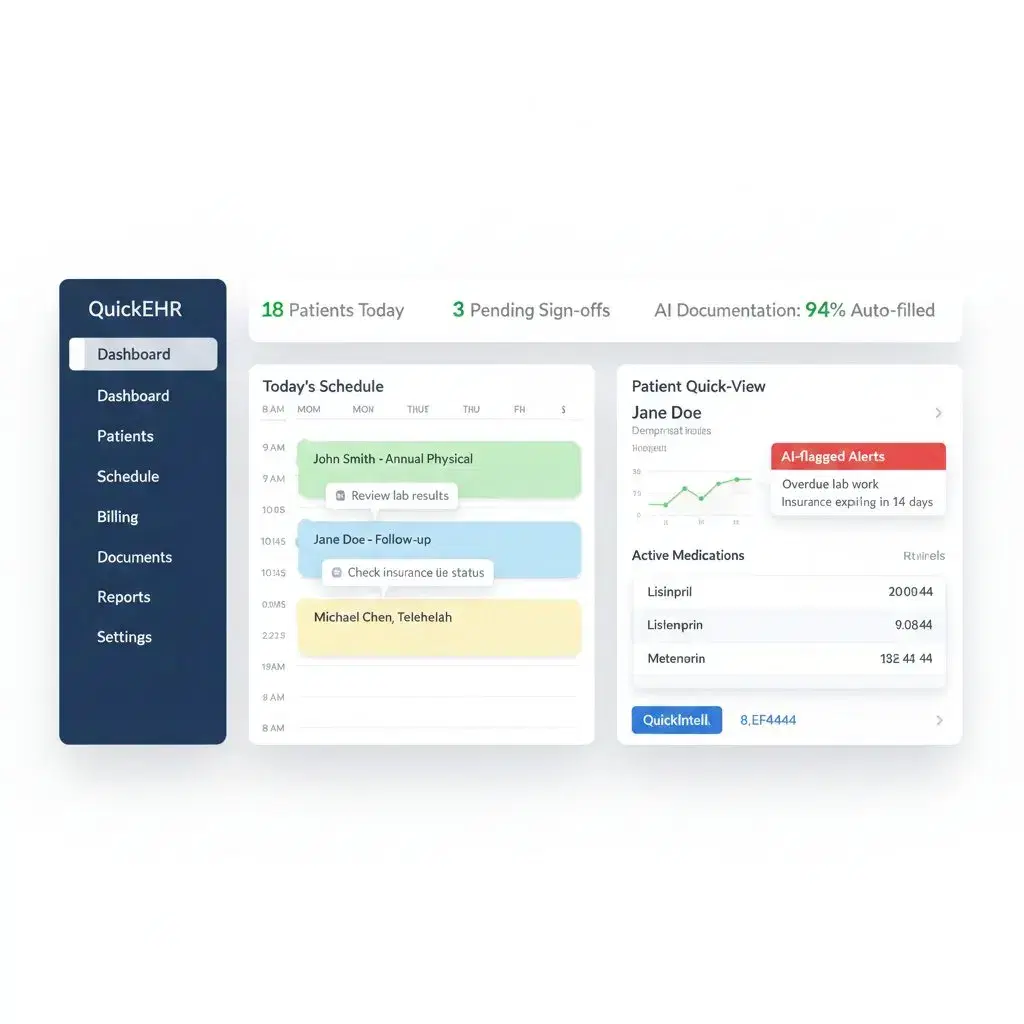
QuickEHR MIPS services workspace
Scope, measure mapping, evidence review, and handoff planning
Service scope
Providers and path
Data mapping
OpenEMR sources
Review packet
Evidence and handoff
MIPS services map
Searchers looking for MIPS reporting services usually need help with both the rules and the work. QuickEHR services connect the program questions to chart data, work queues, review owners, and handoff evidence.
Identify the clinicians, TIN/NPI combinations, specialties, payer programs, participation assumptions, and review owners your team needs before MIPS work starts.
Map MIPS quality reporting needs to specialty workflows, measure candidates, exclusions, denominator logic, documentation gaps, and review checkpoints.
Connect OpenEMR-powered QuickEHR chart fields, schedules, problems, orders, diagnoses, procedures, notes, and reports to the data sources a reporting workflow can use.
Use chart, documentation, coding, authorization, claim, denial, and remittance context to spot incomplete evidence before it becomes a reporting closeout issue.
Prepare the clinic's registry, QPP, file export, or partner submission handoff without claiming QuickEHR is the registry or final submission authority.
Keep owners, approvals, review dates, configuration notes, data assumptions, and supporting evidence organized for final review and audit readiness.
Services workflow
MIPS reporting companies often promise relief from complexity. QuickEHR keeps the work concrete: define the scope, configure the workflow, prepare data for review, and keep final accountability visible.
Assess
MIPS consulting services work best when the team agrees on the reporting path, specialties, owners, data availability, and operational limits before tools are configured.
Map
QuickEHR MIPS services connect reporting requirements to the work teams already perform in the OpenEMR-powered chart, schedule, documentation, coding, and billing workflow.
Operate
AI EHR MIPS services should reduce manual sorting, not replace clinical, coding, compliance, or submission review. QuickIntell modules prepare the evidence path around each encounter.
Closeout
The service engagement should make the final review path explicit: what data is ready, what assumptions were checked, who approved it, and where it goes next.
AI EHR MIPS services
QuickIntell modules can draft, suggest, route, and reconcile work around the chart. They should make MIPS quality reporting more reviewable, not turn regulatory decisions into a black box.
QuickScribe
Draft encounter notes for clinician review so MIPS quality reporting and coding teams are not chasing missing context after the visit.
QuickCode
Use reviewable ICD-10, CPT, HCPCS, modifier, and HCC suggestions to keep coding questions close to the documentation source.
QuickAuth
Assemble payer packet context from orders, diagnoses, coverage, notes, and clinical details while preserving staff review.
QuickRCM
Carry claim, denial, AR, and follow-up context back to the encounter so reporting, billing, and coding teams work from the same record.
QuickERA
Route ERA, EOB, adjustment, underpayment, and posting exceptions into work queues that preserve claim and encounter context.
OpenEMR and QuickEHR fit
QuickEHR is built on the OpenEMR foundation and adds QuickIntell workflow design around the EHR. That lets a services engagement separate OpenEMR foundation evidence, QuickEHR configuration, AI automation, and external reporting handoffs instead of blending them into one vague checklist.
QuickEHR is built on the OpenEMR foundation. OpenEMR MIPS services should be scoped against the configured version, enabled modules, data fields, reports, and interfaces.
QuickIntell adds implementation planning, configuration support, workflow design, data-flow review, and AI automation around the OpenEMR-powered EHR experience.
MIPS reporting services can use chart, coding, claims, denials, remittance, patient outreach, and quality-review context when those data paths are configured.
Practices keeping another EHR can evaluate approved FHIR, API, HL7, file, or interface-engine paths for service workflows around available data.
Services pricing
For teams comparing CMS MIPS reporting support, EHR MIPS reporting, MIPS compliance software, or managed consulting, the right price conversation starts with the work: providers, reporting path, data quality, integrations, AI modules, review cadence, and closeout responsibilities.
MIPS services pricing depends on the number of clinicians, groups, tax IDs, locations, specialties, and review owners in scope.
Scope changes when the practice uses Traditional MIPS, MIPS Value Pathways, a registry, QPP workflow, APM-related process, or a third-party reporting partner.
Historical data, template consistency, structured fields, reports, exports, FHIR, API, HL7, clearinghouse, and file paths all affect implementation effort.
AI EHR MIPS services may include QuickScribe, QuickCode, QuickAuth, QuickRCM, QuickERA, or selected workflow automation only.
A one-time readiness review, implementation project, recurring monthly review, and year-end closeout support have different staffing needs.
Access roles, audit trails, data retention, approval paths, evidence storage, and procurement review can add work that should be scoped up front.
For practices that need to understand the gap between current workflows and MIPS reporting requirements.
For teams configuring QuickEHR worklists, documentation patterns, quality review steps, and handoff paths.
For practices that want recurring review cycles around completeness, exceptions, evidence, and closeout readiness.
Implementation and trust
MIPS reporting requirements change by performance year, clinician, organization, reporting path, and participation status. QuickIntell can help configure the workflow, but the practice and its appointed advisors still own requirement review, submission decisions, and final evidence review.
Confirm current MIPS eligibility, reporting requirements, measure logic, and participation path before relying on any workflow.
Validate OpenEMR version, QuickEHR configuration, interfaces, reports, exports, and evidence packet for the deployment.
Keep clinical, coding, quality, compliance, and submission decisions under appointed human review.
Document data assumptions, unresolved issues, owner signoffs, and handoff responsibilities before closeout.
Review QuickIntell Trust Center materials, implementation scope, and contractual obligations for the specific engagement.
Avoid treating AI suggestions, dashboards, or exports as final regulatory evidence without review by the practice and its advisors.
QuickEHR MIPS services scope review
QuickIntell can help your team map MIPS reporting services to QuickEHR, OpenEMR data sources, AI automation, MIPS quality reporting worklists, pricing scope, and registry or partner handoffs.
MIPS services FAQs
These answers keep the scope explicit: QuickEHR can support services, software workflows, data mapping, and evidence handoffs, but final reporting obligations still need current review.
QuickEHR MIPS reporting services help practices plan and operate the work around MIPS quality reporting: eligibility and scope review, measure mapping, OpenEMR-powered data review, documentation and coding cleanup, AI workflow configuration, registry or QPP handoff planning, and closeout evidence organization. They do not guarantee a score or replace the practice's compliance review.
QuickIntell can scope MIPS consulting services around QuickEHR implementation, OpenEMR data mapping, quality measure workflow design, documentation review, coding handoff, reporting operations, and closeout support. The final engagement depends on the practice's reporting path, specialties, data quality, interfaces, and review owners.
No. The QuickEHR MIPS software page focuses on product workflow. This services page focuses on the support model around that workflow: assessment, configuration, data mapping, recurring review, pricing scope, and registry or partner handoffs.
This page does not claim that QuickEHR is a CMS qualified registry or direct submission entity. QuickEHR can help organize MIPS reporting data, evidence, exports, dashboards, and worklists. The practice's final registry, QPP, file, partner, or submission workflow should be confirmed during implementation.
QuickEHR is built on the OpenEMR foundation. OpenEMR MIPS services should be reviewed against the configured OpenEMR version, enabled modules, chart fields, reports, exports, interfaces, and deployment evidence. QuickIntell adds the managed workflow, AI automation, and implementation support around that foundation.
AI can prepare work for review by drafting documentation, surfacing coding questions, routing payer evidence, and organizing claim or remittance feedback. QuickScribe, QuickCode, QuickAuth, QuickRCM, and QuickERA can support AI EHR MIPS services, but clinical, coding, quality, compliance, and submission decisions still need human review.
MIPS services pricing depends on providers, TINs, locations, specialties, reporting path, registry or partner model, data quality, interface needs, AI module mix, service cadence, closeout support, and governance review. QuickIntell scopes these factors before quoting a services engagement.
No. MIPS participation depends on current QPP rules, clinician type, Medicare volume thresholds, organizational arrangements, APM participation, and other details. Practices should verify current eligibility and obligations before relying on any MIPS reporting services or software workflow.
QuickEHR MIPS services are a fit for practices that want OpenEMR-powered EHR workflows, AI-assisted documentation and coding support, and clearer operating worklists for quality reporting. Common evaluation points include primary care, family medicine, internal medicine, cardiology, dermatology, orthopedics, pediatrics, and multi-specialty groups.