Call
AI EHR population health workflows

Population health management software for QuickEHR

QuickEHR population health management software connects OpenEMR-powered chart context, care gaps, risk stratification, value-based care worklists, patient outreach, quality-program handoffs, coding review, prior authorization, RCM, and ERA follow-through in one QuickIntell operating model.

Cohorts, gaps, and risk queues
OpenEMR-powered patient context
AI assists, humans review

QuickEHR population health workspace

Panel view, gaps, risk, quality work, auth, coding, and RCM

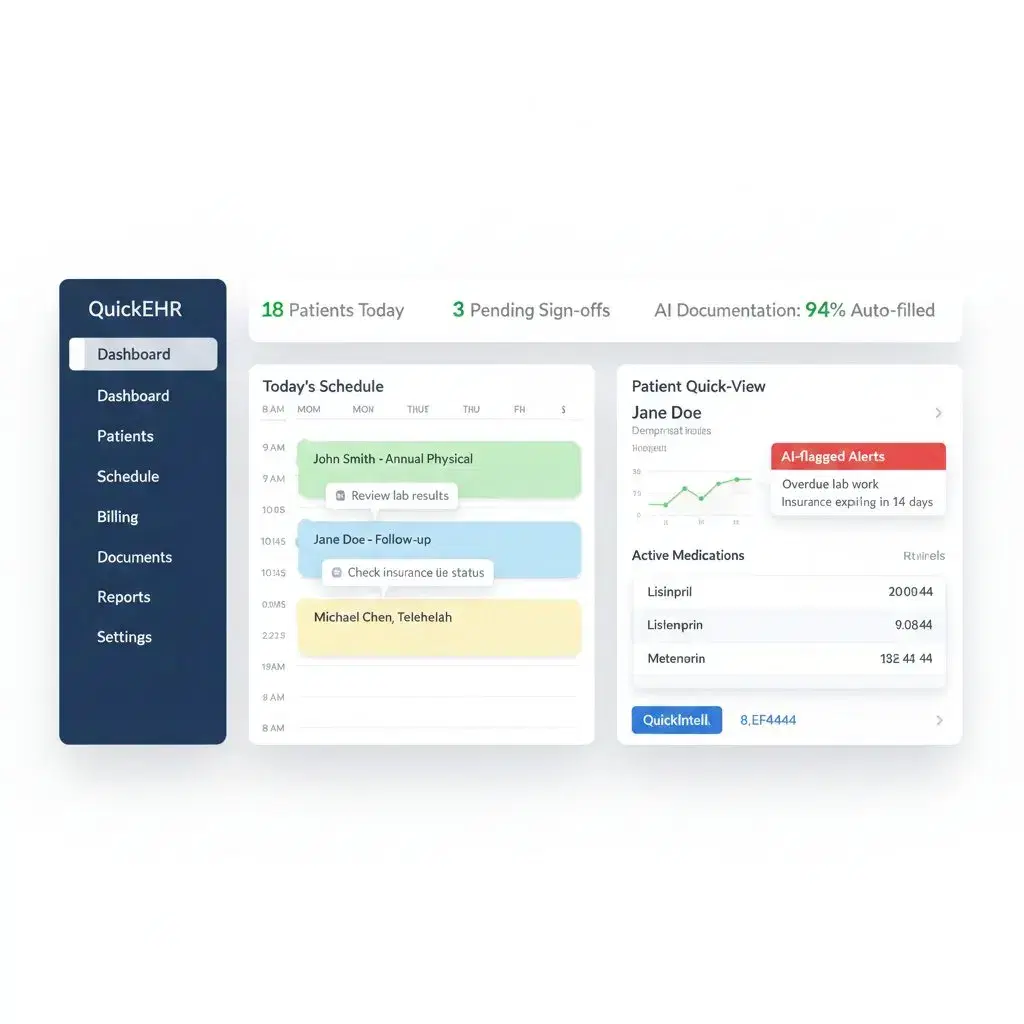
QuickEHR population health management software dashboard showing patient panel worklists and care gap queues

Cohort logic

Panel, payer, gap

AI workflow

Summarize, route, review

Handoff

Care, code, auth

Population health workflow

From EHR data to accountable panel work.

Searchers comparing population health management software expect more than a dashboard. QuickEHR ties cohort definitions, risk signals, care gaps, quality work, and downstream revenue handoffs back to the chart.

Panel intake

Define the cohort before the worklist is built

Population health software should start with a clear panel definition. QuickEHR helps teams frame cohorts by provider, location, payer, program, condition, preventive gap, quality measure, or configured contract view.

  • Use OpenEMR-powered patient, appointment, problem, medication, order, and encounter context as the clinical foundation.
  • Add available coverage, claim, remittance, and payer context when those feeds are approved for the implementation.
  • Keep cohort logic reviewable so operators know why a patient appears in a population health worklist.

Risk signal review

Prioritize patients by risk, gaps, and next action

QuickEHR population health management software can organize care gaps, chronic-condition follow-up, risk adjustment opportunities, quality-program evidence, and outreach needs around the patient chart.

  • Surface high-priority patients for care coordination, documentation review, coding review, authorization planning, or outreach.
  • Represent risk adjustment and value-based care signals without separating them from the clinical record.
  • Show source context for staff review instead of turning AI suggestions into untraceable tasks.

Team routing

Move population work to the team that owns it

Population health management tools only work when the next step is accountable. QuickEHR maps outreach, clinical review, coding, prior authorization, RCM, and payment follow-up to the responsible queue.

  • Route care-gap outreach to care teams or patient engagement teams.
  • Route documentation and coding evidence to QuickScribe and QuickCode review workflows.
  • Route authorization, claim, denial, and ERA exceptions to QuickAuth, QuickRCM, and QuickERA teams.

Program tracking

Track the operating view for value-based care

Value-based care software needs a reliable operating layer for gap closure, review status, outreach, measure follow-through, and exception resolution. QuickEHR keeps those views close to chart and revenue context.

  • Review worklist status, owner, source evidence, last action, and next action.
  • Support quality reporting and program handoffs without claiming a one-size-fits-all registry workflow.
  • Export or hand off implementation-specific evidence when the customer workflow requires it.

Risk and care gaps

What QuickEHR keeps visible for population health teams.

The SERP for population health software is clear: buyers expect data integration, risk stratification, quality reporting, care coordination, and patient outreach. QuickEHR makes those operating signals reviewable and tied to source context.

Care-gap worklists

Track preventive care, chronic-condition follow-up, overdue orders, missing results, open outreach, and care-plan next steps as structured, reviewable work.

Risk stratification

Prioritize patients by configured risk factors, recapture needs, care gaps, utilization context, or contract-specific review queues when supporting data is available.

Quality program handoffs

Organize evidence and work status around MIPS, clinical quality measures, care coordination, and payer-specific programs without making unsupported reporting claims.

Risk adjustment support

Use chart evidence, coding context, and reviewed diagnosis signals to support HCC and RAF workflows through QuickIntell risk adjustment and QuickCode review paths.

Patient outreach

Connect reminders, portal messages, phone outreach, follow-up tasks, and exception routing to the same patient and cohort context.

Operational analytics

Give operators the population health analytics software view they need: panel status, work ownership, gap queues, documentation needs, authorization status, claim exceptions, and payment follow-up.

OpenEMR and QuickEHR fit

OpenEMR population health workflows with QuickIntell automation.

QuickEHR is built on the OpenEMR foundation, then configured around the clinic's cohort logic, care-management workflows, documentation patterns, integration paths, and revenue handoffs.

OpenEMR population health foundation

QuickEHR is built on the OpenEMR foundation, giving clinics a practical base for patient records, schedules, problems, medications, orders, documentation, and billing context.

QuickIntell automation around the chart

QuickIntell adds workflow mapping, AI assistance, product handoffs, integrations, and review queues around the OpenEMR-powered EHR experience.

QuickEHR Connect for mixed environments

Practices keeping another system of record can evaluate QuickEHR Connect as a workflow layer, with available read, write, and sync paths confirmed during implementation.

For the broader OpenEMR integration architecture, review the OpenEMR integration page. For procurement, data handling, security, and governance review, start with the Trust Center.

Connected QuickIntell products

Population health work should reach the next workflow.

Care gaps, quality evidence, risk adjustment, documentation, authorization, claims, denials, remittance, and outreach should not live in separate operational systems. These QuickIntell products share patient and encounter context when configured.

Related solutions and specialties

Population health varies by contract, setting, and panel.

QuickEHR population health workflows should be mapped to care team capacity, payer contracts, clinical programs, specialty patterns, documentation handoffs, and revenue requirements. Related solution pages include population risk, care coordination, MSOs and ACOs, and risk adjustment software.

Implementation and trust

Population health management needs data governance before automation.

Population health work touches clinical follow-up, quality programs, patient outreach, documentation, coding, payer evidence, claims, remittance, and operations reporting. QuickIntell scopes the data sources, review rules, and handoffs before AI automation is enabled.

Population health implementation checklist

  • Define the panel, payer program, quality measure, cohort logic, data sources, and worklist ownership before automation is enabled.
  • Confirm whether QuickEHR-managed OpenEMR, an existing OpenEMR tenant, or QuickEHR Connect around another EHR is the implementation path.
  • Map available OpenEMR API, FHIR, HL7, interface-engine, claims, coverage, remittance, registry, messaging, or file-exchange paths.
  • Decide which AI drafts, summaries, risk signals, coding suggestions, authorization packets, and routing decisions require human review.
  • Align escalation paths for urgent clinical findings, patient outreach, care coordination, coding, authorization, claim, denial, and payment exceptions.
  • Review data handling, access controls, audit expectations, procurement evidence, and implementation-specific documentation before production use.

FAQs

Population health management software questions

Short answers for teams evaluating QuickEHR population health, OpenEMR population health workflows, AI EHR automation, value-based care software, and downstream QuickIntell products.

What is population health management software in QuickEHR?

QuickEHR population health management software organizes panel-level care gaps, risk signals, quality-program work, outreach, documentation needs, coding review, prior authorization, RCM, and ERA context around the OpenEMR-powered chart.

How is population health management different from patient health management?

Population health management focuses on cohorts, panels, risk groups, quality measures, value-based care programs, and broad outreach. Patient health management focuses on the individual chart, encounter, task, and follow-up workflow.

Does QuickEHR support OpenEMR population health workflows?

QuickEHR is built on the OpenEMR foundation and can use OpenEMR-powered patient, encounter, schedule, problem, medication, order, documentation, and billing context. Population health workflows are configured around the clinic's available data and approved integration paths.

How does AI support population health management?

QuickIntell AI can help summarize chart context, draft documentation, prepare coding suggestions, organize authorization evidence, classify work, and route follow-up. The page is intentionally framed around reviewable AI, not autonomous clinical decisions.

Can QuickEHR support value based care software workflows?

QuickEHR can support value-based care workflows by organizing care gaps, risk adjustment signals, quality-program tasks, outreach status, and downstream revenue work. The exact contract, measure, registry, and reporting scope is confirmed during implementation.

Can population health work feed risk adjustment software?

Yes, when configured. Chart evidence, diagnoses, documentation needs, recapture candidates, and reviewed coding context can connect to QuickIntell risk adjustment and QuickCode workflows for human validation.

Can QuickEHR population health work with another EHR?

Practices keeping another system of record can evaluate QuickEHR Connect as a workflow layer. Available read, write, and synchronization paths depend on the source EHR, deployment environment, approved interfaces, and implementation scope.

Does this page make certification or compliance claims?

No. This page describes QuickEHR as built on the OpenEMR foundation and explains configurable QuickIntell workflows. Any certification, regulatory, procurement, or deployment-specific evidence should be reviewed in the current implementation packet.

See how QuickEHR turns population health into accountable work.

Bring your current panel definition, quality program, care-gap workflow, risk adjustment process, documentation handoff, and revenue-cycle constraints. QuickIntell will map the population health workflow before automation is enabled.