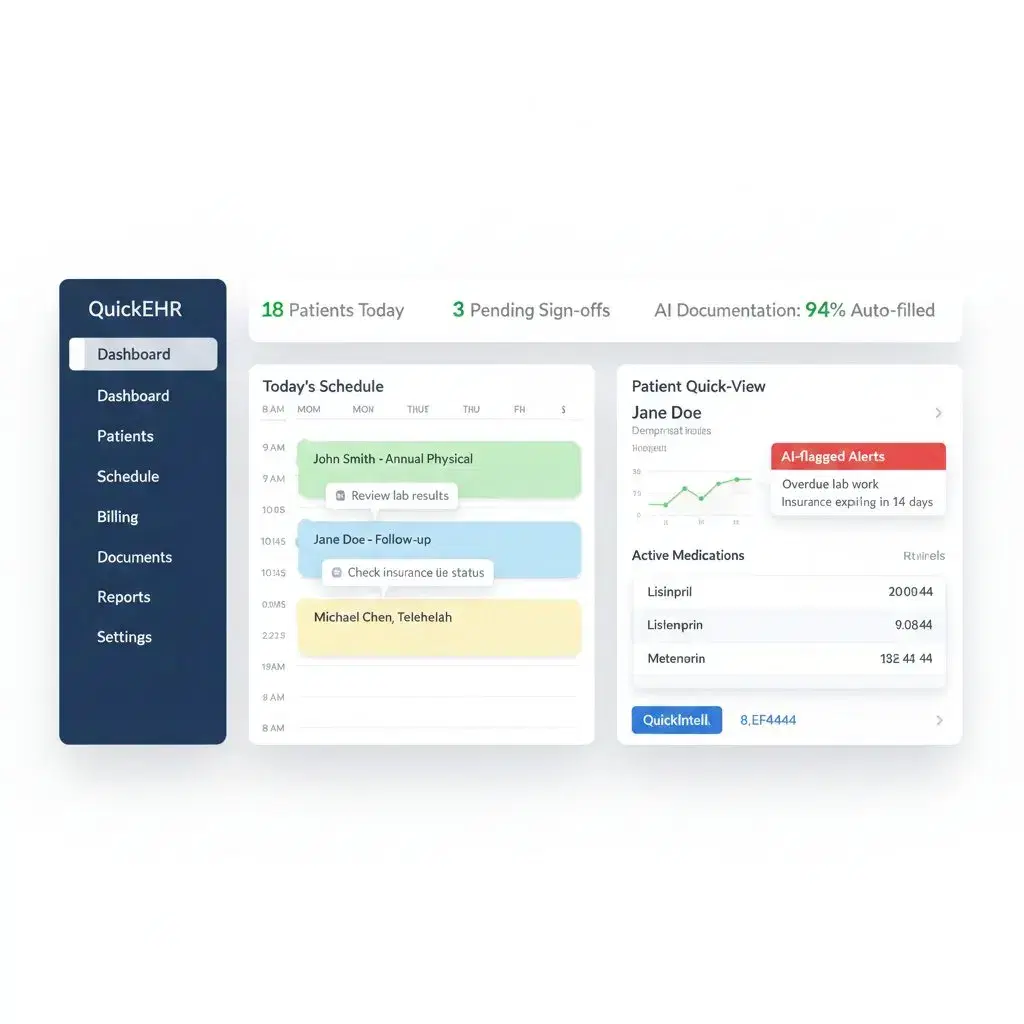
Consent forms software for QuickEHR and OpenEMR workflows
QuickEHR consent forms software helps clinics assign digital consent forms from appointment, portal, and intake context, collect patient signatures, route exceptions to staff, and store signed packets in OpenEMR document records when configured.
Packet assignment, signatures, document records, and review queues
Assign packet
Visit and portal context
Capture signature
Patient completion path
Store and route
Document record and queues
Consent workflow
A consent form should become a completed record, not another inbox attachment.
The consent forms software SERP is crowded with form builders and PDF templates. QuickEHR focuses on the healthcare workflow: packet assignment, patient completion, signed form storage, and staff review connected to the chart.
Packet assignment
Start consent work from the appointment, procedure, or portal task
QuickEHR consent forms software should know why a patient needs a form. The packet can be organized around appointment type, provider, location, specialty, language needs, and staff review rules.
Assign consent packets from QuickEHR scheduling, intake, patient portal, or staff worklist context.
Use OpenEMR-powered patient, encounter, provider, and document context when QuickEHR is the managed EHR.
Keep general, specialty, procedure, financial, and portal acknowledgments tied to the visit or patient record.
Patient completion
Give patients a digital path to review, complete, and sign
Digital consent forms work best when patients can complete the right packet before the visit while staff can still see what is missing, expired, incomplete, or needs manual review.
Collect signatures, acknowledgments, initials, required fields, attachments, and patient-submitted updates when configured.
Route incomplete forms, questions, declined signatures, and mismatched packets to staff instead of hiding exceptions.
Pair consent reminders with portal, SMS, email, or voice outreach workflows where the deployment supports those channels.
Signed form storage
Store signed consent packets where the clinic can find them
After completion, signed consent packets should not live in a disconnected form tool. QuickEHR can help route signed forms into OpenEMR document records and keep follow-up work visible to the team.
Store signed forms in OpenEMR document records for QuickEHR-managed OpenEMR workflows when configured.
Connect consent status to chart review, rooming, documentation, authorization, billing, and follow-up tasks.
Preserve clear review points for staff and clinicians before any patient-facing, clinical, or financial action is finalized.
Digital consent forms
Cover the real consent packets clinics manage every day.
Buyers comparing medical consent form software, patient consent forms software, informed consent software, or e consent software usually need more than a blank form builder. QuickEHR keeps consent status close to the patient chart, appointment, document record, and staff queue that owns the next step.
Collect routine treatment acknowledgments and keep status visible before check-in, rooming, and chart review.
Procedure-specific packets
Organize specialty and procedure consent packets around appointment type, provider rules, required attachments, and staff review.
Telehealth and portal acknowledgments
Pair portal access, communication preferences, telehealth acknowledgments, and patient-facing instructions with the same QuickEHR record.
Financial policy forms
Route assignment, policy acknowledgment, balance, and coverage-related forms toward front-desk and revenue workflow review.
Intake attachments
Capture supporting documents, IDs, referrals, outside records, or packet attachments without separating them from the patient chart.
Document follow-through
Track missing, unsigned, expired, superseded, or manually reviewed forms so teams can see consent status before care or billing handoff.
AI consent automation
AI can prepare consent work while teams keep the review points.
For practices researching AI EHR consent forms, QuickEHR uses QuickIntell modules to classify missing packets, summarize exceptions, route signatures, and connect consent status to documentation, coding, authorization, RCM, ERA, and voice workflows.
OpenEMR consent forms need a clear document record path.
QuickEHR is built on the OpenEMR foundation, so consent form design can include OpenEMR document records, appointments, patient charts, and staff queues. The exact storage and sync path depends on the approved implementation model.
QuickEHR is built on the OpenEMR foundation, so consent packets can be planned around OpenEMR patient, encounter, appointment, and document record context.
Existing OpenEMR tenants
Practices already using OpenEMR can evaluate approved OpenEMR API, FHIR, HL7, or interface-engine paths for document storage and status updates.
QuickEHR Connect for other EHRs
Clinics keeping another system of record can still use QuickEHR as a workflow layer around consent status, patient outreach, and downstream worklists.
Connected QuickIntell products
Consent status should move into the next workflow.
A signed packet, missing form, patient question, financial acknowledgment, or procedure consent can affect documentation, authorization, coding, billing, and patient outreach. These links keep the workflow connected.
Related QuickIntell products
QuickEHR consent form status can become clinical, authorization, coding, billing, remittance, or outreach work. These products keep that handoff visible.
Consent rules vary by specialty. Procedure packets, minors, behavioral-health policies, telehealth workflows, and financial acknowledgments should match the care model.
Define packet rules before patients start signing.
Digital consent forms touch patient access, clinical operations, document storage, billing, and support. QuickEHR implementation should define which forms exist, when they are assigned, who reviews exceptions, and where signed packets are stored.
Choose QuickEHR-managed OpenEMR, an existing OpenEMR tenant, or QuickEHR Connect for another EHR before designing consent storage.
Confirm how signed forms move into OpenEMR document records or another approved document destination for the deployment.
Define what AI may draft, classify, summarize, route, or queue before a staff or clinician review point.
Review patient-facing instructions, support ownership, escalation paths, access roles, and document-retention expectations before launch.
Validate portal, reminder, scheduling, documentation, authorization, RCM, and ERA handoffs with representative consent scenarios.
Before visit
Assign packets from schedule, portal, intake, or staff worklist context.
During review
Route missing, unsigned, declined, or mismatched forms to the right team.
After signature
Store signed packets and connect the next clinical or revenue workflow.
FAQs
QuickEHR consent forms software questions
Practical answers for teams evaluating digital consent forms, OpenEMR consent forms, signed form storage, and AI-assisted routing inside QuickEHR.
What is QuickEHR consent forms software?
QuickEHR consent forms software helps practices assign, collect, review, and store digital consent forms around QuickEHR and OpenEMR workflows. It is designed for patient consent packets, signed form storage, staff review queues, and downstream connections to documentation, authorization, RCM, ERA, and patient outreach.
How do OpenEMR consent forms fit with QuickEHR?
QuickEHR is built on the OpenEMR foundation. In a QuickEHR-managed OpenEMR environment, consent packets can be planned around OpenEMR patient, appointment, encounter, and document record context. Existing OpenEMR tenants can evaluate approved API, FHIR, HL7, or interface-engine paths for document storage and status updates.
Can patients complete and sign digital consent forms before a visit?
Yes, when the workflow is configured. Patients can be routed to the right packet through portal, intake, reminder, or staff-driven workflows, while incomplete forms, declined signatures, questions, and mismatches are routed back to the team for review.
Where are signed consent forms stored?
For QuickEHR-managed OpenEMR workflows, signed consent forms can be stored in OpenEMR document records when configured. The exact destination, naming, attachment handling, and review rules should be confirmed during implementation.
How can AI EHR consent forms help staff?
AI EHR consent forms in QuickEHR are assistive workflow automation. QuickIntell can help classify missing forms, summarize exceptions, route packets, draft staff tasks, and connect consent context to QuickScribe, QuickCode, QuickAuth, QuickRCM, QuickERA, and QuickVoice workflows for review.
Is QuickEHR a replacement for clinical, legal, or consent policy review?
No. QuickEHR can help operationalize consent form workflows, but each practice must approve its forms, patient-facing language, review rules, signature requirements, retention expectations, and escalation process with the appropriate internal owners.
Can QuickEHR support informed consent software workflows?
QuickEHR can support informed consent software workflows where packets, signatures, attachments, review queues, and document storage are defined for the deployment. Specialty and procedure-specific packets should be reviewed with clinical operations before use.
How do consent forms connect to the patient portal?
Consent packets can connect to QuickEHR patient portal software so patients can receive intake tasks, form requests, acknowledgments, and instructions before the visit. Staff should define which forms are patient-facing and which require in-office review.
How do consent forms connect to QuickRCM and QuickERA?
Consent, assignment, policy, coverage, and balance-related forms often affect revenue workflow. QuickEHR can route those signals into QuickRCM and QuickERA so billing teams have patient, encounter, claim, and remittance context when follow-up is needed.
What should practices review before launching patient consent forms software?
Practices should review packet types, ownership, signature capture, patient instructions, document storage, OpenEMR or EHR interfaces, portal and reminder paths, staff queues, expiration rules, access controls, and which AI actions can prepare work before review.
Does this page make certification or compliance claims?
No. This page describes QuickEHR consent form workflow planning. QuickEHR is built on the OpenEMR foundation, and any certification, security, privacy, procurement, payer, or regulatory evidence should be verified in the current implementation packet and contract for the specific deployment.
Build consent workflows around the QuickEHR record.
QuickIntell can help your team scope digital consent forms, OpenEMR document storage, AI routing, and patient engagement workflows before go-live.