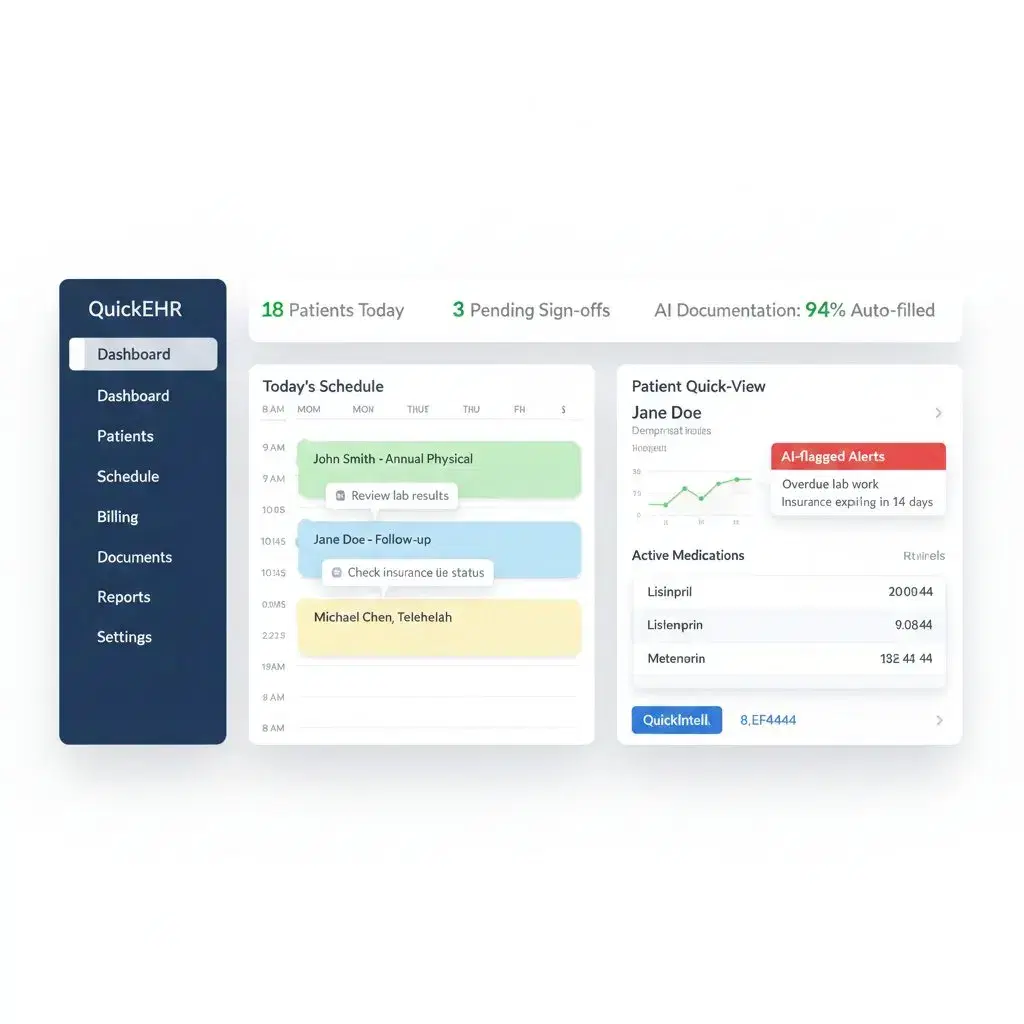
Patient balances, statement history, reminders, holds, ERA
Readiness
Clean balance review
Outreach
Soft letters and calls
Handoff
QuickRCM and QuickERA
Soft collections workflow
Patient balance follow-up should start with account evidence.
The soft collection letters SERP is full of templates and generic advice. QuickEHR focuses on the healthcare workflow behind those reminders: statement readiness, patient responsibility, holds, payment plans, remittance evidence, and RCM handoff.
Balance readiness
Confirm the account before outreach
QuickEHR soft collections software starts with the account evidence behind the patient balance: encounter, claim, ERA, EOB, adjustment, statement, payment, dispute, and patient responsibility context.
Separate clean patient balances from open claims, denied lines, missing remittance, pending adjustments, unapplied payments, refunds, and disputed items.
Keep patient demographics, guarantor, payer transfer, statement history, payment activity, and account notes visible before outreach is prepared.
Route blockers to billing, payment posting, coding, authorization, front desk, or patient financial owners before an account enters a soft collections queue.
Patient outreach
Prepare soft collection letters with review controls
Soft collection letters should be early, clear, and patient-friendly. QuickEHR helps teams stage reminders, balance explanations, and follow-up tasks without turning the workflow into unmanaged collections activity.
Queue collection letters to patients by balance age, statement cycle, account status, patient communication preference, owner, and approved outreach rules.
Draft patient payment collection letters and call-note prompts for staff review using the visit, claim, payer payment, adjustment, and balance facts already in context.
Keep holds, hardship notes, payment plan status, returned mail, disputed balances, and compliance review rules attached to the account.
Resolution
Close the loop before escalation
Soft collections work should end in a documented next action: payment, payment plan, patient question, dispute, statement correction, AR handoff, or approved escalation path.
Connect patient responses, portal questions, phone notes, failed payments, promised payments, and payment-plan exceptions to QuickRCM work queues.
Use QuickERA context to keep remittance, payer transfer, adjustment, and payment posting evidence tied to the patient balance.
Review outcomes so front-desk, eligibility, documentation, coding, claims, statement, and payment workflows can reduce repeat balance issues.
Soft collection letters
Cover the collection-letter jobs healthcare teams actually need.
Buyers searching for medical billing collections software or patient collections software need more than a generic letter template. QuickEHR keeps the balance, statement, remittance, payment, hold, and dispute context close to the outreach workflow.
Check claim status, payer transfer, EOB details, adjustments, prior payments, statement history, deposits, refunds, and account notes before outreach.
Soft collection letter queues
Organize accounts receivable collection letters by balance age, statement cycle, owner, location, provider, payer, amount, and readiness status.
Friendly reminder cadence
Stage soft collection reminders, patient-friendly balance explanations, call tasks, and message handoffs around practice-approved outreach policies.
Dispute and hold routing
Keep disputed balances, collection holds, hardship notes, returned mail, wrong-address tasks, and insurance questions out of automated follow-up.
Payment plan handoff
Route payment-plan requests, failed payments, promised payments, partial payments, and follow-up dates to the right patient financial owner.
Medical billing context
Connect collection letters to patients with the visit, claim, payer payment, adjustment, denial, and statement facts staff need to answer questions.
AR collections preparation
Prepare healthcare AR collections software workflows with account evidence, outreach history, balance status, and approved escalation boundaries.
Feedback loops
Track balance causes, patient questions, statement corrections, payment exceptions, and collection outcomes to improve the next billing cycle.
AI soft collections automation
AI can prepare patient balance work while staff keep control.
For practices comparing AI EHR soft collections, patient balance automation, or AR collections software, QuickEHR uses QuickIntell workflows to organize account history, exceptions, draft support, and next actions around real billing context.
Balance history summaries
AI-assisted summaries can present the encounter, claim, payer transfer, ERA/EOB, adjustment, payment, statement, and patient balance timeline for staff review.
Exception classification
Group accounts by clean balance, open claim, denial, missing payment, disputed item, collection hold, payment plan issue, or patient question.
Letter draft support
Prepare reviewable soft collection letters, reminder text, call notes, and patient-friendly explanations based on account facts and approved templates.
Next-action routing
Route work to patient financial, billing, QuickRCM, QuickERA, coding, authorization, eligibility, front desk, or manager review based on the blocker.
OpenEMR soft collections should reflect the actual patient account.
QuickEHR can be a managed OpenEMR-powered EHR or a connection layer around an existing system. In either model, soft collections should know whether the balance is ready, blocked, disputed, on hold, already paid, or better routed back to billing.
QuickEHR is built on the OpenEMR foundation and adds QuickIntell-managed workflow configuration around patient balances, statements, AR follow-up, and soft collections.
Existing OpenEMR environments
Practices already using OpenEMR can evaluate approved OpenEMR API, FHIR, HL7, EDI, clearinghouse, ERA, payment, or interface-engine paths for account and balance context.
QuickEHR Connect
Practices keeping another EHR or practice management system can evaluate QuickEHR as a workflow layer around patient balance automation, RCM routing, and soft collections review.
Related QuickIntell products
Soft collections touches the whole revenue workflow.
Patient balance outreach depends on statements, payments, ERA, denial resolution, documentation, coding, authorization, RCM routing, and the EHR context around them.
Revenue cycle pages
Buyers comparing healthcare collections software often need the surrounding patient financial, payment posting, denial, and AR workflows before choosing a soft collections model.
Define soft collections policy before outreach begins.
Soft collections touches patient communication, PHI, balance accuracy, payment workflows, collection holds, disputes, payment plans, outside partners, and escalation policy. QuickEHR implementation should make timing, language, review ownership, and exceptions explicit.
Security and procurement teams can review current materials through the Trust Center. Any deployment-specific evidence should be verified in the current contract and implementation packet.
Soft collections implementation checklist
Scope these items before go-live.
Confirm whether the practice will use QuickEHR-managed OpenEMR, an existing OpenEMR tenant, or QuickEHR Connect around another EHR or practice management system.
Define which accounts can enter soft collections, which require human review, which must stay on hold, and when escalation requires management, compliance, or legal review.
Approve patient-facing language, soft collection letter templates, call scripts, message routing, accessibility expectations, and language support before production use.
Set review boundaries for which AI actions may summarize, classify, draft, prioritize, or route patient balance work before staff approval.
Document handoffs to QuickRCM, QuickERA, QuickCode, QuickAuth, patient financial teams, payment processors, external billing services, or collection partners when they are in scope.
Review access controls, PHI handling, audit expectations, support ownership, and current trust materials before go-live.
QuickEHR navigation
Related QuickEHR pages for patient balance teams.
Soft collections depends on the EHR, statements, payments, AR, remittance, RCM, and OpenEMR context around the patient balance.
Answers for practices comparing soft collections software, soft collection letters, patient collections software, OpenEMR soft collections, and AI patient balance automation.
What is QuickEHR soft collections software?
QuickEHR soft collections software helps practices manage early patient balance follow-up before harder escalation paths. It connects patient balance review, soft collection letters, statement history, payment activity, OpenEMR-powered account context, AI-assisted worklists, QuickRCM, and QuickERA workflows.
What are soft collection letters in medical billing?
Soft collection letters in medical billing are patient-facing reminders used before more formal collection escalation. They typically explain the balance, reference recent billing activity, ask the patient to pay or contact the practice, and preserve room for questions, disputes, payment plans, or insurance review. Practices should approve the wording and escalation rules for their own policies.
How does QuickEHR support patient collections software workflows?
QuickEHR can support patient collections software workflows by organizing clean patient balances, disputed accounts, payment-plan exceptions, statement follow-up, patient questions, returned mail, collection holds, and approved next actions around the patient, encounter, claim, remittance, and payment context available for the deployment.
Can QuickEHR automate soft collection letters?
QuickEHR can assist with soft collection letter workflows by preparing account summaries, classifying balances, drafting reviewable reminder text, and routing tasks. Patient-facing content, release timing, holds, disputes, payment-plan terms, and escalation decisions should remain under the practice's approved review process.
How do OpenEMR soft collections fit with QuickEHR?
QuickEHR is built on the OpenEMR foundation. In a QuickEHR-managed OpenEMR environment, soft collections can be planned around OpenEMR patient, encounter, billing, document, statement, and payment context. Existing OpenEMR tenants can evaluate approved API, FHIR, HL7, EDI, payment, or interface-engine paths for the data needed in patient balance workflows.
How does AI EHR soft collections support patient balance automation?
AI EHR soft collections in QuickEHR can help summarize account history, identify clean balances versus exceptions, draft staff-reviewed patient-friendly explanations, prioritize worklists, and route patient balance automation tasks to billing, patient financial, QuickRCM, QuickERA, QuickCode, or QuickAuth owners.
Does QuickEHR replace a collection agency?
No. QuickEHR is the EHR and workflow layer for patient balance review, soft collections preparation, and RCM coordination. A practice may still use an external collection agency, billing service, payment processor, clearinghouse, lockbox, or accounting system depending on the implementation and contract model.
Can QuickEHR handle accounts receivable collection letters?
QuickEHR can help organize accounts receivable collection letters and patient payment collection letters when the practice defines approved templates, timing, holds, review roles, and escalation rules. The workflow keeps account evidence, outreach history, and patient balance status visible for staff review.
What should practices review before launching soft collections?
Practices should review statement cycles, payment paths, balance aging rules, patient communication preferences, language access, collection holds, dispute handling, payment-plan policies, approved letter language, external partner handoffs, access controls, audit expectations, AI review boundaries, and current trust materials before go-live.
Is QuickEHR soft collections legal or compliance advice?
No. QuickEHR can help operationalize soft collections workflows, but each practice should approve patient-facing language, balance policies, collection timing, escalation rules, dispute handling, and any legal or regulatory requirements with the appropriate internal owners or advisors.
Bring patient balance outreach back into the EHR and RCM workflow.
See how QuickEHR, QuickRCM, and QuickERA can keep soft collection letters, patient balances, payment plans, holds, remittance evidence, and patient questions in one connected operating model.