Call
AI-assisted patient feedback routing

Doctor reputation management software for QuickEHR review workflows

QuickEHR doctor reputation management software connects post-visit feedback, patient review requests, online review management workflows, service recovery, and QuickIntell AI routing to OpenEMR-powered chart, schedule, and billing context.

Search fit: doctor reputation management
Workflow: feedback, reviews, recovery
AI handoff: classify, route, summarize

QuickEHR reputation workspace

Feedback, review requests, staff queues, and AI routing

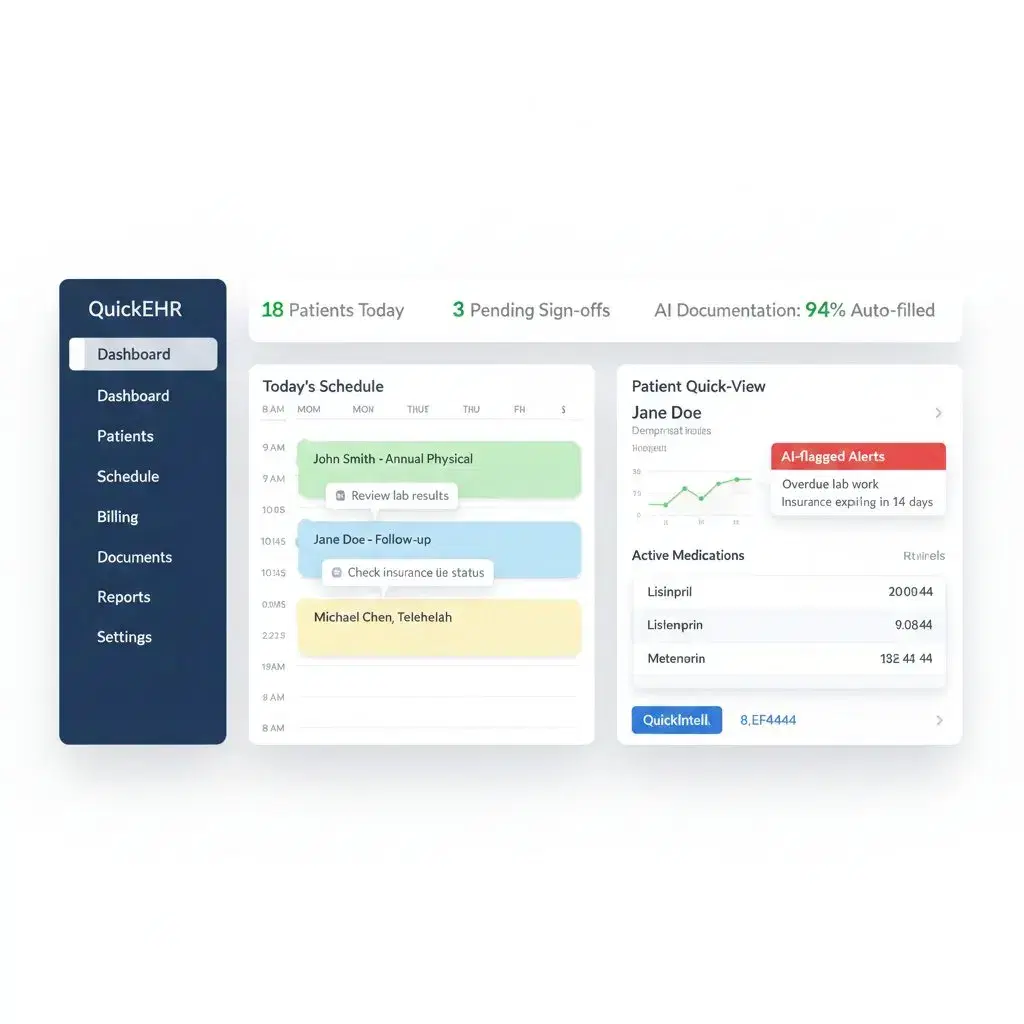
QuickEHR dashboard showing patient feedback, review request, chart context, scheduling, documentation, authorization, RCM, and ERA workflows

Capture

Visit-linked feedback

Route

Service recovery

Measure

Review operations

Reputation workflow

Reputation management works when feedback becomes owned work.

Healthcare buyers searching for doctor reputation management and healthcare reputation management software expect review requests, feedback capture, online review monitoring, sentiment signals, and service recovery. QuickEHR connects those signals to patient, visit, provider, and staff context.

After the visit

Trigger feedback from real appointment context

QuickEHR reputation management starts from the scheduled visit, provider, location, encounter, and follow-up context instead of a disconnected marketing list.

  • Use QuickEHR appointment and OpenEMR-powered chart context to decide which visits should receive feedback outreach when configured.
  • Coordinate post-visit prompts with patient communications, reminders, portal follow-up, and QuickVoice outreach.
  • Keep excluded visit types, sensitive workflows, quiet hours, and patient preferences in the implementation rules.

Service recovery

Route unhappy feedback before it becomes a public issue

Doctor review management is not only about asking for stars. Practices need a way to capture concerns, classify urgency, assign ownership, and close the loop with the right team.

  • Classify patient comments, missing follow-up, access issues, billing questions, and low-confidence AI signals for staff review.
  • Escalate clinical, medication, safety, privacy, billing, and service concerns according to the clinic's approved workflow.
  • Connect unresolved items to QuickEHR queues so front-desk, clinical, billing, or support owners can act with context nearby.

Review follow-through

Separate internal feedback from approved public-review requests

Healthcare reputation management software should help teams manage review requests, internal survey responses, online review monitoring, and reporting without promising a specific rating outcome.

  • Use approved language for review invitations, patient surveys, and follow-up messages before production launch.
  • Scope review destinations, directory/listing work, and monitoring responsibilities during implementation.
  • Feed patterns back into scheduling, documentation, authorization, billing, and patient experience work when configured.

Review operations

Cover patient review management without disconnecting it from the clinic.

Medical reputation management touches scheduling, patient communications, portal access, clinical follow-up, billing, and management review. QuickEHR gives practices a way to scope those workstreams together instead of operating a separate reputation inbox.

For OpenEMR-powered environments, review workflow planning can include OpenEMR integration, QuickIntell AI routing, QuickVoice outreach, and staff queues tied to the operational record.

Patient review requests

Send post-visit review invitations through approved patient communications workflows, with visit-type rules and staff oversight for exceptions.

Review communications

Internal feedback capture

Use internal surveys or feedback prompts to surface wait-time issues, access gaps, care-team follow-up, and billing questions before public review escalation.

Review engagement

Appointment-linked outreach

Connect reminder outcomes, completed visits, missed visits, recalls, and reschedules to reputation outreach rules when those workflows are enabled.

Review reminders

Portal and messaging handoff

Route patient questions, response follow-up, and review-sensitive issues into patient messaging or portal worklists instead of separate spreadsheets.

Review messaging

Listing and directory scope

Define which provider profiles, locations, directory fields, and review destinations belong in scope during implementation.

Review OpenEMR fit

Measurement without inflated claims

Track sent, delivered, responded, escalated, staff-reviewed, resolved, and routed outcomes without promising fixed review volume or rating lift.

Review trust materials

OpenEMR and QuickEHR fit

OpenEMR reputation management needs appointment and chart context.

QuickEHR is built on the OpenEMR foundation and adds managed workflow design around feedback capture, review requests, patient communications, QuickVoice outreach, and QuickIntell AI automation.

QuickEHR-managed OpenEMR foundation

QuickEHR is built on the OpenEMR foundation and adds managed workflow design around review requests, feedback routing, staff queues, and QuickIntell automation.

Existing OpenEMR environments

Practices already using OpenEMR can evaluate approved OpenEMR API, FHIR, HL7, or interface-engine paths for appointment, patient, encounter, and feedback context.

QuickEHR Connect for mixed systems

Clinics keeping another EHR or practice management system can scope QuickEHR as a workflow layer for patient feedback, outreach, billing, and service recovery signals.

Implementation and trust

Launch review workflows with language, ownership, and data paths defined first.

Reputation management for medical practices crosses patient experience, clinical follow-up, billing, access, and support. QuickIntell scopes the implementation around approved outreach language, enabled interfaces, staff ownership, AI review boundaries, and reporting requirements.

Review current security, privacy, and procurement materials in the QuickIntell Trust Center with the implementation packet for the specific deployment.

Best-fit use cases

Ambulatory practices, multi-location groups, and specialty clinics that want healthcare reputation management software connected to OpenEMR-powered QuickEHR context, QuickVoice, and QuickIntell automation.

Launch checklist

  • Choose QuickEHR-managed OpenEMR, an existing OpenEMR tenant, or QuickEHR Connect for another EHR or practice management system.
  • Map reputation workflows: internal feedback, post-visit review requests, service recovery, directory/listing scope, online review monitoring, and reporting.
  • Define approved patient-facing language, timing, visit-type exclusions, channel preferences, quiet hours, opt-out handling, and review destination rules.
  • Confirm which OpenEMR, EHR, scheduling, portal, telephony, survey, directory, and review-monitoring data paths are enabled for the deployment.
  • Decide where AI may draft, classify, summarize, score sentiment, route, or prepare work before staff, clinician, billing, or support review.
  • Review access controls, audit expectations, data handling, implementation evidence, support ownership, and current Trust Center materials before production use.

Patient-facing approval

Review invitations, survey prompts, service-recovery messages, and response templates should be approved before launch and re-reviewed when workflows change.

Staff and clinician ownership

Practices should define which feedback paths belong to front desk, care team, billing, management, or support before automation routes work.

Integration-specific scope

Review monitoring, provider directory fields, public-review destinations, write-back behavior, and outreach channels depend on the approved implementation scope.

Trust documentation

Use the current QuickIntell Trust Center, contract, and implementation packet to review security, privacy, access, and procurement evidence for the specific deployment.

FAQs

QuickEHR reputation management questions

Answers for practices evaluating doctor reputation management, patient review management software, OpenEMR workflows, and QuickIntell AI automation.

What is QuickEHR doctor reputation management?

QuickEHR doctor reputation management helps practices connect post-visit feedback, review requests, service recovery, patient messaging, online review workflow planning, and QuickIntell AI routing to OpenEMR-powered QuickEHR context.

How is QuickEHR different from generic healthcare reputation management software?

Generic healthcare reputation management software often focuses on surveys, review requests, and review monitoring. QuickEHR keeps those workflows close to the appointment, provider, location, chart, billing context, patient communications, QuickVoice outreach, and staff queues.

Can QuickEHR support patient review management software needs?

Yes, patient review management software workflows can be scoped for post-visit outreach, internal feedback capture, review requests, low-confidence response routing, service recovery, and reporting. The exact channels and destinations should be confirmed during implementation.

Does QuickEHR monitor Google, Healthgrades, or other reviews?

Review monitoring, provider directory fields, and public-review destinations are implementation-specific. QuickEHR can be scoped around online review management workflows, but the supported destinations, permissions, and response responsibilities should be confirmed for the deployment.

How does AI support medical reputation management in QuickEHR?

AI can help classify feedback, summarize patient concerns, identify sentiment patterns, draft reviewable responses or tasks, and route issues to the right queue. Staff, clinician, billing, or support owners should review patient-facing actions according to clinic policy.

How does OpenEMR reputation management fit with QuickEHR?

QuickEHR is built on the OpenEMR foundation. For QuickEHR-managed OpenEMR deployments, reputation workflows can be planned around managed chart, schedule, portal, and billing context. Existing OpenEMR tenants can evaluate approved API, FHIR, HL7, or interface-engine paths.

Can patient feedback trigger QuickRCM, QuickAuth, or QuickERA work?

Yes, when configured. Feedback about coverage, authorization delays, claims, balances, denials, or payment confusion can be routed into QuickAuth, QuickRCM, and QuickERA workflows so the responsible team has operational context nearby.

Can QuickVoice help with reputation management for medical practices?

QuickVoice can support routine calls, callbacks, service recovery outreach, and inbound follow-up paths when the practice enables those workflows. Exceptions and sensitive topics should route to the staff queue defined during implementation.

What should practices review before launching review requests?

Practices should review patient-facing language, timing, visit-type exclusions, opt-out handling, channel preferences, review destination scope, escalation paths, staff ownership, AI review boundaries, access controls, and current Trust Center materials.

Does this page make compliance or rating-improvement claims?

No. This page describes QuickEHR reputation management workflow planning. It does not promise a specific review rating, review volume, certification status, or compliance outcome. Any required legal, security, payer, procurement, or regulatory evidence should be verified in current implementation materials.

QuickEHR reputation management

Bring patient feedback, review requests, and service recovery into the EHR workflow.

QuickIntell can help scope the data paths, AI routing, staff ownership, and patient-facing language needed to make reputation work operational.