Call
QuickEHR template library

EHR template library for QuickEHR and OpenEMR workflows

QuickEHR helps practices organize an EHR template library around real clinical work: OpenEMR-powered chart templates, specialty note patterns, patient forms, AI-assisted draft notes, coding evidence, prior authorization packets, RCM worklists, and ERA follow-through in one QuickIntell workflow model.

Clinical note templates
OpenEMR template planning
Reviewable AI handoff

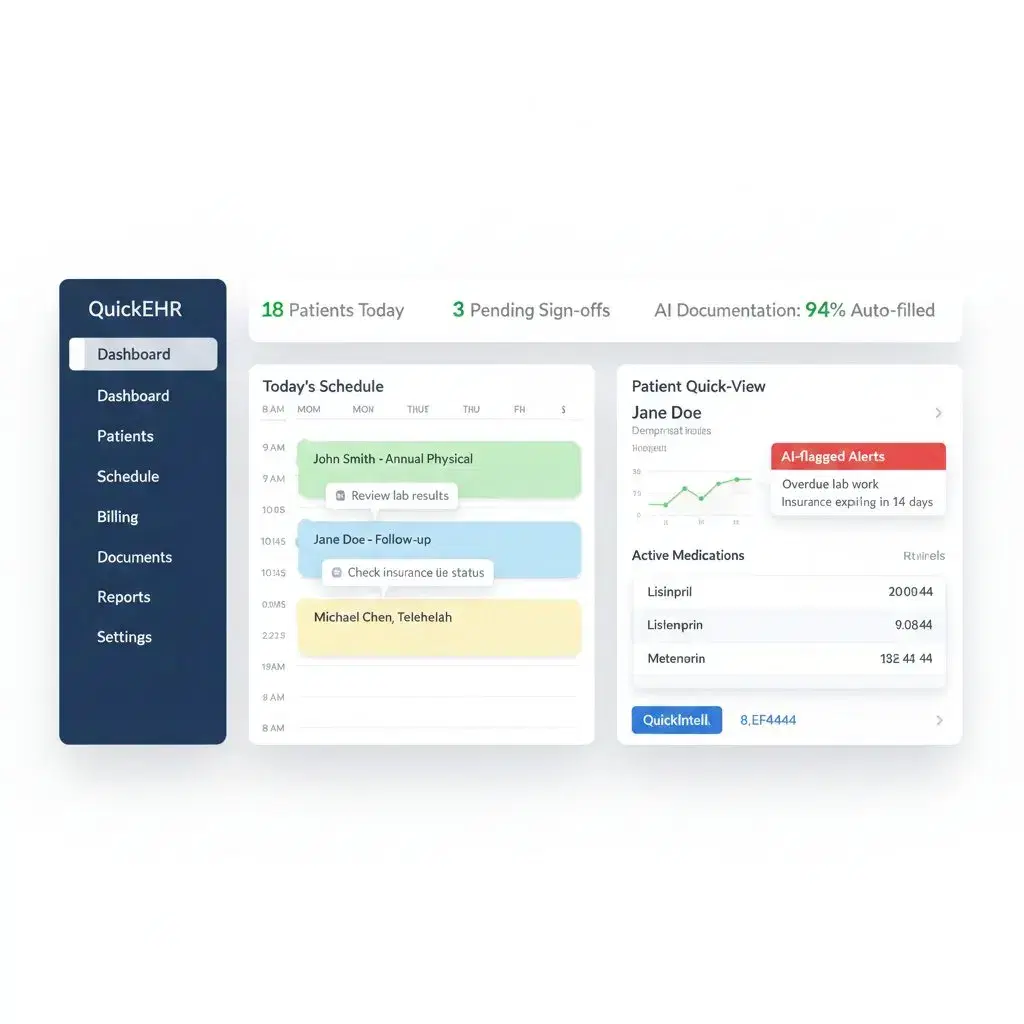
Template library workspace

Templates, AI drafts, coding, authorization, and revenue handoff

QuickEHR EHR template library dashboard with chart, documentation, coding, authorization, and revenue workflows

Library

Reusable patterns

Review

Provider controls

Handoff

Code, auth, RCM

Template library workflow

A template library should govern the whole encounter.

The search intent is educational: teams want to understand EHR templates, OpenEMR document templates, medical chart templates, and reusable library workflows. QuickEHR connects those patterns to clinical review and downstream operations.

Collect

Start with the templates clinicians already trust

A useful EHR template library begins with real encounter patterns, not a blank folder of downloadable forms. QuickEHR implementations inventory the clinical note templates, patient forms, specialty prompts, and handoffs that teams use today.

  • Separate visit notes, patient forms, orders, referrals, and operational templates.
  • Identify which templates belong to providers, coders, authorization teams, billing teams, or administrators.
  • Preserve the clinical review step before any template becomes standard workflow.

Structure

Organize reusable templates by specialty and encounter type

Searchers looking for EHR templates usually want faster charting, repeatable documentation, and specialty fit. QuickEHR groups template work around specialties, visit types, note sections, and downstream evidence needs.

  • Map common note sections for HPI, ROS, exam, assessment, plan, procedures, and follow-up.
  • Create starter sets for primary care, urgent care, behavioral health, pediatrics, cardiology, orthopedics, and other ambulatory workflows.
  • Keep template names and ownership clear so teams can find the right pattern quickly.

Review

Keep AI drafts and template output reviewable

An AI EHR template library should make work easier without hiding responsibility. QuickIntell can help draft, summarize, route, and prepare work from approved chart context while clinicians and operations teams retain review paths.

  • Use QuickScribe to prepare draft notes against configured encounter context where implementation scope allows.
  • Route evidence to QuickCode and QuickAuth for coding and authorization review.
  • Keep incomplete notes, missing evidence, and template exceptions visible in worklists.

Maintain

Tune the library as workflows change

Template library software has to handle drift: payer requirements change, providers refine notes, locations add specialties, and billing teams find recurring gaps. QuickEHR makes template governance part of implementation planning.

  • Track which templates cause rework, missing documentation, or downstream questions.
  • Define owners for template changes before group-practice starter sets are reused.
  • Review OpenEMR configuration, QuickIntell automation, and trust requirements before go-live changes.

EHR template library

Build reusable templates without losing clinical ownership.

A QuickEHR template library can include clinical note templates, EHR documentation templates, patient forms, medical chart templates, specialty starter sets, coding prompts, and operational handoff patterns. Each item should have a purpose, owner, and review path.

Need the OpenEMR-specific architecture? Review the OpenEMR integration. Looking for specialty examples? See QuickEHR specialty templates.

Clinical note templates

Reusable visit-note patterns for SOAP-style notes, follow-ups, preventive visits, procedure checks, consults, behavioral health sessions, and specialty encounters.

Patient forms and intake templates

Patient-facing or staff-assisted forms that can support demographics, histories, screening prompts, consent workflows, and pre-visit context where configured.

Medical chart templates

Structured chart patterns for problems, medications, allergies, orders, referrals, care plans, instructions, and follow-up tasks inside the patient record.

Specialty template starter sets

Reusable starter patterns for specialties and group practices. These can act like template keys or profiles during implementation without turning into unsupported one-size-fits-all settings.

Coding and authorization prompts

Documentation cues that help reviewed chart content carry the right evidence into QuickCode coding review and QuickAuth prior authorization packet workflows.

Operational handoff templates

Task, claim, remittance, exception, and follow-up patterns that help QuickRCM and QuickERA teams connect revenue work back to the source encounter.

Group-practice starter sets

Use template keys carefully.

DataForSEO showed that "template keys" has mixed SERP intent outside healthcare. In QuickEHR, the useful concept is a reusable starter set: a reviewed template profile for a specialty, location, provider group, or launch workflow.

Standard visit-note starter sets for each specialty
Reusable patient-form profiles for intake and follow-up
Operational templates for coding, authorization, RCM, and ERA tasks

OpenEMR and QuickEHR fit

OpenEMR template library planning, managed through QuickEHR.

QuickEHR is built on the OpenEMR foundation and adds QuickIntell configuration, implementation support, integrations, and AI-assisted workflow handoff around it. That boundary matters when teams evaluate an OpenEMR template library, QuickEHR template library, and any connected automation.

OpenEMR document-template foundation

OpenEMR supports document and patient-template concepts. QuickEHR uses the OpenEMR foundation and scopes template behavior inside the deployed environment, enabled modules, and implementation plan.

QuickIntell workflow layer

QuickIntell adds managed configuration, integration planning, support ownership, and reviewable AI workflows around OpenEMR-powered charting and template use.

Connected product handoff

Template content can become useful context for documentation, coding, prior authorization, RCM, remittance, and follow-up workflows when the project scope supports it.

Implementation and trust

Approve the library before teams rely on it.

EHR template library changes affect clinical documentation, AI assistance, coding, authorization, claims, remittance, and patient follow-up. QuickIntell implementation planning should make ownership, access, review, and support paths explicit.

Inventory current forms, note templates, provider preference lists, specialty workflows, and downstream handoff pain points.
Define library ownership for clinical leaders, administrators, coders, authorization teams, billing teams, and implementation owners.
Map QuickEHR and OpenEMR configuration assumptions before templates become production workflows.
Confirm which AI drafts, summaries, coding cues, authorization packets, RCM worklists, and ERA exceptions require human review.
Validate template behavior with representative encounters, missing fields, duplicate data, and role-specific access paths.
Review data handling, permissions, support ownership, legal terms, and procurement evidence through the implementation packet and Trust Center.
Document what can be reused across a group practice and what must stay specialty, provider, location, or payer specific.

FAQs

QuickEHR template library questions

Answers for teams comparing an EHR template library, OpenEMR template library, AI EHR templates, clinical note templates, and reusable group-practice starter sets.

What is the QuickEHR EHR template library?

The QuickEHR EHR template library is a configured set of reusable clinical note templates, patient forms, chart patterns, specialty starter sets, and operational handoffs inside the QuickEHR workflow. It is meant to support OpenEMR-powered charting and QuickIntell automation rather than act as a generic download folder.

How does the QuickEHR template library work with OpenEMR?

QuickEHR is built on the OpenEMR foundation. Template behavior depends on the deployed QuickEHR environment, OpenEMR version, enabled modules, configured forms, access model, and implementation scope. The OpenEMR integration page covers the architecture in more detail.

Can the library include OpenEMR document templates?

Yes, OpenEMR document-template and patient-template concepts can be part of planning where the deployed environment supports them. QuickIntell scopes how those templates connect to charting, AI drafting, coding, authorization, RCM, and remittance workflows.

Is this template library software or a set of free EHR templates?

QuickEHR is not positioning this page as a free template download collection. It describes template library software workflows: governance, reusable note and form patterns, implementation configuration, review paths, and handoff into QuickIntell products.

How does an AI EHR template library support clinical notes?

An AI EHR template library can help QuickScribe prepare draft notes from configured encounter context and template patterns. Clinicians still review, edit, approve, and sign clinical documentation before it becomes final.

Can template content help coding and prior authorization?

Yes, when configured. Reviewed template content can provide evidence for QuickCode coding review and QuickAuth prior authorization packet workflows, while keeping coding, authorization, and clinical review responsibilities visible.

What are template keys in a group-practice context?

In this QuickEHR context, template keys are best understood as reusable starter sets or template profiles that help a group practice launch consistent workflows. They still need implementation review because specialty, provider, location, payer, and deployment details can differ.

Who maintains EHR templates after go-live?

Template ownership should be assigned during implementation. Clinical leaders, administrators, providers, coding teams, authorization teams, billing operators, and QuickIntell implementation owners may all participate depending on the workflow.

Does this page make certification, HIPAA, SOC 2, EPCS, or customer claims?

No. This page describes QuickEHR template library workflows and the OpenEMR foundation. Current security, procurement, legal, certification, regulatory, payer-program, or controlled-substance evidence should be reviewed for the specific deployed configuration.
QuickEHR template library

Turn reusable templates into reviewable clinical and revenue workflows.

Map the templates you use today, decide what belongs in QuickEHR, and connect the approved library to QuickIntell automation where implementation scope supports it.