FAQs
Billing coding software questions
Short answers for teams comparing EHR billing software, medical coding software, AI medical coding software, and OpenEMR billing coding workflows.
What is billing coding software?
Billing coding software helps practices connect clinical documentation, code review, charges, claim preparation, payer edits, denial feedback, payment posting, and AR follow-up. QuickIntell billing coding software uses QuickEHR, QuickCode, QuickAuth, QuickRCM, and QuickERA workflows so billing and coding teams can review the same encounter context.
What software do you need for medical billing and coding?
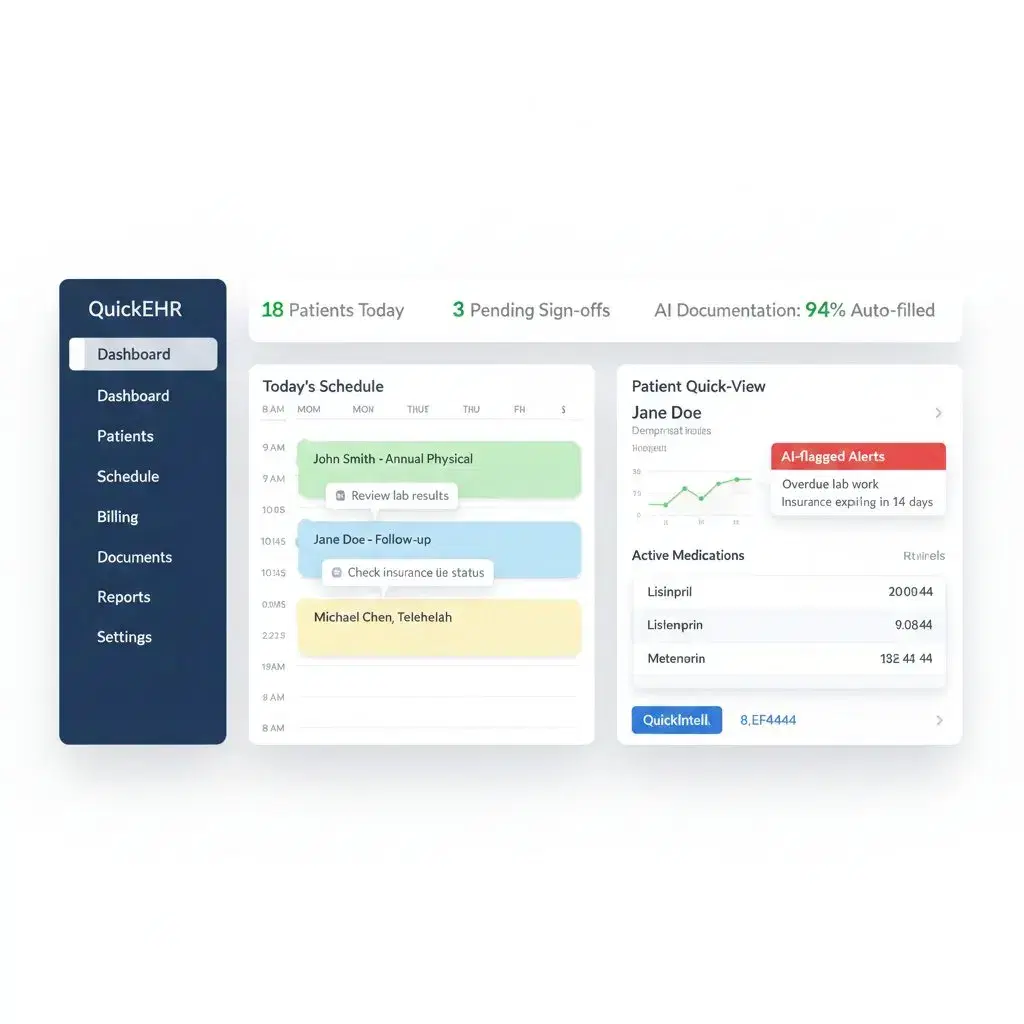
Most teams need EHR context, documentation tools, medical coding software, charge review, claim scrubbing, electronic claims, denial management, payment posting, and reporting. QuickEHR brings those medical billing and coding software workflows into an OpenEMR-powered environment with connected QuickIntell AI products.
How is this different from a standalone medical coding tool?
A standalone coding tool may help with code lookup or suggestions, but the work still has to reach billing, claims, denials, and remittance. QuickEHR keeps coding review tied to chart documentation, coverage, authorization evidence, charges, payer feedback, QuickRCM queues, and QuickERA remittance context.
Does AI medical coding software replace coders?
No. This page describes AI-assisted preparation and routing. QuickIntell AI can help draft suggestions, summarize evidence, classify exceptions, and prioritize queues, but implementation should define coder, clinician, billing, and compliance review points before production use.
Can QuickEHR support OpenEMR billing coding workflows?
Yes. QuickEHR is built on the OpenEMR foundation. Practices can use QuickEHR-managed OpenEMR workflows or evaluate an existing OpenEMR tenant when approved FHIR, OpenEMR API, HL7, EDI, clearinghouse, file, or interface-engine paths are available.
Which codes can the workflow prepare for review?
A billing coding implementation can be scoped around reviewable ICD-10, CPT, HCPCS, modifiers, units, diagnosis pointers, place of service, charges, and specialty-specific documentation evidence. Final scope depends on configured data sources, payer requirements, review rules, and specialty workflow.
Does QuickIntell support specialty billing and coding workflows?
Yes. QuickIntell can scope workflows for primary care, family medicine, internal medicine, urgent care, behavioral health, cardiology, orthopedics, dermatology, gastroenterology, pediatrics, ophthalmology, OB-GYN, and other specialties when the required templates, interfaces, and review rules are configured.
Can practices use QuickIntell with another EHR or PM system?
Practices keeping another EHR or practice-management system can evaluate QuickEHR Connect, QuickCode, QuickRCM, or other QuickIntell integration paths. Availability depends on approved interfaces, source data, security review, user roles, workflow ownership, and implementation scope.
How should practices compare medical billing software options?
Look beyond a list of medical billing software features. Evaluate whether the system connects chart documentation, coding evidence, authorization, claim edits, electronic claims, denial work, payment posting, ERA/EOB review, user ownership, and specialty reporting without forcing duplicate work.
What should be reviewed before launching AI EHR billing coding?
Review documentation sources, attestation timing, code families, payer edits, authorization evidence, claim scrubber paths, remittance handling, access controls, audit expectations, support ownership, and which AI outputs require human review.