Call
OpenEMR-powered patient access

Patient portal software for QuickEHR and OpenEMR workflows

QuickEHR patient portal software gives ambulatory clinics a patient-facing path for intake forms, messages, selected results, billing questions, and OpenEMR-powered data access, while QuickIntell AI helps route the work into documentation, coding, prior authorization, RCM, and ERA workflows for review.

Patient access: portal software
EHR fit: OpenEMR and QuickEHR
AI role: assistive workflow routing

QuickEHR portal workspace

Intake, messages, records, billing, and follow-up

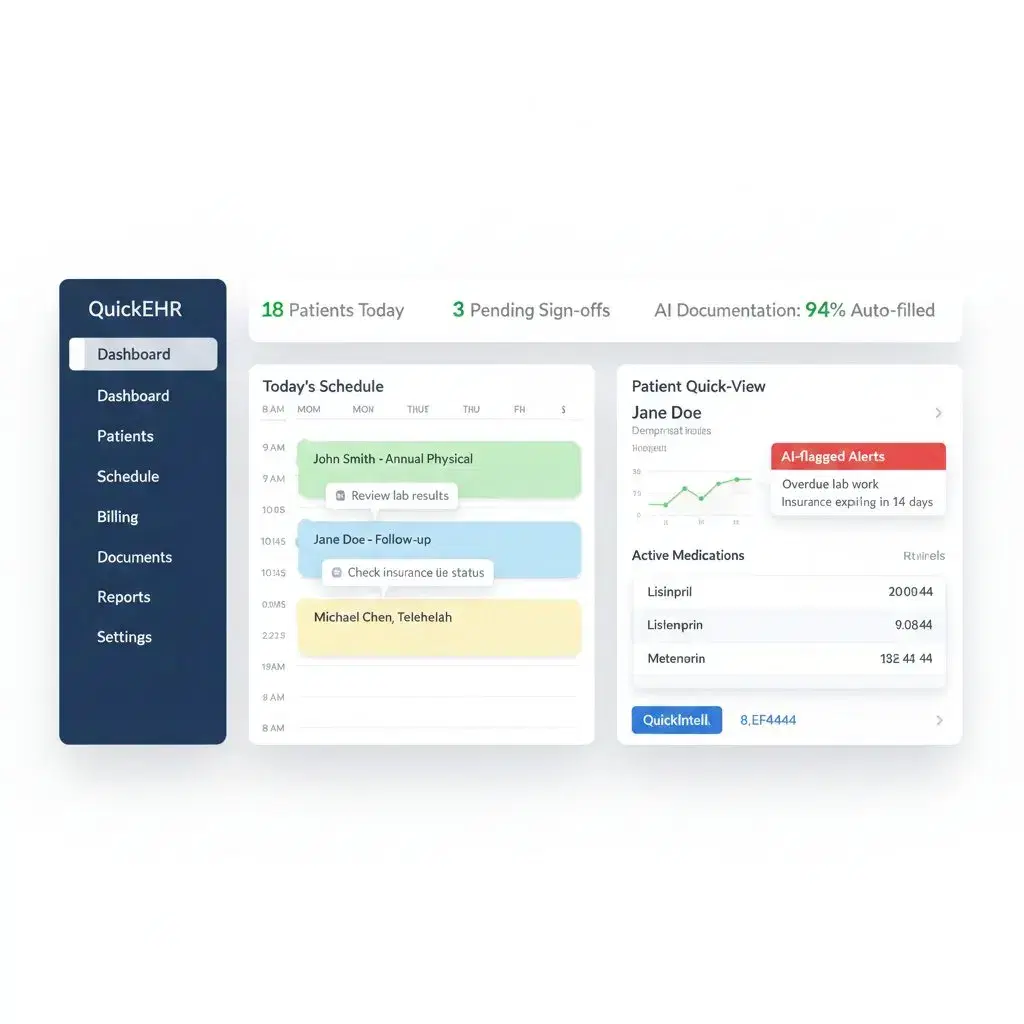
QuickEHR dashboard showing patient chart, intake, portal message, billing, coding, and revenue workflow context

Intake

Forms and updates

Patient access

Messages and results

Follow-through

Billing, RCM, ERA

Portal workflow

A patient portal should move work into the right queue.

Complete patient portal software covers intake, messaging, results, billing, and EHR integration. QuickEHR connects those patient-facing jobs to the operational workflows that staff, clinicians, coders, and billing teams already manage.

Before the visit

Collect the visit context before the patient arrives

QuickEHR patient portal software should reduce front-desk rework by keeping intake forms, demographic updates, coverage details, consent packets, and visit reasons close to the scheduled encounter.

  • Route patient intake forms online into reviewable clinic queues.
  • Keep updates connected to the QuickEHR patient chart instead of scattered across inboxes.
  • Flag missing information for staff review before the rooming workflow starts.

During care

Give patients a practical channel for results and messages

The portal should help patients see the information the clinic chooses to make available while giving staff a structured place to review messages, follow-up questions, and result-related tasks.

  • Support secure patient messaging software workflows without bypassing team review.
  • Organize results, chart summaries, care instructions, and follow-up tasks around the encounter.
  • Keep message context visible for clinicians, front desk, and care teams.

After the visit

Connect portal activity to billing and revenue work

Patient portal software is most useful when billing, balances, statements, and follow-up work connect back to the same QuickIntell operating model as documentation, coding, authorization, RCM, and ERA.

  • Move patient billing portal questions into the right billing work queue.
  • Use QuickRCM and QuickERA context when claim, payment, or remittance questions come up.
  • Keep patient-facing tasks aligned with the clinic's configured approval and support process.

Portal requirements

Cover the patient-facing work without separating it from the chart.

QuickEHR is built for clinics comparing medical patient portal software, patient engagement software, or an EHR patient portal tied to real operations. Intake, results, messages, and billing should all point back to the patient chart, the encounter, and the staff queue that owns the next step.

For the OpenEMR-specific architecture, see the OpenEMR integration. For provider-facing charting, review QuickEHR clinical documentation.

Intake and forms

Collect demographics, history updates, visit reason, consent packets, and other patient-submitted forms before the appointment when configured for the clinic.

Messages and staff routing

Route portal messages, follow-up questions, and operational requests to the right team while keeping chart and encounter context nearby.

Results and records

Make selected results, chart summaries, instructions, and patient data access workflows easier to manage through the OpenEMR-powered QuickEHR foundation.

Billing and balances

Connect statements, balances, payment questions, and patient AR follow-up to QuickRCM and QuickERA workflows instead of leaving billing teams to reconstruct context.

Scheduling handoff

Use portal activity, appointment context, reminders, and follow-up needs to support patient self-scheduling software workflows and reduce avoidable phone work.

Care instructions

Keep after-visit summaries, instructions, pending tasks, and requested updates connected to the encounter so staff can see what the patient is responding to.

OpenEMR and QuickEHR fit

OpenEMR patient portal workflows, managed through QuickEHR.

QuickEHR uses the OpenEMR foundation for the EHR and patient access layer, then adds QuickIntell configuration, support, integrations, and assistive AI workflows around it. That makes the boundary clear: the OpenEMR foundation holds the EHR context, while QuickIntell helps route work across clinical and revenue workflows.

OpenEMR patient portal foundation

QuickEHR is built on the OpenEMR foundation, giving clinics a practical base for patient data access, chart context, scheduling, forms, and billing workflows.

QuickEHR managed portal workflows

QuickIntell adds managed configuration, support, implementation planning, integrations, and AI workflow design around the OpenEMR-powered portal experience.

Patient portal integration for existing EHRs

Clinics keeping another system of record can use QuickEHR Connect to route patient, encounter, order, claim, and remittance context around existing EHR workflows.

Implementation and trust

Build the portal rules before patients use it.

A patient portal changes how intake, records, messages, results, billing, and support work reach the clinic. QuickIntell helps configure the workflows, but the practice still needs clear ownership, patient-facing instructions, access rules, escalation paths, and review evidence before launch.

Choose QuickEHR-managed OpenEMR, an existing OpenEMR tenant, or QuickEHR Connect for another EHR.

Map portal users, proxy access needs, staff queues, forms, result-release rules, message routing, and billing handoff.

Confirm which OpenEMR API, FHIR, HL7, interface-engine, payment, or communication paths are enabled for the deployment.

Define which AI suggestions are allowed to draft, classify, route, or summarize work before staff or clinician review.

Review patient-facing language, support ownership, escalation paths, and after-hours expectations before launch.

Review trust, data handling, access controls, audit expectations, and implementation-specific documentation before production use.

Portal data

OpenEMR

Patient records and portal workflows start from the OpenEMR-powered QuickEHR foundation.

Routing

AI-assisted

QuickIntell can draft, classify, summarize, and route portal work for human review.

Revenue handoff

QuickRCM

Billing and payment questions can connect to claim, AR, and remittance context.

FAQs

QuickEHR patient portal questions.

These answers are written for clinics evaluating patient portal software, OpenEMR data access, intake, messaging, results, billing, AI routing, and implementation boundaries.

What is QuickEHR patient portal software?+

QuickEHR patient portal software is the patient-facing workflow layer for QuickEHR. It helps clinics organize intake forms, patient messages, selected results and records, billing questions, appointment follow-up, and OpenEMR-powered data access while connecting the work to QuickIntell AI, documentation, coding, authorization, RCM, and ERA workflows.

For the full platform overview, see QuickEHR.

Is QuickEHR patient portal software built for login searches?+

No. This page is written for software buyers and operators evaluating patient portal software for a clinic. Actual patient login paths, access instructions, support policies, and proxy access workflows should be configured and documented for each deployment.

How does QuickEHR use OpenEMR patient portal workflows?+

QuickEHR is built on the OpenEMR foundation. That foundation can support patient data access and portal workflows, while QuickIntell adds managed deployment, configuration, integrations, support, and AI workflow automation around the clinic's configured QuickEHR environment.

Can the portal support patient intake forms online?+

Yes, when configured for the clinic. QuickEHR can organize intake forms, demographic updates, visit reasons, histories, consent packets, and staff review queues so patient-submitted information is connected to the encounter instead of handled as disconnected paperwork.

Does QuickEHR include patient messaging software workflows?+

QuickEHR can support patient messaging workflows when enabled. The important implementation detail is routing: messages should go to the right staff or clinical queue, keep relevant chart context visible, and preserve the review responsibilities the clinic defines.

Can patients see lab results or medical records in the portal?+

QuickEHR can support selected results, chart summaries, instructions, and patient data access workflows through the configured OpenEMR-powered environment. Each clinic should define result-release rules, support ownership, and patient-facing instructions before go-live.

How does the patient billing portal connect to QuickRCM?+

Billing questions, balances, statements, claim follow-up, and remittance context can connect to QuickRCM and QuickERA workflows. That helps billing teams answer patient questions with the same encounter, claim, and payment context used in revenue-cycle operations.

Does AI answer patient messages or release results by itself?+

No. QuickIntell AI should be treated as assistive workflow automation. It can help draft, classify, route, summarize, or prepare work for review, but the clinic should define staff, clinician, billing, and support responsibilities for patient-facing actions.

What should practices review before launching a portal?+

Practices should review users, roles, proxy access, intake forms, message routing, result-release rules, payment workflow, patient support language, escalation paths, data handling, audit expectations, enabled integrations, and where QuickScribe, QuickCode, QuickAuth, QuickRCM, and QuickERA may use portal or chart context.

How should practices compare QuickEHR with other patient portal software companies?+

Compare workflow ownership, EHR integration, intake forms, messaging, result-release controls, billing handoff, AI review boundaries, implementation support, and trust documentation. QuickEHR is a managed OpenEMR-powered workflow inside the QuickIntell ecosystem, not a one-off patient portal software development project.

Does this page make certification or compliance claims?+

No. This page describes QuickEHR patient portal workflows and implementation planning. QuickEHR is built on the OpenEMR foundation, and any required certification, compliance, security, payer, procurement, or regulatory evidence should be verified in the current implementation packet and contract for the specific deployment.

Need a patient portal tied to QuickEHR workflows?

QuickIntell can walk through QuickEHR portal workflows, OpenEMR data access, intake forms, messaging, results, billing, QuickScribe, QuickCode, QuickAuth, QuickRCM, QuickERA, and implementation review for your clinic.