Call

ASC EHR, billing, and practice management workflows

Ambulatory surgery center software for AI EHR workflows

QuickIntell ambulatory surgery center software connects QuickEHR, OpenEMR-powered ASC EHR workflows, AI documentation, coding, prior authorization, billing, RCM, and practice management so case work stays visible from schedule to payment.

QuickEHR and OpenEMR-powered chart workflows
Pre-op, intra-op, post-op, billing, coding, and RCM handoffs
AI review queues for ASC teams without hiding human approvals

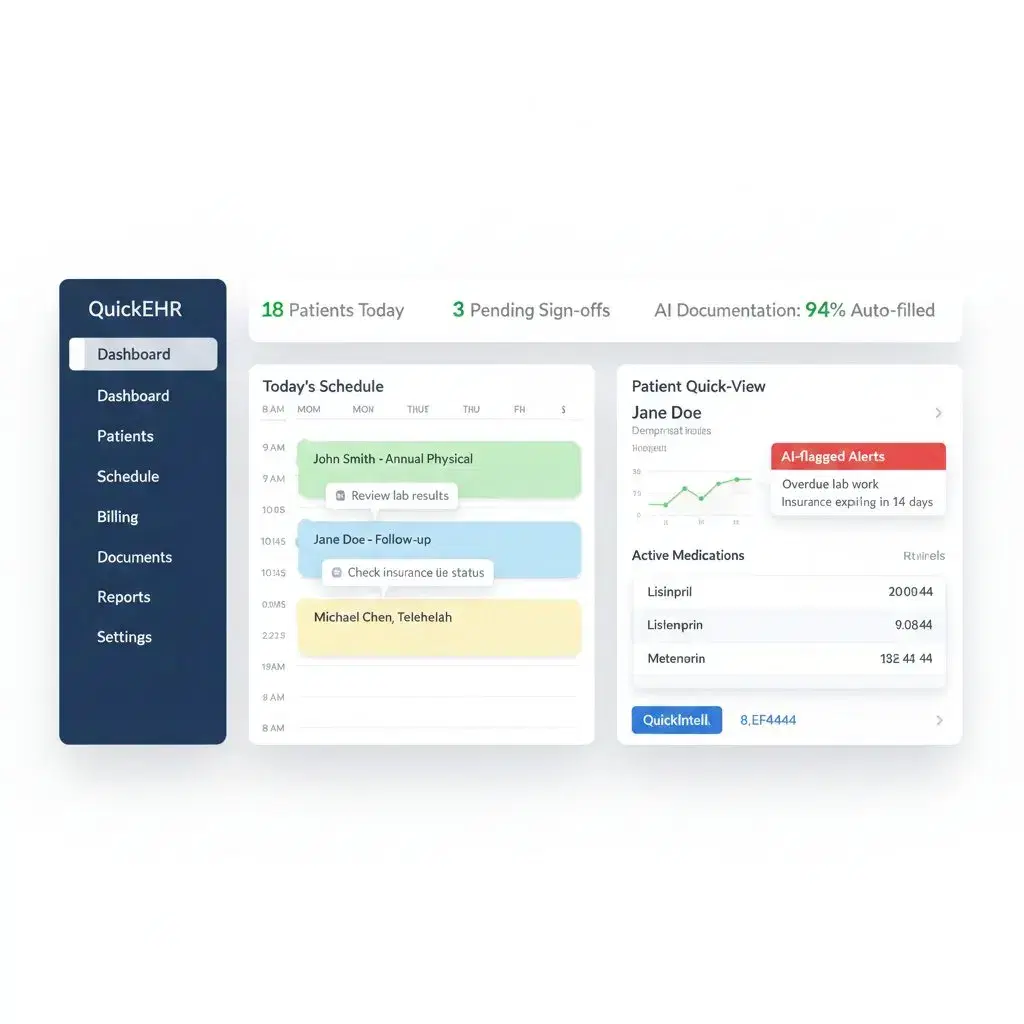
QuickEHR ASC case view

Schedule, chart, auth, coding, billing, and RCM queues

Reviewable AI
QuickEHR dashboard for ambulatory surgery center software workflows
Pre-op ready
Coding review
ERA follow-up

ASC case lifecycle

Workflow built around the case, not disconnected tools

ASC software has to handle fast-moving schedules, procedure documentation, authorization evidence, coding, billing, and payment follow-up. QuickIntell keeps those handoffs organized around reviewable work queues.

Case intake

Start each surgical case with clean access and schedule context

Ambulatory surgery centers run on tightly sequenced case days. QuickEHR helps keep registration, eligibility, payer, location, surgeon, procedure, referral, and authorization context visible before staff commit the schedule.

  • Surface missing demographics, coverage, referral, consent, authorization, and patient-responsibility details before the case reaches the clinical team.
  • Carry appointment, facility, provider, payer, planned-procedure, and document context into charting, coding, and claim worklists.
  • Support front desk, pre-op, clinical, coding, billing, authorization, and RCM ownership without making teams rebuild the case story.

Clinical workflow

Connect pre-op, intra-op, and post-op documentation to the chart

ASC EHR and ASC EMR software searches usually point to procedure-specific documentation. QuickIntell keeps AI-generated drafts and summaries reviewable so clinicians and staff decide what becomes part of the record.

  • Organize chart context for pre-op checks, procedure notes, implants or supplies, anesthesia references, discharge instructions, follow-up tasks, and care-team handoffs.
  • Use QuickScribe to prepare reviewable summaries from encounter context while preserving clinician sign-off boundaries.
  • Map ASC templates, forms, documents, and task queues to the OpenEMR-powered QuickEHR workflow selected during implementation.

Revenue workflow

Move the case from documentation to charge, claim, ERA, and denial work

Ambulatory surgery center software has to account for billing and practice management, not only charting. QuickCode, QuickAuth, QuickRCM, and QuickERA connect documentation evidence to the downstream work that protects cash flow.

  • Review CPT, ICD-10, HCPCS, modifiers, units, facility, surgeon, payer, authorization, implant, and documentation support before charge release.
  • Route claim exceptions, payer requests, denials, appeals, underpayments, payment posting, and patient-balance follow-up into operational queues.
  • Use remittance feedback and denial reasons to improve future authorization packets, coding review, and documentation prompts.

ASC-specific fit

Coverage for EHR, EMR, scheduling, charting, billing, and management

Search intent for ASC software spans clinical documentation and operational throughput. QuickIntell keeps the software conversation tied to the actual workflows ASC teams run every day.

Procedure-aware case setup

Plan each case around patient, payer, surgeon, facility, procedure, anesthesia, implant, supply, and documentation inputs before downstream work begins.

Specialty chart context

Support ASC EHR software workflows for orthopedics, pain, gastroenterology, ophthalmology, general surgery, urology, and other procedural teams.

Authorization packet prep

QuickAuth can prepare evidence packets, track approved service windows, and flag missing clinical support for staff review before surgery day.

Coding review queues

QuickCode can surface procedure, diagnosis, modifier, unit, and documentation-support suggestions for coder review before charges move forward.

Billing and claim readiness

Connect charge review to claims, clearinghouse exceptions, remittance, denials, appeals, underpayments, and patient AR follow-up.

Management visibility

Help administrators see where cases are blocked across scheduling, documentation, authorization, coding, billing, payment, and denial queues.

AI automation

Reviewable AI for the work that slows ASC teams down

QuickIntell does not make hidden billing or clinical decisions. It prepares draft context, flags missing evidence, and routes exceptions so clinicians, coders, authorization owners, billers, and managers can approve the work that matters.

The practical ASC AI pattern

Use AI to reduce manual search, re-keying, packet assembly, and queue triage. Keep final documentation, coding, authorization, claim, appeal, and posting actions tied to role-based review.

Pre-op evidence checks

AI worklists can classify missing insurance, referral, authorization, document, and payer-policy inputs so ASC staff can work exceptions before the day of service.

Clinical summaries for review

QuickScribe can prepare draft summaries from encounter context, imported documents, and visit details for clinical review and chart completion.

Coding and claim edits

QuickCode and QuickRCM can flag mismatches between planned procedures, operative context, modifiers, attachments, payer rules, and claim fields.

ERA and denial feedback

QuickERA and QuickRCM can turn payer responses into review queues for posting, adjustments, appeals, underpayment checks, and workflow improvement.

OpenEMR and QuickEHR fit

Use OpenEMR-powered QuickEHR where ASC software needs a flexible EHR foundation

QuickEHR is built on the OpenEMR foundation. For ambulatory surgery centers, that means implementation can focus on specialty templates, case documents, user roles, reporting, integration paths, and AI handoffs before production work begins.

QuickEHR on the OpenEMR foundation

QuickEHR is built on the OpenEMR foundation and adds QuickIntell-managed workflow configuration, implementation support, and AI-assisted operations around the EHR.

Existing OpenEMR tenants

For ambulatory surgery centers already using OpenEMR, QuickIntell can scope approved API, FHIR, HL7, interface-engine, or controlled data paths before automation is enabled.

ASC-specific implementation mapping

Map templates, forms, documents, roles, payer rules, charge workflows, and reporting needs before turning on AI review queues for live case work.

Billing and practice management

ASC billing software needs clean handoffs from the chart

The same case details that drive clinical work also drive charge review, claims, payer responses, and management reporting. QuickIntell brings those details into reviewable queues instead of forcing ASC teams to reconcile them from disconnected systems.

Workflows to map before launch

Case schedule, appointment status, and ownership queues
Eligibility, benefits, referral, authorization, and GFE handoffs
Procedure documentation, attachments, implants, supplies, and charge support
CPT, ICD-10, HCPCS, modifier, unit, location, and payer edits
Claims, clearinghouse errors, denials, appeals, payment posting, and underpayment checks
Dashboard views for unresolved cases, aging work, payer friction, and staff ownership

Implementation and trust

Scope the operational reality before turning on automation

ASC implementations should be precise about source systems, charting workflows, data access, billing ownership, automation boundaries, and deployment-specific evidence. The Trust Center and implementation packet should be reviewed for current security, compliance, and procurement materials.

Confirm the source-system path

Decide whether the ASC will use QuickEHR-managed OpenEMR, connect an existing OpenEMR tenant, or integrate another EHR, PMS, clearinghouse, payer portal, or document source.

Define AI review boundaries

Name which recommendations are drafts, which roles approve them, which events write back, and which exceptions require human review before production use.

Baseline the case lifecycle

Measure schedule blocks, missing auth, late documentation, coding lag, claim errors, denials, ERA exceptions, and aging AR before selecting the first pilot.

Related navigation

Continue through ASC, QuickEHR, OpenEMR, and surgical specialty pages

Use these links to compare the specialty page with the broader ASC RCM solution, QuickEHR product pages, OpenEMR integration planning, and related procedural specialties.

FAQs

Ambulatory surgery center software questions

Answers for ASC teams comparing EHR, EMR, billing, practice management, OpenEMR, QuickEHR, and AI workflow automation options.

What is ambulatory surgery center software?+

Ambulatory surgery center software supports the operational, clinical, and revenue workflows that move a surgical case from scheduling and pre-op work through documentation, coding, billing, payment posting, denials, and follow-up. QuickIntell focuses this workflow around QuickEHR, OpenEMR-powered chart context, and AI-assisted review queues for ASC teams.

Does QuickEHR support ASC EHR software workflows?+

QuickEHR is designed for ambulatory and specialty workflows and is built on the OpenEMR foundation. For ASCs, implementation should map the case schedule, chart templates, procedure documentation, authorization rules, coding review, billing handoffs, and reporting needs before live use.

How does OpenEMR fit ambulatory surgery centers?+

QuickEHR uses the OpenEMR foundation, and QuickIntell can scope either a managed QuickEHR path or an integration with an existing OpenEMR tenant. OpenEMR deployments vary by hosting model, version, modules, and custom forms, so the approved API, FHIR, HL7, interface-engine, or controlled data path should be confirmed during implementation.

Can QuickIntell help with ASC billing software workflows?+

Yes. QuickIntell connects ASC billing software needs to QuickCode, QuickAuth, QuickRCM, and QuickERA workflows for charge review, claim readiness, authorization evidence, denials, appeals, payment posting, underpayment checks, and AR follow-up. Staff keep approval ownership for production billing actions.

What AI automations are useful for ambulatory surgery centers?+

Common ASC AI workflows include missing-information checks, authorization packet prep, draft documentation support, coding suggestions, claim edits, ERA exception routing, denial triage, underpayment review, patient-balance follow-up, and dashboarding for blocked case work.

Is this the same as the ASC RCM automation page?+

No. The ASC RCM automation page explains QuickIntell's broader surgery-center revenue cycle solution. This specialty page is focused on ambulatory surgery center software, ASC EHR and EMR workflow fit, OpenEMR-powered QuickEHR, practice management, billing, and related product handoffs.

Can QuickIntell replace an existing ASC EHR or practice management system?+

It depends on the current system and implementation goals. Some ASCs may use QuickEHR as an OpenEMR-powered EHR workflow, while others may connect QuickIntell automation around an existing EHR, PMS, clearinghouse, payer portal, or document repository. The integration and migration scope should be reviewed before a replacement decision.

Does QuickIntell make certification or compliance claims for ASCs?+

This page does not make deployment-specific certification, endorsement, regulatory, HIPAA, SOC 2, ONC, EPCS, or payer-contract claims. QuickEHR is built on the OpenEMR foundation, and any required security, compliance, procurement, or regulatory evidence should be verified in current Trust Center and implementation materials for the specific deployment.

Plan ASC EHR, billing, and RCM automation around your actual case workflow

Bring QuickIntell the current schedule, chart, authorization, coding, claim, ERA, denial, and reporting workflow. We can help map where QuickEHR, OpenEMR, QuickScribe, QuickCode, QuickAuth, QuickRCM, and QuickERA fit.