Call
QuickEHR MFA software for medical practices

MFA software for QuickEHR and OpenEMR-powered EHR access

QuickEHR MFA software helps practices plan multi factor authentication around chart access, administrator actions, remote work, recovery workflows, and QuickIntell AI automation connected to the OpenEMR-powered EHR.

Primary intent: MFA software
EHR fit: OpenEMR-powered access
AI role: controlled, reviewable workflows

QuickEHR MFA operating view

Login, role, session, recovery, audit, and AI workflow controls

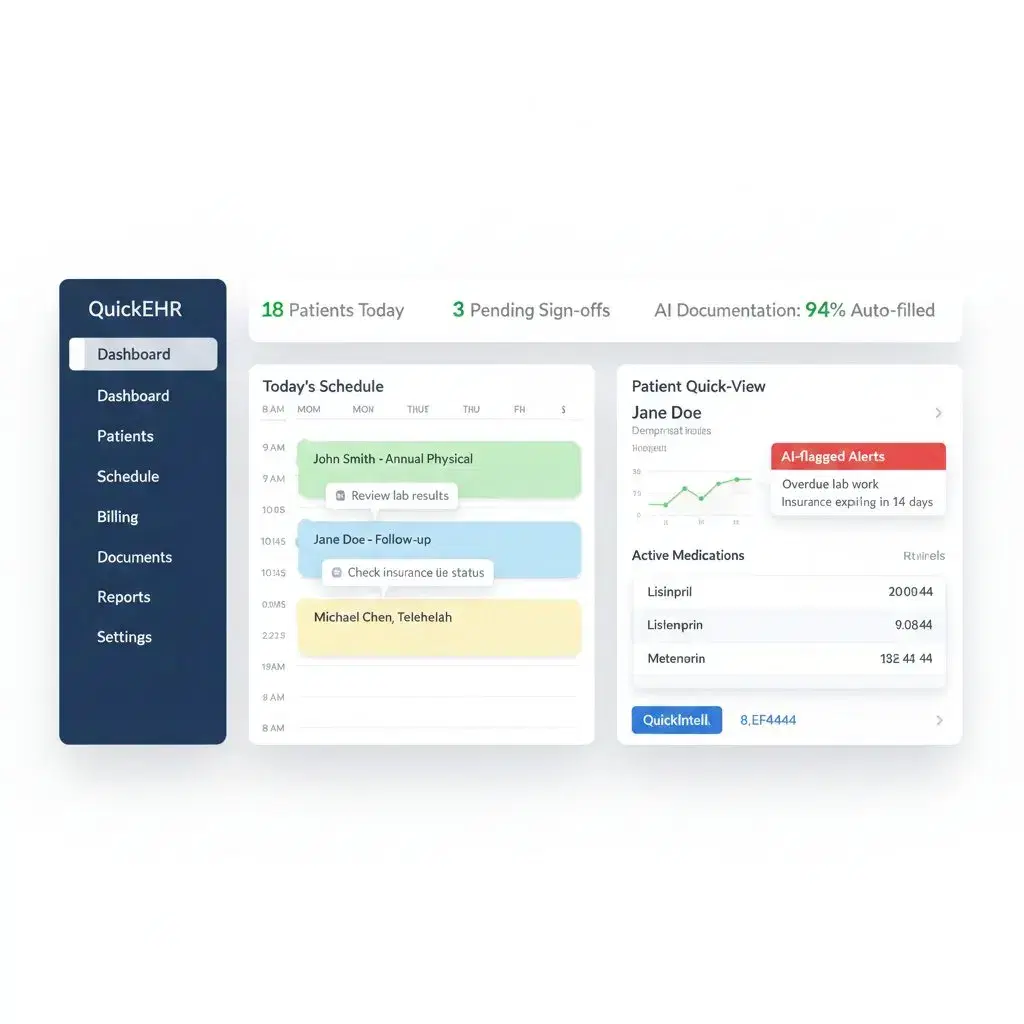
QuickEHR workspace with patient chart, schedule, documentation, authorization, coding, and revenue workflow context

MFA policy

Enrollment and prompts

Role controls

Least-privilege access

Recovery plan

Lockout and support

Healthcare MFA workflow

Multi factor authentication has to match how the practice works.

Searchers comparing EHR MFA and healthcare MFA need more than a checkbox. QuickEHR implementation planning connects MFA policy to clinicians, staff, administrators, remote access, support access, AI workflows, and downstream revenue work.

Identify

Map every user before enforcing MFA.

QuickEHR MFA planning starts with the people and systems that touch the record: providers, clinical support, front desk, billers, coders, authorization teams, administrators, external support, and connected automation users.

  • Separate normal clinical access from administrator access, interface credentials, exports, and support workflows.
  • Define which users need multi factor authentication at login, remote access, privileged actions, or sensitive workflow checkpoints.
  • Keep onboarding, role changes, temporary coverage, and offboarding in the same access-control plan.

Challenge

Apply healthcare MFA where risk and workflow meet.

MFA software for medical practices should protect access without blocking care teams from routine work. QuickEHR implementation planning ties MFA prompts to role, device, location, session, and sensitive-workflow decisions.

  • Scope workstation, browser, remote, mobile-ready, and administrator sessions before launch.
  • Review fallback and recovery workflows for lost devices, new phones, after-hours coverage, and locked accounts.
  • Document any break-glass or emergency-access process with leadership and compliance stakeholders before production use.

Authorize

Pair MFA with role-based EHR permissions.

Multi factor authentication confirms identity, but EHR security also depends on what the authenticated user can do inside OpenEMR-powered QuickEHR workflows.

  • Align schedule, chart, note, order, document, billing, reporting, export, and configuration permissions to job duties.
  • Review high-impact actions such as user administration, role changes, API keys, data exports, and billing configuration.
  • Keep least-privilege access visible during implementation and periodic access review.

Review

Make MFA and access activity easy to investigate.

Healthcare teams need an access story they can review: who authenticated, which role was used, which workflow changed, and how downstream AI or revenue work moved.

  • Preserve user, role, source, timestamp, work queue, and review status around connected workflows.
  • Route failed logins, exceptions, suspicious changes, and unsupported automation paths into review instead of hiding them.
  • Connect MFA planning with Trust Center review, implementation evidence, and deployment-specific access requirements.

Access policies

MFA protects the front door. Permissions protect the work inside the EHR.

QuickEHR MFA planning should define who can authenticate, how they authenticate, what they can do after authentication, and which recovery paths are acceptable when normal access fails.

For broader EHR security design, review QuickEHR security. Procurement and evidence requests should go through the QuickIntell Trust Center.

Clinician chart access

Define MFA expectations for providers opening charts, documenting visits, reviewing orders, signing notes, and working outside the clinic network.

Administrator access

Treat user management, permission changes, interface setup, exports, and configuration work as privileged actions that require stronger review.

Revenue cycle access

Scope biller, coder, prior authorization, claims, denial, ERA, EOB, and payment workflows around the data each team needs to complete its work.

Device and session rules

Document workstation, browser, mobile-ready, timeout, shared device, and remote access expectations so MFA enforcement fits practice operations.

Recovery and lockout

Plan lost-device replacement, new-phone enrollment, temporary coverage, after-hours support, and account recovery before staff depends on the system.

Audit-ready review

Identify the authentication, access, role, support, interface, and workflow events reviewers need for deployment-specific security review.

OpenEMR and QuickEHR fit

OpenEMR MFA planning belongs in the same review as QuickEHR workflow security.

QuickEHR is built on the OpenEMR foundation. Practices should review OpenEMR users, roles, modules, APIs, exports, support access, and connected QuickIntell work queues when designing MFA and EHR access controls.

Review the OpenEMR integration for implementation architecture, API options, FHIR, HL7, and workflow connection planning.

QuickEHR-managed OpenEMR foundation

QuickEHR is built on the OpenEMR foundation. MFA planning should be reviewed with OpenEMR users, roles, modules, API access, exports, and support paths.

Existing OpenEMR tenants

Practices using an existing OpenEMR environment can review identity provider options, access scope, API permissions, and support workflows before connecting QuickIntell automation.

Connected QuickEHR workflows

QuickEHR can also sit around another primary EHR as an integration and automation layer for documentation, coding, authorization, RCM, remittance, and outreach work.

Implementation and trust

Define enrollment, recovery, roles, and evidence review before go-live.

MFA rollouts fail when lockout recovery, after-hours coverage, device replacement, administrator access, and support workflows are handled informally. QuickEHR implementation planning turns those edge cases into documented operating steps.

Current security, privacy, legal, and procurement materials should be reviewed through the Trust Center. Deployment-specific evidence should be confirmed in the active contract and implementation packet.

QuickEHR MFA implementation checklist

Scope these items before production use.

  • Choose the final MFA method, identity provider, enrollment workflow, and recovery path for the deployment.
  • Map clinician, staff, administrator, support, interface, and automation users to role groups before production use.
  • Confirm OpenEMR and QuickEHR permissions for charts, notes, orders, documents, billing, exports, APIs, and configuration.
  • Define session timeouts, remote access rules, mobile-ready access, shared-device policy, and after-hours access expectations.
  • Document lost-device, locked-account, temporary-coverage, break-glass, and offboarding procedures before go-live.
  • Review AI workflow boundaries for QuickScribe, QuickCode, QuickAuth, QuickRCM, QuickERA, and QuickVoice.
  • Confirm Trust Center materials, procurement evidence, contract language, and deployment-specific requirements with the appropriate reviewers.

FAQs

QuickEHR MFA software questions

Answers for practices evaluating multi factor authentication, EHR security, OpenEMR MFA planning, and AI workflow access controls.

What is QuickEHR MFA software?+

QuickEHR MFA software is the QuickEHR workflow for planning and operating multi factor authentication around OpenEMR-powered EHR access. It helps practices define user roles, authentication policy, session rules, recovery paths, audit expectations, and connected QuickIntell AI workflow boundaries.

Does QuickEHR support EHR multi factor authentication?+

QuickEHR implementations can scope EHR multi factor authentication for clinicians, staff, administrators, remote users, and sensitive workflows. The final identity provider, MFA method, enrollment process, session policy, and recovery process should be confirmed in the current deployment packet.

How does OpenEMR MFA fit with QuickEHR?+

QuickEHR is built on the OpenEMR foundation, so OpenEMR MFA planning should be reviewed with OpenEMR users, roles, modules, API access, exports, support access, and the QuickIntell automation layer. Practices with an existing OpenEMR tenant should confirm the supported identity and access paths for that environment.

Is MFA required by HIPAA?+

This page does not provide legal advice or claim a specific HIPAA requirement. Many healthcare organizations evaluate HIPAA multi factor authentication as part of access control and risk management. Practices should review their own risk analysis, policies, contracts, and current legal or compliance guidance before finalizing requirements.

What MFA methods should a medical practice consider?+

Practices commonly evaluate authenticator apps, push prompts, one-time codes, hardware keys, biometric device controls, and identity-provider policies. The right choice depends on clinical workflow, device availability, remote access, administrator risk, recovery needs, and implementation scope.

How should practices handle MFA lockouts or lost phones?+

QuickEHR MFA planning should define account recovery, lost-device replacement, after-hours support, temporary access, break-glass review, and offboarding before go-live. These workflows should be documented so access recovery does not become an informal workaround.

How does MFA affect AI EHR workflows?+

MFA is one layer of AI EHR security. QuickScribe, QuickCode, QuickAuth, QuickRCM, QuickERA, and QuickVoice should use approved data paths, role controls, and human review so AI can draft, summarize, classify, route, or queue work without silently finalizing clinical or revenue actions.

Can QuickEHR MFA work for remote or mobile-ready access?+

Remote and mobile-ready access should be scoped during implementation. Practices should review device expectations, trusted networks, session timeouts, shared-device use, user roles, and recovery paths before relying on MFA in production workflows.

How is this different from the QuickEHR security page?+

This page focuses specifically on MFA software, healthcare MFA rollout, OpenEMR MFA planning, lockout recovery, and authentication policy. The QuickEHR security page covers the broader EHR security program, including roles, audit trails, data movement, AI workflow controls, and Trust Center review.
Plan QuickEHR MFA with the EHR, AI, and revenue workflows in view.

Review how QuickEHR MFA software can support authentication, access controls, recovery planning, and OpenEMR-powered workflow security for your practice.