Prior Authorization Automation That Moves Requests to Resolution
Automate submissions, follow-ups, and appeals from one workflow
QuickIntell helps revenue cycle teams package clinical documentation, check payor rules, track status, and route exceptions so patients move toward care without manual chasing.
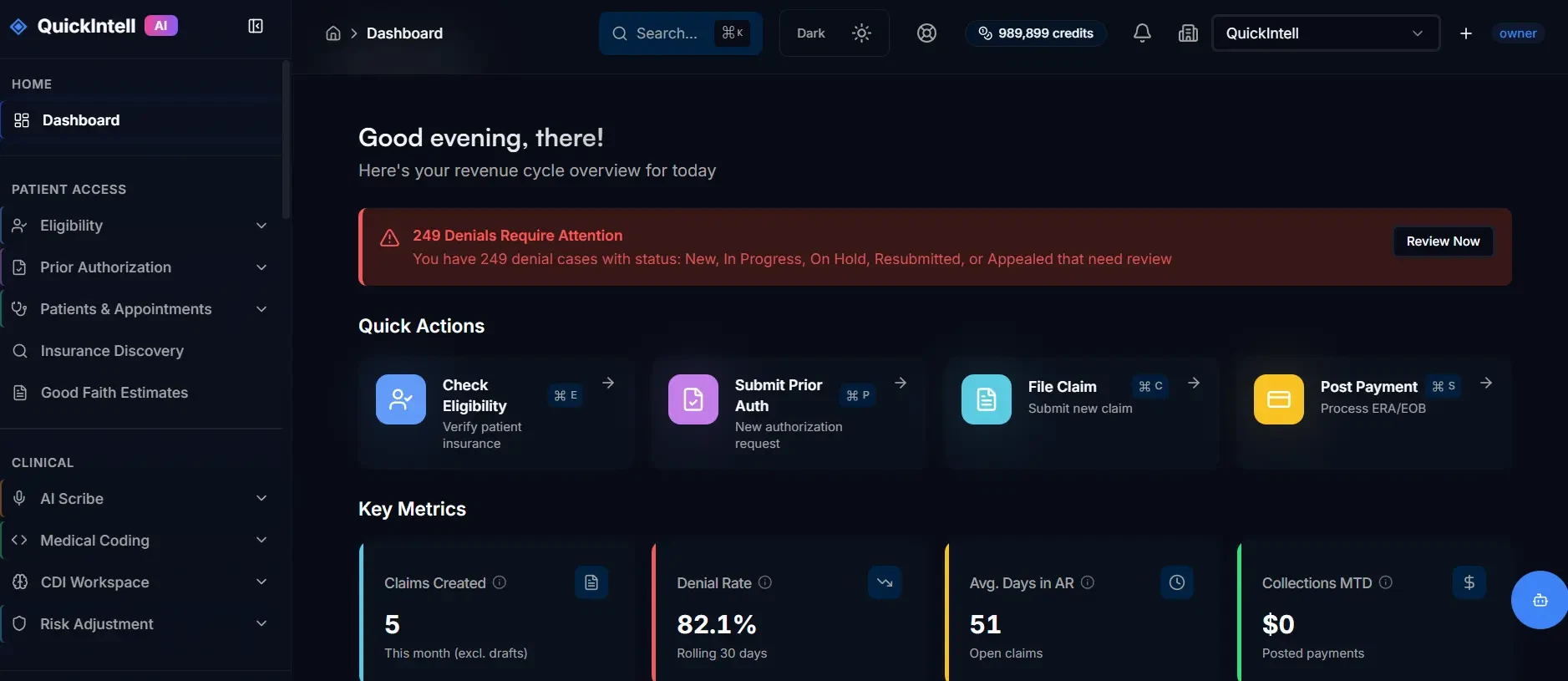
Operational workflow
From scheduled visit to authorization write-back
QuickIntell follows the same workflow authorization teams use every day, from upstream scheduling and eligibility through submission, payer follow-up, exceptions, renewals, and EHR synchronization.
Scheduling and eligibility
A scheduled appointment creates the work item, then eligibility context confirms active coverage before authorization rules run.
PA required decision
QuickIntell compares payer rules, planned CPT/HCPCS codes, diagnoses, provider details, service date, and units to decide whether a PA is needed.
Validation before submission
Staff review patient, payer, code, NPI, unit, service-date, and clinical-documentation fields, then resolve red validation errors before release.
EDI 278, portal, or fax
Clean requests route through EDI 278 where supported, portal automation for portal-only payers, or a queued fax packet when required.
15-minute status polling
Submitted requests move to in-review status and are polled every 15 minutes so teams can see payer acknowledgments and outcomes without refreshing.
Appeal and P2P routing
Denied or partially approved requests move into appeals with draft letters, filing deadlines, supporting evidence, and peer-to-peer tracking.
Renewal calendar
Expiring authorizations surface before coverage lapses so recurring care can be cloned, updated, validated, and resubmitted.
EHR write-back
Approved authorization numbers, units, and effective dates sync back to the EHR so schedulers, clinicians, and claims teams work from the same record.
What does Voice Enabled Prior Authorization mean?
Voice Enabled PAULA automates prior authorization calls to insurers, ensuring swift approvals and freeing you from manual follow-ups to improve patient access to timely care. Our automated prior authorization software streamlines the entire process.
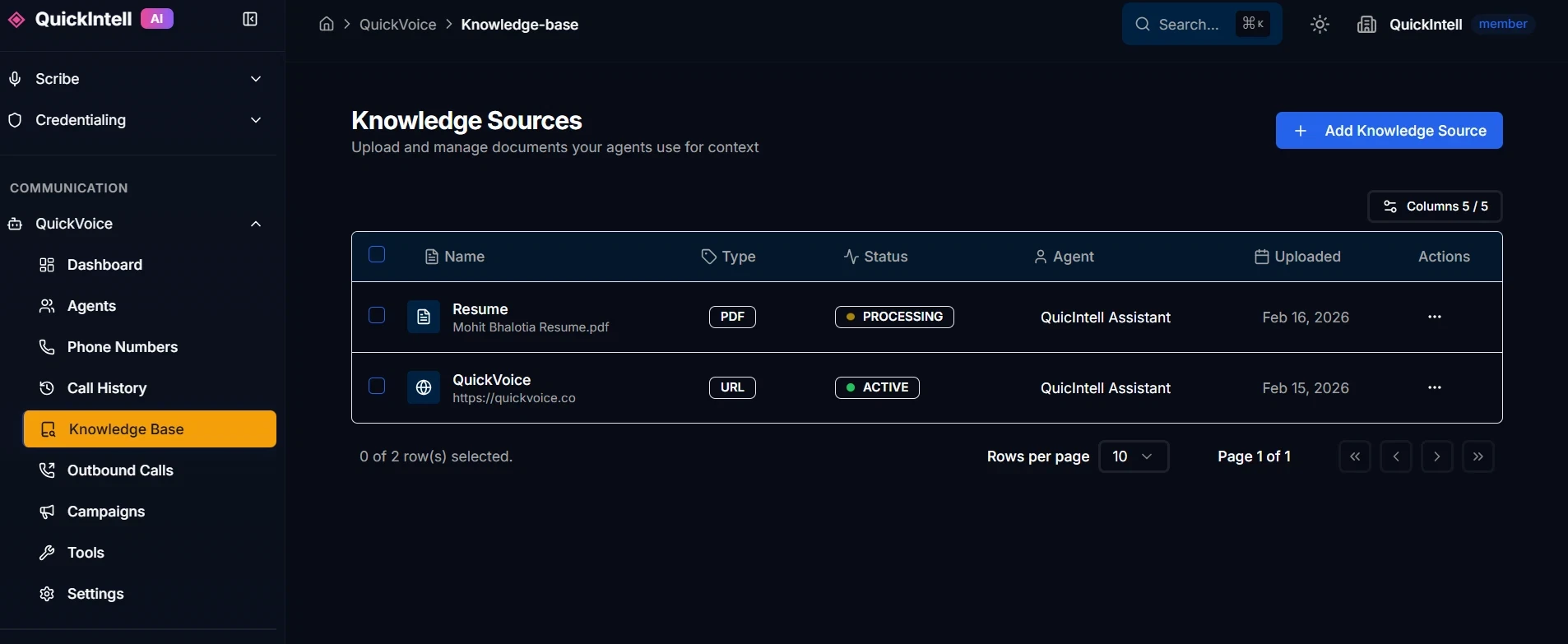
Prior Authorization on Autopilot
Transform your prior authorization process from a burden into a competitive advantage with QuickIntell's innovative automated prior authorization software. Our solution streamlines the entire process, from submission to approval.
PAULA automates submission packaging and follow-up to shorten cycle time versus manual workflows.
Payor-specific rule checks before submission reduce avoidable rework on initial responses.
Intelligent Prior Authorization Appeals
Submit with confidence and stay up-to-date on payors' rules with our intelligent automated prior authorization software that checks each patient's health plan policy to ensure accurate submissions. It also provides seamless real-time tracking and visibility, reducing delays in patient care by monitoring the status of requests until resolution, automatically following up with payors, and generating appeal letters with supporting clinical evidence when denials occur.
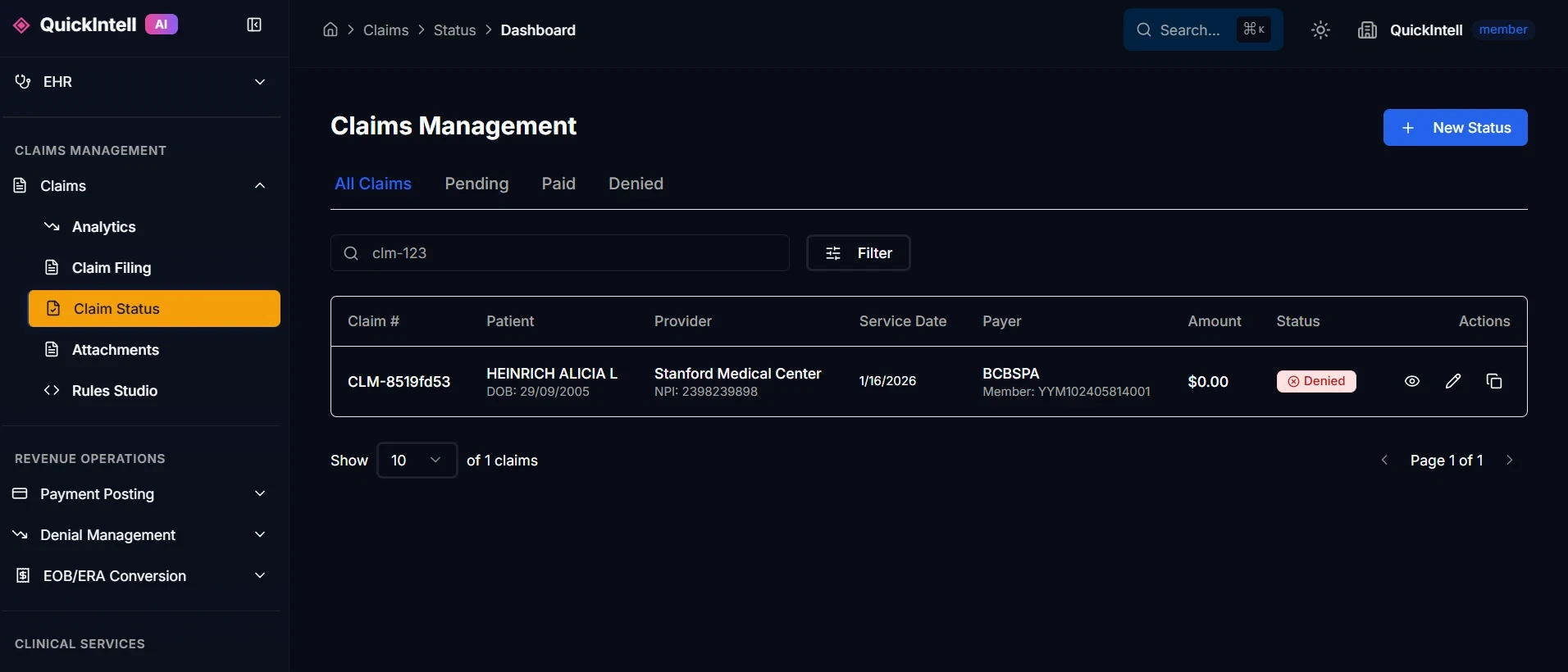
Key Features of Our Prior Authorization Software








Built for queue volume
Prior authorization capabilities for high-volume teams
PA teams can work routine batches, renewals, urgent reviews, portal exceptions, and role-specific queues without losing the status trail that finance and clinical teams need.
Bulk upload worklists
Upload surgery blocks, recurring infusions, or renewal cohorts by spreadsheet with row-level validation before the batch is released.
Renewal calendar
Surface expiring authorizations at 30, 14, and 7 days, then clone prior approvals with updated date ranges, units, and documentation.
Urgent and P2P path
Flag time-sensitive requests, schedule peer-to-peer reviews, record outcomes, and keep expedited cases visible to clinical owners.
Portal-only failure handoff
When portal automation cannot finish a screen, staff resume the saved session, enter the confirmation number, and continue status polling.
Status and state reference
Draft, in review, approved, partial, denied, appealed, expired, and cancelled states tell each queue owner the next action.
Role-specific value
Authorization specialists work the queue, schedulers check appointment badges, managers watch SLAs, and clinicians attach missing evidence.
Benefits of Automated Prior Authorization for Healthcare Providers
Scalability
Our automated prior authorization software scales across practice sizes, handling high volumes of PA requests effortlessly.
Security & Compliance
Enhanced Security & Compliance, ensuring all prior authorization data is securely managed and HIPAA-compliant.
Related QuickIntell workflows
Prior authorization works best when the surrounding revenue cycle systems share eligibility, coding, claims, appeals, EHR, automation, and analytics context.
Eligibility Verification
Confirm active coverage before PA rules run.
Medical Coding
Feed validated CPT, HCPCS, and ICD-10 context into PA decisions.
Claims
Carry approved authorization numbers into clean claim submission.
Appeals
Escalate denials with evidence, deadlines, and payer responses.
EHR Integration
Read scheduling and chart context, then write approvals back.
Automation
Govern AP-2 detection and AP-15 renewals with automation controls.
Analytics
Track turnaround, approval rate, appeals, and renewal performance.
What Our Healthcare Clients Say
“Cara Perry, SVP of Revenue Cycle Management, Signature Dental Partners, achieved a 45% reduction in days sales outstanding below industry standards by implementing our automated prior authorization software, stating it's like 'training a perfect employee, that works 24 hours a day, exactly how you trained it'.”
Transform Your Prior Authorization Process Today
QuickIntell's innovative automated prior authorization software can streamline your healthcare operations, improving efficiency and reducing manual workloads.
GET STARTED TODAYFrequently Asked Questions About Automated Prior Authorization
QuickIntell combines appointment context, eligibility results, and planned CPT or ICD-10 codes to determine whether a prior authorization is needed. When authorization is required, the workflow creates a draft for staff review before submission.
Staff verify patient demographics, payer, CPT or HCPCS codes, ICD-10 codes, ordering provider NPI, service date, requested units, and supporting clinical documentation. Validation flags missing diagnoses, units, or member ID mismatches before the request leaves the queue.
Requests can be routed through EDI 278, payer portal automation, or fax depending on payer support. The authorization record keeps the submission receipt, channel, and tracking reference in one place.
QuickIntell polls payer status every 15 minutes and updates the shared queue when the payer responds. Teams can see whether a request is in review, approved, partially approved, denied, appealed, or expired without manually refreshing payer sites.
Denied and partially approved requests route into the Appeals Workspace. Teams can review the denial reason, draft a first-level reconsideration, attach supporting clinical documents, track filing deadlines, and schedule peer-to-peer review when appropriate.
The Renewal Calendar surfaces authorizations expiring in the next 30 days, including 30-, 14-, and 7-day reminders. Staff can clone the prior authorization, update dates and units, add fresh documentation, validate, and resubmit.
Yes. Approved or partially approved records can sync the authorization number, approved units, and effective dates back to the EHR so clinical and claims teams can see the authorization on the appointment or encounter.
Access is limited to organization members with prior authorization permissions. Role-based controls separate read, write, delete, approve, and export actions, and every action is recorded in an immutable audit trail.